



Photo: Hulton Archive/Getty Images
The news since the recent elections has not been heartening. The markets have been sharply down while the foolishness of politicians, both Democrats and (sometimes) Republicans, has been up, up, up. Elections have consequences. This year, very ugly ones. The biblical admonition not to put one’s trust in princes seems less a matter of special revelation and more a matter of simply opening one’s eyes.
The difficulties of this world are a good reminder that we can and ought to put our trust only in the Prince of Peace. Whatever politicians do or do not do, our ultimate faith and hope reside only in Jesus Christ. Today, in most Catholic Churches throughout the world and some Protestant ones, Christians celebrate that truth in the Feast of Christ the King, more formally “Our Lord Jesus Christ King of the Universe.”
In the Catholic world, this new feast was announced by Pope Pius XI in his December 1925 encyclical Quas Primas. Pius explained that, although the mystery of Christ is celebrated throughout the year in countless feasts, they all focused on “something quite distinct from his royal title and dignity.” He wanted a feast that would focus on the distinct truth that Jesus, who is friend, physician, advocate, and shepherd, is also and ultimately the king of all.
Pius cited a multitude of texts from the Old Testament announcing the anointed king who would come out of the House of Jacob and who would rule on the throne of his father David. Among the passages cited is Psalm 72, which many commentators have thought was either written by Solomon or for him by his dying father, David. Either way, Christians have long seen its ultimate fulfillment as coming in Jesus Christ. Verses 8-11 show why:
May he have dominion from sea to sea,
and from the River to the ends of the earth!
May his foes bow down before him,
and his enemies lick the dust!
May the kings of Tarshish and of the isles
render him tribute,
may the kings of Sheba and Seba bring gifts!
May all kings fall down before him,
all nations serve him!
That Jesus was the one to fulfill these promises is made clear by the Archangel Gabriel, who tells Mary that, to the son she would bear, “the Lord God shall give unto him the throne of David his father, and he shall reign in the house of Jacob forever; and of his kingdom there shall be no end.”
Though, in his earthly ministry, Jesus often turns upside down the expectations that people had for Him, He nevertheless demonstrates His kingship. Pope Pius argues that Christ demonstrates legislative, judicial, and executive power, “threefold power which is essential to lordship.” Jesus presents Himself as a new Moses, giving law to his disciples and those around Him in the Sermon on the Mount and elsewhere. He claims the power to judge what parts of the Old Law are breakable and announces that He will be the final judge at the last day. “Executive power, too,” Pope Pius says, “belongs to Christ, for all must obey his commands; none may escape them, nor the sanctions he has imposed.”
The emphasis of the feast, as Pius conceived it, was how Jesus Christ is Lord of all people and all nations here and now. Pius wanted Christians to testify to Christ’s lordship in individual hearts, the family, the community, and even the nation. The moral import of this celebration was to encourage Catholics to pray and act in such ways that Christ’s reign was evident everywhere and order private and public life as much as possible to Christ’s will. The feast was set on the last Sunday of October, right before the feast of All Saints, to emphasize that no one can be holy without bending the knee and following the will of Christ the King.
In 1969, a different pope, Paul VI, changed the liturgical calendar of Catholics. He put the feast of Christ the King a month later on the last Sunday of the liturgical year. This change was made so that “the eschatological importance of this Sunday is made clearer.”
“Eschatological” means having to do with the last things. In other words, Pope Paul wished to put the focus on the consummation of Christ’s kingship at the end of the world, to which we look forward and for which we pray.
Those two emphases are both necessary. To the extent possible, when Christians pray “thy kingdom come,” they ought to be watching for every opportunity in their own lives—whether private or public—to respond to Christ’s commands and thus make visible His kingship. To have the confidence to do so, however, they must exercise faith that Christ Himself will finally manifest His kingship to all. When things look bleakest in our own present lives, we must resolve all the more to put our trust in the Prince of Peace, who will overcome all things.
The political news today may not look so good, but the fundamentals of our situation never change. Christ the King is in charge. We may not be able to see how He triumphs over particular present circumstances or what His plan is, but Jesus never fails.
All the earthly kings will fall down before Him and serve Him in the end. It is good and right in good times and bad to put our trust in the Prince of Peace, Christ the King of the Universe, now and forever.
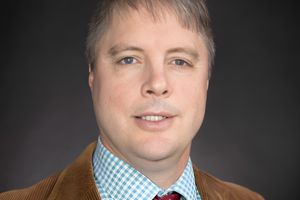
About the author
David P. Deavel
Associate Professor of Theology, University of St. Thomas (Houston)
@davidpdeavelAll articles by David P. Deavel →
Expertise
- • Catholic theology and thought
- • Conservative political and cultural commentary
- • John Henry Newman, G.K. Chesterton, and Aleksandr Solzhenitsyn studies
- • Education and higher education
Credentials
- • Associate Professor of Theology, University of St. Thomas, Houston, Texas
- • Associate Editor, VoegelinView
- • Senior Contributor, The Imaginative Conservative
- • 2019 Lincoln Fellow, Claremont Institute


Comments