


Government is hard to keep accountable, but it can be done. Having conducted deep oversight investigations into federal failures for five years, tackling waste, fraud, and abuses by Justice, Defense, State, NASA, and Clinton’s White House, I learned lessons. They apply now, as Americans look for state-level accountability.
Lesson one: A garden untended becomes a weed garden, bad crushing good. If you allow an agency to go without oversight from the legislative branch, an inspector general, or an attorney general, corruption seeds and reseeds.
Lesson two: Once public corruption seeds – insider trading, self-dealing, conflicts of interest, non-competed contracts, quiet bribes, officials looking the other way as friends profit, then give donations, or as drugs get trafficked, you have cancer. The cancer of public corruption, left unchecked, quickly metastasizes.
Lesson three: The source of that cancer is most often one-party control. A single legislative session begets another and another, until repeating seasons of corruption appear – agency leaders get used to it, midlevel program directors, procurement officers, and legislators give the nod to sweetheart deals. It gets “normalized.”
Lesson four: Public corruption is not just insidious, not just an act of not caring, not just a theft of tax dollars; it is persistent. It is a cold wind under the eaves, at the door, in the windows, up through the floorboards, hard to shake, like chilblains.
Lesson five: Political leaders come and go, some imagining this is easy to stop, to reverse, that they will tell people to do it, and things will get cleaned up. Not usually. Bureaucrats and corrupt political players wait them out, hide from the inquiries, play tricks, believe they are “a law unto themselves,” and practice invisibility.
Lesson six: Sometimes these corrupt actors, midlevel agency money dealers, high-level partisans, and legislators on the take – are brought down. That happens when an investigator has full authority, makes criminal referrals, stops the waste, fraud, abuse, and rolling felonies.
As a federal investigator, empowered by Speaker Newt Gingrich to conduct congressional oversight with depositions, subpoenas, mountains of documents, and media, my time produced criminal referrals, billions in savings, retooled large chunks of the federal government, and Waco hearings to counter narcotics.
President Trump is at that in a bigger way now. He knows what so many Democrats work overtime to prevent the public from knowing: An enormous amount of public corruption pervades government, and it has to be stopped.
Lesson seven: Nothing comes easy, especially holding government actors – including high-level political actors – accountable. That said, it can be done. Persistence and unblinking resolve produce results. One-party states – like Maine – tend to breed and normalize corruption over decades. That can be stopped.
Lesson eight: Just as a federal chief executive, President Trump, gets better with time, finds, and prosecutes, a seasoned governor can force accountability if it starts early, never loses energy, focus, or resolve, and he knows how.
The modern conservative – some would say libertarian – James Bovard wrote: “To blindly trust government is to automatically vest it with excessive power…To distrust government is simply to trust humanity.” He has it right.
Bovard’s sentiments remind me of words from Thomas Jefferson, himself a tenacious budget cutter, believer in limited government, and oversight warrior.
Jefferson said it many times, in many ways, but I like this quote best. He puts a fine point on it, makes clear the reality: “When the government fears the people, there is liberty. When the people fear the government, there is tyranny.”
Central to avoiding tyranny – federal or state – is accountability, oversight, insistence that every dollar be accounted for, and leaders be honest. Too much to expect? I think not. Government is hard to keep accountable, but it must be done.
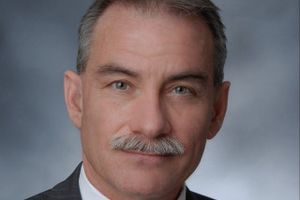
About the author
Robert B. Charles
National Spokesman, AMAC
@Bobby4MaineAll articles by Robert B. Charles →
Expertise
- • U.S. foreign policy and national security
- • Counter-narcotics and international law enforcement
- • American politics and government
- • Leadership, character, and American history
Credentials
- • Former U.S. Assistant Secretary of State, Bureau of International Narcotics and Law Enforcement Affairs (October 2003 - March 2005)
- • Reagan White House staffer (1981-1983)
- • Deputy Associate Director, Office of Domestic Policy, George H.W. Bush White House (1992-1993)
- • Staff Director and Chief Counsel, U.S. House Subcommittee on National Security, International Affairs, and Criminal Justice (1995-1999)


20 Comments