
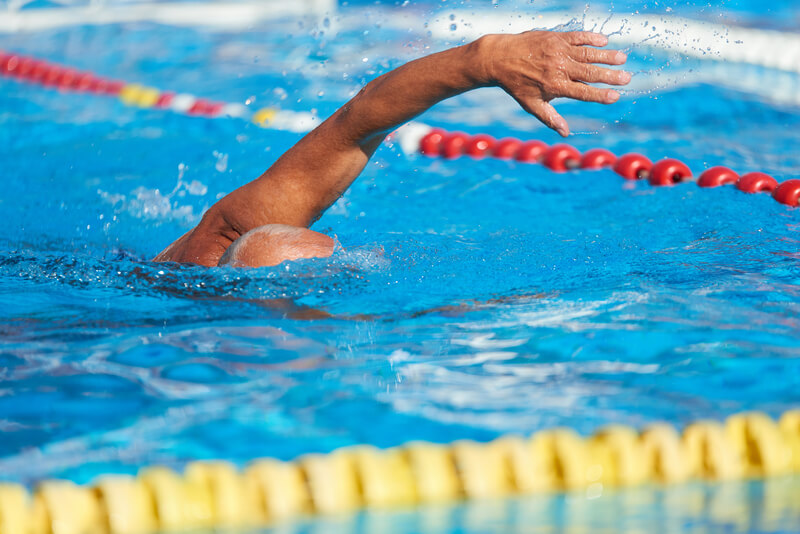
This article highlights the benefits of swimming plus offer safety tips for senior swimmers.
A delightful form of exercise
Swimming is one of the most pleasurable activities senior citizens can enjoy. It is both a refreshing activity, especially during the summertime, and a formidable form of exercise for older adults. Not only does the activity harken childhood memories for swimmers who enjoy it as a lifelong pastime, but it also offers a terrific workout – helping senior stay fit, flexible, and healthy. Let’s learn more about this fun senior sport.
An engaging sport
Sports are activities that involve physical activity and skill. Sometimes, they can be competitive. For example, fit senior citizens may compete in swimming competitions or triathlons. However, most seniors swim for a combination of enjoyment and exercise as swimming uses almost every muscle in the body. At senior centers and retirement communities, pools are common hubs for social engagement and entertainment.
The amazing benefits of swimming
Per All Seniors Care, “When swimming, around 90% of your body weight is supported by water, so you will float through your exercise session without putting pressure on your joints. The relatively weightless environment and support from the water can help people overcome painful movement caused by arthritic and other health conditions.” Swimming is also an excellent form of cardiovascular exercise. It can strengthen the heart, help people maintain healthy weight, and improve physical endurance. Water sports help build stronger bodies, thereby reducing risks of falls in older adults. Plus, it’s brain healthy. Many people are surprised to learn that swimming may decrease stress, boost mood, and likely improve concentration and cognitive function.
For newbies or people changing routines
Anyone beginning a sport or changing an exercise routine should consult their doctor to discuss what type and amount of exercise is right for them. For newbies, many doctors will suggest a slow buildup rather than full indulgence in sports so that the body acclimates to the routine. This can go a long way to reducing injury. In sports, it’s essential to perform tasks properly and safely; incorporating warmups, cooldowns, and using a trainer to avoid injury. A swim instructor can provide guidance and reassurance to senior citizens who are interested in learning how to swim or wish to increase their skill.
Swim and water safety tips:
- After consulting a doctor, newbies and less confident swimmers should begin in shallow water. Exercise gently and build up skills.
- Swimming lessons or private instruction are ideal for beginners.
- Whether swimming in a pool, lake, bay, or ocean, all swimmers (regardless of expertise) should avoid swimming alone. It’s best to have someone nearby in case there is an emergency.
- Always swim in a lifeguarded area with a partner, group, or instructor.
- Don’t enter the water if you don’t feel well.
- Talk to your doctor about medications you are currently taking as some may cause drowsiness and negatively affect swim performance.
- Avoid diving in shallow pools. Performing improper dives or diving in shallow pools are dangerous practices that can lead to injury or death.
- Don’t drink alcohol & swim. Drinking can impair swimming abilities and lead to accidents such as drowning.
- Seniors are encouraged to make use of floatation devices such as swim noodles, kickboards or life jackets, helpful tools should one become tired.
- Swim goggles and caps can improve visibility, reduce distractions, and improve safety.
- Ear plugs may be recommended to keep water out of the ear canal.
- Use handrails and safety rails when getting in and out of pools or hot tubs.
- Older people with difficulties entering and exiting pools should have assistance or consider using a pool lift to help them access the water.
- Aways survey the ground for dropped goggles, swim toys, or other tripping hazards.
- Also be cautious of wet and slippery surface areas.
- Have a towel handy to dry off the body, including the bottom of the feet.
- Consider wearing non-slip shoes near pools and wet decks to prevent slips and falls.
- Limit time in the water and don’t overdo it. Pay attention to the water temperature and exit the pool if feeling too cold or uncomfortable.
- When swimming in the ocean, swim in lifeguard-patrolled areas and pay attention to warning flags and their meanings.A double red flag means that extreme hazards are present, and the water should not be entered.
- A solid red flag means high surf and rip tides, so avoid water activity.
- Yellow indicates moderate surfing conditions. Use extreme caution.
- Green means low hazard conditions with rip tides still possible.
- Purple means that marine animals are present. This includes jellyfish, stingrays, dangerous fish or other marine life.
Be aware of water conditions to include riptides, dangerous fast-moving channels of water that can form unexpectedly and pull swimmers away from the shore. Here are some quick tips:
- Riptides are hard to spot. Always check beach conditions (wave forecast reports) before going into the water. Or ask a lifeguard on duty.
- The best way to get out of a rip current is to not panic. It will not pull you under, but it prevents you from swimming directly back to the shore. Follow the three R's: Relax and float to conserve energy
- Raise your hand to signal for help
- Ride the rip until it stops and you can swim back to shore or help arrives.
Move parallel to the shoreline to escape the pull and then swim at an angle toward the shore. Per Fox Weather, big schools of fish spotted along the coast may indicate that sharks can be in the area. Other signs include the presence of seals or birds, schools of jumping fish, and spotting baitfish or chum in the water. Talk to your doctor about hot tub safety. While a pleasurable water activity, hot tubs can pose a risk to senior citizens due to potential health complications related to heat exposure, water quality, and the physical environment of the hot tub. Folks with preexisting conditions like heart problems, diabetes, or lung issues should consult a doctor before using a hot tub as the heat can exacerbate health conditions. Learn CPR training. Despite following safety rules, accidents or health emergencies are still possible. While a trained lifeguard will likely perform CPR if needed, it doesn’t hurt to become educated on CPR, a practice that can potentially save lives.
It’s the best!
Swimming is a wonderful activity that is beneficial for most senior citizens. This low impact sport is excellent for the body and keeping in shape. When done properly, it poses little risk of physical injury. Swimming can help increase mental wellbeing by engaging the mind and lifting spirits. It’s also a great way to meet fellow swimmers, form friendships, and enjoy quality time together doing something you love.



AMAC Active members
Join the conversation
4 comments so far from AMAC members.
Comments