


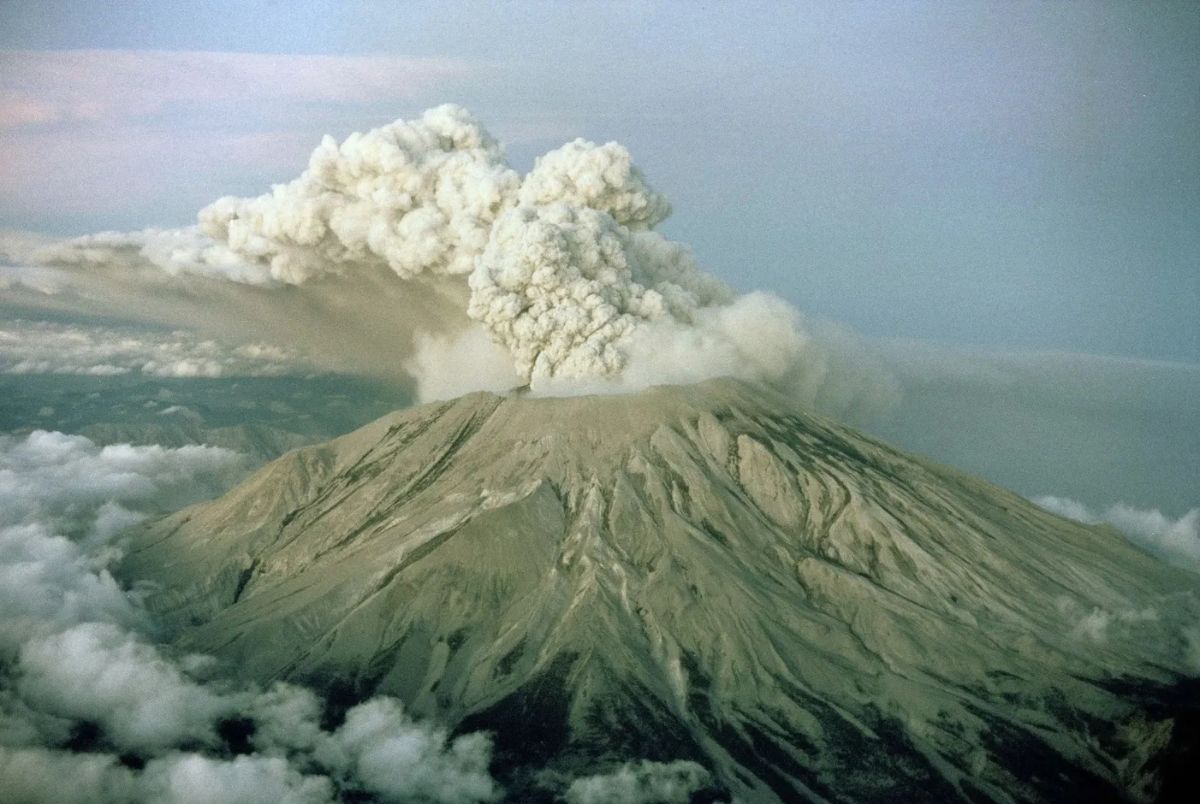
On May 18, 1980, the Pacific Northwest witnessed one of the most devastating natural disasters in American history when Mount St. Helens erupted in southwestern Washington. The catastrophic explosion transformed the landscape, claimed dozens of lives, and forever changed how scientists monitor volcanic activity in the United States.
The eruption occurred at 8:32 a.m. after a 5.1 magnitude earthquake struck beneath the volcano’s north flank. The quake triggered the largest landslide ever recorded, causing the mountain’s weakened side to collapse and unleashing a massive lateral blast of superheated gas, ash, and rock. Within minutes, ash soared nearly 80,000 feet into the atmosphere, darkening skies across the region and spreading debris across multiple states and into Canada.
Prior to the eruption, Mount St. Helens had shown increasing signs of unrest. Beginning in March 1980, the volcano experienced hundreds of earthquakes, steam explosions, and the appearance of a large bulge on its north side caused by rising magma. Scientists from the U.S. Geological Survey closely monitored the activity, warning that a major eruption was possible. Still, few anticipated the sheer scale and violence of what would unfold that May morning.
The blast devastated roughly 230 square miles of forest, flattening millions of trees and wiping out wildlife habitats. Entire rivers were clogged with volcanic mudflows and debris, while ash blanketed towns hundreds of miles away. In Washington communities such as Yakima, daylight turned to darkness as thick ash fell from the sky.
Fifty-seven people were killed in the disaster, including volcanologist David A. Johnston, who famously radioed the message, “Vancouver, Vancouver, this is it!” moments before the eruption overtook his observation post. Homes, bridges, highways, and railroads were destroyed, and damages exceeded $1 billion, making it the deadliest and most economically destructive volcanic eruption in modern U.S. history.
In the decades since, Mount St. Helens has become both a symbol of nature’s immense power and a living laboratory for scientists studying volcanic behavior and ecological recovery. Forests have slowly regenerated, wildlife has returned, and researchers continue to learn from the eruption’s long-term environmental impacts. More than 40 years later, the events of May 18, 1980, remain a powerful reminder of the unpredictable forces shaping our planet.


Comments