


In late January, Democratic Representative Kristen McDonald Rivet held a press conference celebrating $866,000 in federal funding she had lobbied Congress to include in a late 2025 appropriations bill.
“In an emergency, every second counts. Firefighters know that better than anyone else,” she wrote in a post–press conference social media post, which included photos of her standing beside firefighters. “We just announced new federal funding that will help the Bridgeport Fire Department respond faster and protect firefighters from dangerous toxins.”
Left unmentioned in McDonald Rivet’s remarks was the fact that she voted against the mammoth spending bill that secured the Bridgeport Fire Department funding for her own district.
Like many swing-seat House Democrats who had lobbied appropriators to include community funding projects in their districts last year, McDonald Rivet opposed the appropriations bill that included fire-station-facility improvement funding that she’d specifically earmarked over concerns that the appropriations bill in question didn’t extend the enhanced, pandemic-era Obamacare subsidies that were set to phase out on January 1.
McDonald Rivet is not alone in championing community-project funding she voted against. The Michigan congresswoman’s “no” vote is part of a larger trend in Congress in recent years, where many members oppose mammoth spending bills only to take credit for earmarked community funding projects on the campaign trail.
The trend demonstrates the increasingly partisan nature of the congressional appropriations process, with stopgap spending bills now routinely entangled in larger political battles over domestic policy issues. During the first year of Trump’s second term, for example, congressional Democrats have frequently opposed GOP-drafted appropriations bills to protest the administration’s policies related to Elon Musk’s cost-cutting efforts, expiring health-care subsidies, and immigration enforcement.
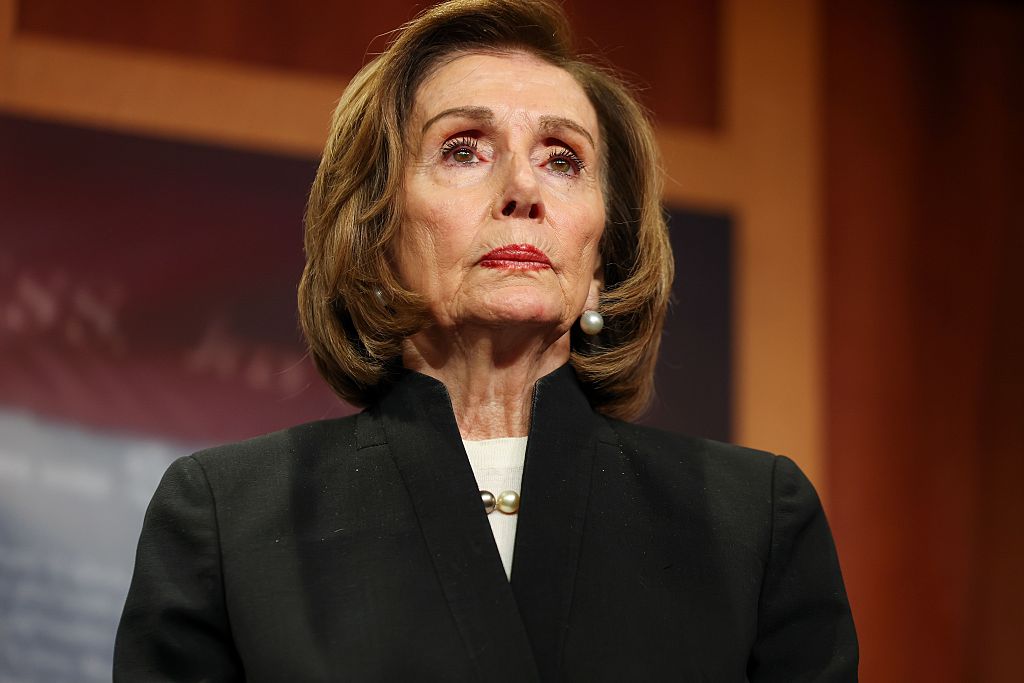
Describing this political phenomenon back in 2021, then–House Speaker Nancy Pelosi (D., Calif.) coined the term “vote no and take the dough” to preempt House Republican efforts to take credit for the Biden-era infrastructure and pandemic relief bills back home. And yet years later, vulnerable members of Pelosi’s own party have developed a track record for doing exactly that.
In December, a handful of swing-district House Democrats hit the campaign trail to tout federal funding toward infrastructure projects in their home districts that they’d also opposed.
“In May, I urged the House Appropriations Committee to allocate new federal funding for a fire truck for the Bellerose Village Fire Department and successfully secured $938,000,” freshman Representative Laura Gillen (D., N.Y.) wrote in a social media post praising the announcement. “I am delighted that this funding is now headed to Bellerose to help our first responders.”
And yet just like swing-district Democrats April McClain Delaney of Maryland, Josh Riley of New York, and Gabe Vasquez of New Mexico, Gillen voted against the bill that secured the federal funding for her district over concerns that the bill did not include an extension of the expiring health-care subsidies Democrats lobbied for.
The “vote no and take the dough” strategy has continued into the new year as Democrats are starting to take credit for funding they opposed in the recently passed stopgap funding bill to end the four-day partial government shutdown prompted by disagreements over the Trump administration’s immigration enforcement strategy.
On February 4, for example, Representative Greg Landsman (D., Ohio) touted $14 million in federal funding for community projects in southwest Ohio that were included in the appropriations bill that the congressman had joined most of his Democratic colleagues in voting against the day before.
“Each year, members of Congress can submit projects to the House Appropriations Committee for federal funding through the Community Project Funding process,” Landsman wrote in a press release celebrating the funding. “From affordable housing to infrastructure and parks, Congressman Landsman is delivering $14,225,000 for 14 community-led projects through funding bills that are now law.”
Audrey Fahlberg is a politics reporter for National Review.
Reprinted with Permission from National Review by Audrey Fahlberg.
The opinions expressed by columnists are their own and do not necessarily represent the views of AMAC or AMAC Action.


38 Comments