



Photo: Spencer Platt/Getty Images
For almost three decades, I have visited recovery centers – among them needle exchange (giveaway) programs all over the world. Whatever the rationale in the near term, the stark truth is they are a net detriment. We can do so much better.
In Switzerland, the founding location for this concept, they produced an uptick in social costs, wider addiction, deaths at “safe injection” sites, greater use and dependence, and needle pricks in parks. They did little to reduce HIV transmission for a simple reason: A heroin or other injection drug addict will not go ten feet to acquire a clean needle, if a dirty one filled with heroin is closer, or even just a needle with heroin residue (they fill with water to get the rest of the high).
Second, science does not support this modality. At best, the net effect is neutral on disease spread, with elevated public risk, anxiety, and perpetuated intravenous drug use.
The epic (largest) study on the issue, the Vancouver study, suggested HIV cases actually increase with needle giveaways. “Led by researcher Steffanie Strathdee, the Vancouver Injecting Drug Use Study (VIDUS) found that an ongoing HIV epidemic was occurring despite the city having a massive needle exchange program. Surprisingly, the data showed that frequent needle exchange attendees were actually more likely to test positive for HIV than those who went less often.”
Finally, with an open mind – not thinking about the dollars that flow, the forces behind the idea, or the present environment – ask these six questions.
- How many new drug users are created by giving away needles? Intravenous drug use requires a needle, allows mainlining and overdosing. Use of addictive drugs – making use easier to initiate and perpetuate – creates wider demand.
- How many young people are adversely affected by the “imprimatur of legitimacy” of government supporting or enabling injection drug use? People – as survey data shows – are heavily influenced by what the government endorses.
- How many ODs (fatal and non-fatal) would not occur in states like Maine if the state or nonprofits on state funds did not give away 4 million needles annually?
- As Maine’s Governor Janet Mills and aid Hannah Pingree gave away four million needles annually in Maine after March 2020, how many deaths followed?
Truth? Virtually all. Roughly 3000 deaths and 40,000 overdoses (fatal and non-fatal) are traceable to those needles. Is that an effective, morally centered policy?
- How many people are unintentionally pricked each year by discarded needles, possibly contracting AIDS, HIV, Hepatitis B or C, tetanus, endocarditis, sepsis, or thrombophlebitis (all diseases caught by dirty needles) is “too many?”
Finally …
- Why would any state not halt a failing strategy, move to favorable outcomes, stop perpetuating addiction? Why not invest in proven treatment, critical residential recovery? Why not require naloxone be followed by one week detox, then 3.5 and 3.1 level residential treatment (with more beds), halfway houses, sober living, recovery-friendly jobs and affordable housing, not more needles?
Common sense is increasingly uncommon; ideology and vested interests are hard to get out of non-partisan policy these days, but some outcomes are worth the effort.
Over the past 40 years, many in recovery with whom I have spoken (recovered addicts, nurses, doctors, even Democrat political leaders) do not agree with needless giveaways. They agree with me, based on clinical and academic experience.
The facts argue against endless needle giveaways. The net-net is negative. Those who want lasting recovery to be the new norm know: We can do better, must now.
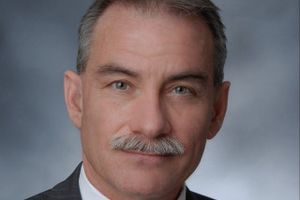
About the author
Robert B. Charles
National Spokesman, AMAC
@Bobby4MaineAll articles by Robert B. Charles →
Expertise
- • U.S. foreign policy and national security
- • Counter-narcotics and international law enforcement
- • American politics and government
- • Leadership, character, and American history
Credentials
- • Former U.S. Assistant Secretary of State, Bureau of International Narcotics and Law Enforcement Affairs (October 2003 - March 2005)
- • Reagan White House staffer (1981-1983)
- • Deputy Associate Director, Office of Domestic Policy, George H.W. Bush White House (1992-1993)
- • Staff Director and Chief Counsel, U.S. House Subcommittee on National Security, International Affairs, and Criminal Justice (1995-1999)


15 Comments