


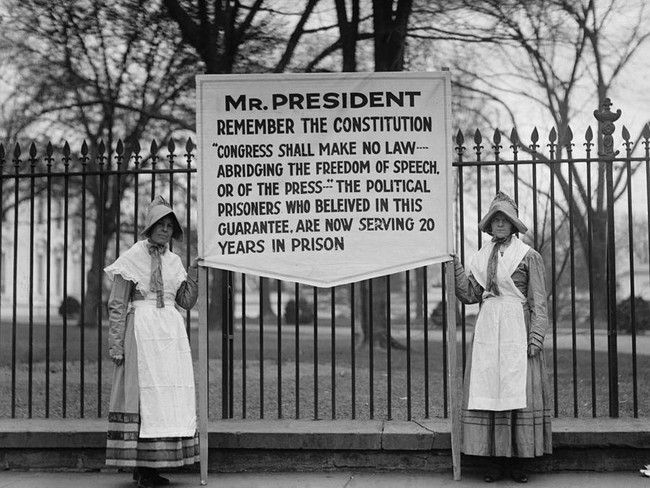
On June 15, 1917, just two months after the United States entered World War I, Congress passed one of the most controversial laws in American history: the Espionage Act. Signed into law by President Woodrow Wilson, the measure was intended to protect national security during wartime by preventing interference with military operations, recruitment efforts, and the broader war effort.
The United States had declared war on Germany in April 1917, and government leaders feared that spies, saboteurs, and anti-war activists could undermine the nation’s ability to mobilize troops and resources. The Espionage Act made it a federal crime to obtain or share information that could aid America’s enemies or interfere with the success of U.S. military operations. It also criminalized efforts to obstruct military recruitment or encourage insubordination within the armed forces. Violators faced severe penalties, including hefty fines and lengthy prison sentences.
Although the law was originally aimed at combating espionage, its reach quickly extended beyond spies. Federal authorities used the Act to prosecute anti-war activists, labor organizers, socialists, and others who publicly criticized the war. In 1918, Congress strengthened the legislation through the Sedition Act, which expanded restrictions on speech by making it illegal to use language deemed disloyal or abusive toward the government, the Constitution, the flag, or the military. Thousands of Americans were investigated or prosecuted under these wartime laws.
The Espionage Act also played a significant role in shaping First Amendment law. Several landmark Supreme Court cases, including Schenck v. United States (1919), tested the balance between free speech and national security. The Court upheld convictions under the Act, ruling that speech posing a “clear and present danger” during wartime could be restricted.
More than a century later, much of the Espionage Act remains in force. While some provisions have been repealed or modified, the law continues to be used in cases involving the unauthorized disclosure of national defense information and classified documents. Its enduring legacy reflects an ongoing debate in American society: how to protect national security while preserving the constitutional freedoms that define the nation.


Comments