



Can the President close USAID by Executive Order (EO)? No, since the agency was reorganized in 1998 by statute, 22 USC 6601, requiring a similar act to close it. However, can he end the agency’s waste, fraud, and abuse by EO, then have Congress reorganize it in a Reconciliation Bill? Yes.
USAID is a unique animal, a $50 billion experiment in saving the world with projects that have – by and large – been pursued with little or no oversight, delivered inconsistent results, profited a handful of contractors by billions, and even produced results at odds with US national security.
The agency’s top ten recipient countries – Afghanistan, Syria, Congo, Somalia, South Sudan, Yemen, Nigeria, Ukraine, and Jordan – are shadowed by public corruption, rights abuses, and terrorism, and yet receive money through often unvetted, hard to trace subcontractors.
These subs, in turn, work for longtime USAID contractors, many on the agency dole for decades, taking in billions, while – in many cases – being fined tens of millions for law-breaking. The combination of hundreds of unreported violations is corroborated in dozens of IG reports.
The most recent IG report is illustrative, and showed up on January 23, 2025, after months of investigation. It details the hidden, arguably insidious, knowingly dishonest process by which USAID money goes to government and nongovernmental organizations, often just disappearing.
Worse, the report shows how patterns of criminal activity, long documented at places like UN agencies, from fraud and misuse of money to sexual exploitation, are often hidden or ignored.
Specifically, it shows three big areas of recent malfeasance, including “resistance from UN agencies and foreign-based nongovernmental organizations to sharing information with the Office of Inspector General about potential misconduct, “limitations on vetting of aid organizations for ties to designated terrorist organizations and known corrupt actors,” and “limitations in obtaining data about USAID-funded sub-awardees,” making accounting for their behavior impossible.
In more detail, the report shows “519 instances of potential misconduct” were not reported to the Inspector General despite specific, contractual obligations by government and nongovernmental entities to do so, with no consequences for the contractual and legal lapse.
Specifically, what USAID and contractors did not do was “enforce the requirement that UN agencies promptly report allegations of fraud or sexual exploitation and abuse directly to the Office of Inspector General.”
Likewise, there was a “failure of UN agencies to share investigative information with the Inspector General,” ranging broadly, but including associations “with Hamas,” potential “food diversion,” employment of those accused of “sexual assault” to “lead humanitarian efforts in Ukraine,” “mismanagement” of programs in “Yemen,” “recirculation of problematic UN staff through the aid sector,” including sexual predators, and failure of foreign-based NGOs to cooperate with information and an inability to sue them, to keep them accountable.
The list goes on, as does the string of prior damning reports. In short, USAID has long been a pool of contractors working for unaccountable, heavily funded employees. While the intent was good, USAID has become a weed garden. It must be realigned with US national security interests.
The best way to do that? President Trump should end the agency’s waste, fraud, and abuse by Executive Order, and have Congress reintegrate the core mission into the State, as part of Reconciliation.
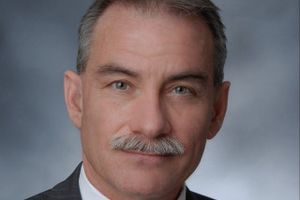
About the author
Robert B. Charles
National Spokesman, AMAC
@Bobby4MaineAll articles by Robert B. Charles →
Expertise
- • U.S. foreign policy and national security
- • Counter-narcotics and international law enforcement
- • American politics and government
- • Leadership, character, and American history
Credentials
- • Former U.S. Assistant Secretary of State, Bureau of International Narcotics and Law Enforcement Affairs (October 2003 - March 2005)
- • Reagan White House staffer (1981-1983)
- • Deputy Associate Director, Office of Domestic Policy, George H.W. Bush White House (1992-1993)
- • Staff Director and Chief Counsel, U.S. House Subcommittee on National Security, International Affairs, and Criminal Justice (1995-1999)


15 Comments