


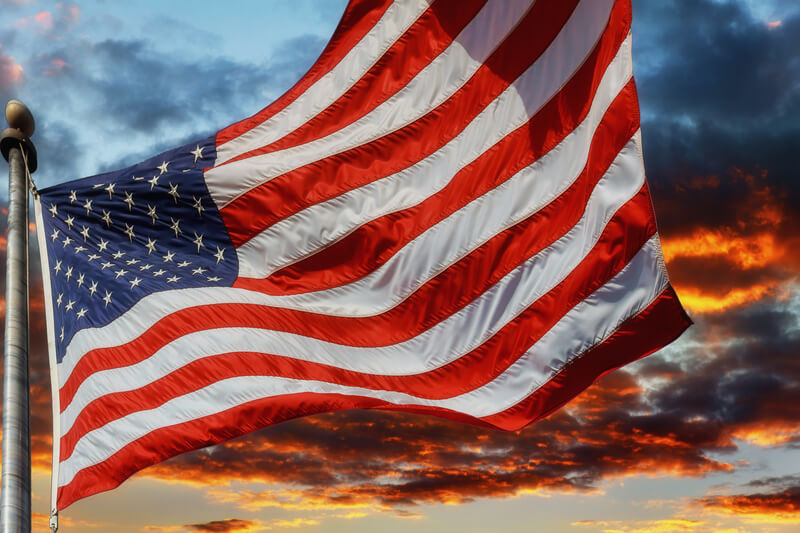
As we stand on the threshold of America’s 250th anniversary, winter’s quiet resolve invites us to pause and reclaim the radical promise of our founding. This is no ordinary moment. Much like the crises that forged our Republic, today’s challenges demand a reawakening to the truths that set America apart.
This is the first in a series of installments on American exceptionalism—what makes this nation unique among the world today and throughout all of history. In this inaugural column, let us celebrate the dawn of American exceptionalism—rooted in our Judeo-Christian heritage—where human dignity as imago Dei, created in God’s image, fuels a society of virtue, liberty, and bold individualism. Here, we defend freedom even for those with whom we disagree, contrasting sharply with the stifling collectivism that reduces people to mere cogs in a utilitarian machine.
Consider the winter of 1776. A fledgling band of colonists, huddled against the cold winds of tyranny, dared to declare independence—not from fleeting passions or material gain, but from timeless truths drawn from Scripture: that all are endowed by their Creator with unalienable rights, including life, liberty, and the pursuit of happiness. This wasn’t, and isn’t, mere rhetoric. It was, and remains, a revolutionary assertion that the government’s role is to protect these God-given dignities, not to grant or revoke them at whim.
As Genesis teaches, humanity bears the divine image, implying inherent worth that no earthly power can erase. Our founders, shaped by this Judeo-Christian ethic, envisioned a nation where virtue flourishes not through coercion but through personal responsibility and moral accountability before God.
Yet exceptionalism is not about perfection; it is about progress through principled struggle. We see this in pivotal moments like abolitionists invoking biblical justice to end slavery, echoing Exodus’s cry for liberation, or civil rights leaders drawing on the prophets’ calls for righteousness amid division. These were not collectivist mandates but individual acts of courage—citizens guided by faith defending freedom for all.
Think of unsung heroes like Hiram Revels, the first Black U.S. Senator in 1870, who bridged Reconstruction’s divides with a commitment to equality rooted in scriptural dignity. Or the frontier families enduring harsh winters, embodying the Protestant ethic of stewardship and self-reliance. Such stories remind us that America’s strength lies in its people—free to innovate, create, and pursue truth without the oppressive hand of centralized control.
Today, as we mark this anniversary, we must confront the encroaching shadows of collectivism. Modern bureaucracies, with their labyrinthine regulations and self-serving elites, mirror the very tyrannies our forebears started a revolution to throw off.
I recall the barber-regulation battle I encountered as a Kansas legislator in the 1990s. The licensing regime was a relic of 18th-century guild rules, when barbers still performed bloodletting. By the 1990s, entering the trade required more than $30,000 in capital—tuition at licensed schools, full-time attendance (forgoing other income), and compliance costs for opening a shop. These barriers limited competition and denied opportunities to aspiring entrepreneurs, especially those from lower-income backgrounds.
Established barbers lobbied fiercely against loosening the licensing requirements, while potential entrants had no organized voice. The effort failed, illustrating how regulations entrench power for the few at the expense of the many. This is the fruit of a system where government expands not to serve but to dominate, turning citizens into dependents.
We’ve bureaucratized and regulated everything. The California legislature has formed a “happiness” committee, which undoubtedly only has the opposite effect of promoting that feeling. The U.S. Congress now has more than 250 committees and subcommittees. Something as simple as removing a tree for a construction project has become a maze of local government permits and approvals that can take months or even years to navigate. Unknowable and uncountable laws are now a constant threat to everyday Americans just trying to get by.
Collectivism conforms, crushes creativity, and converts humanity into utilitarian tools, echoing the idolatries of ancient empires where rulers played god—and where today the worship of government replaces the worship of God.
In contrast, American individualism, infused with Judeo-Christian moral law, sparks expression and innovation. It recognizes objective truth—not subjective whims—and fosters a virtuous society where we defend even adversaries’ rights, as Christ commanded: love your enemies, pray for those who persecute you. This radical grace affords room for mistakes, for growth, for the unexamined life to become worth living through self-reflection and repentance.
American exceptionalism, rooted in individualism, is the antithesis of cancel culture’s unforgiving grip, where fear blinds us to God’s presence, much like the Pharisees who refused to see Christ’s mercy. We wrestle ghosts of division stirred by fear and false hope, amplified by megaphones funded through a mix of foreign adversaries and government-backed nonprofit networks.
What does this mean for us in 2026? As winter soon yields to spring’s renewal, let us recommit to these ideals.
Parents, teach your children the cost of freedom—its suffering, its sacrifice, its joy—as American revolutionary and Declaration of Independence signer John Hart did, losing farm and family yet gaining a legacy.
Leaders, simplify the byzantine codes that entrench corruption, restoring power to families over faceless agencies.
Citizens, embrace the daring spirit: pursue truth amid deception, extend mercy in a joyless world, and build communities where love—not fear—binds us. For if we nurture crassness and isolation, we dismantle the soul; but if we live as forgiven sinners before a holy God, we unleash joy in the midst of war.
America’s experiment endures because we dare to believe in something greater: a nation under God, where virtue flourishes such that we willingly defend freedoms for all. This is our exceptional calling—not in parades or platitudes, but in how we live. This year, we will explore such living together through the stories of America’s past.
The dawn breaks anew. The question is not whether it rises—but whether we will rise with it.



11 Comments