MEET THE AUTHOR
Ben Macintyre
Ben Macintyre is a writer-at-large for The Times (UK) and the bestselling author of Agent Sonya, The Spy and the Traitor, A Spy Among Friends, Double Cross, Operation Mincemeat, Agent Zigzag, Rogue Heroes, and Prisoners of the Castle, among other books. Macintyre has also written and presented BBC documentaries of his work.
1. What did you think of Oleg Gordievsky as a person? Did you admire him, sympathize with him, or question his motives?
He struck me as someone driven by a strong personal conscience. I admired that he rejected a system he believed was morally corrupt, even though it meant putting his life at enormous risk. At the same time, spying against your own country is always complicated, so there was a mix of admiration and unease.
2. Did anything surprise you about the mechanics of Cold War espionage — the communication, disguises, or exfiltration plan?
Yes — the sheer amount of detail, discipline, and choreography behind even the smallest exchange amazed me. The signal chalk marks, the shopping bag dead drops, the layered disguises; it all felt both incredibly meticulous and incredibly fragile.
3. How did this book deepen your understanding of the Cold War and the role of intelligence in shaping global politics?
It showed how much leaders depended on imperfect information and how intelligence could either calm tensions or escalate them. Gordievsky’s insights helped Western leaders understand that Soviet fear, not aggression, was often driving decisions — something that may have kept the world from a dangerous misstep.
4. Was Gordievsky a hero, a traitor, or both? Can betrayal ever be justified in the name of peace?
He was both. To the Kremlin, he was a betrayer; to the West, he was a vital ally who promoted stability. The book invites the idea that loyalty to humanity can sometimes outweigh loyalty to a flag.
5. What long-term effects did Gordievsky’s intelligence have on British and American policies? Did it truly prevent war?
It changed how leaders like Thatcher and Reagan interpreted Soviet intentions. It helped avoid overreactions that could have drawn nuclear powers into conflict. We can’t measure a war that never happened, but his intelligence certainly lowered the temperature.
6. What role did manipulation play in the lives of spies on both sides?
Manipulation was constant — governments manipulating operatives, operatives manipulating relationships, and everyone deceiving one another as part of survival. The psychological cost was enormous. Trust barely existed anywhere.
7. How does the book explore the conflict between personal integrity and national allegiance?
Gordievsky’s journey makes the reader question what “integrity” really means. He abandoned the country he served not because he hated Russia, but because he believed its government betrayed Russian values. His internal conflict shows that allegiance isn’t always to a nation-state, but to a moral compass.
8. What were your thoughts during the dramatic exfiltration sequence? Did it feel like a movie?
Absolutely. It was tense, cinematic, and almost too unbelievable to be true. I caught myself holding my breath because every checkpoint or pause felt like the moment it could all fall apart.
9. How did Gordievsky’s choices affect his personal life, especially his relationship with his family?
His double life created deep distance and eventual loss. His family became collateral damage in a cause they never agreed to. The emotional toll of being separated from his wife and children shows that espionage victories often come with personal heartbreak.
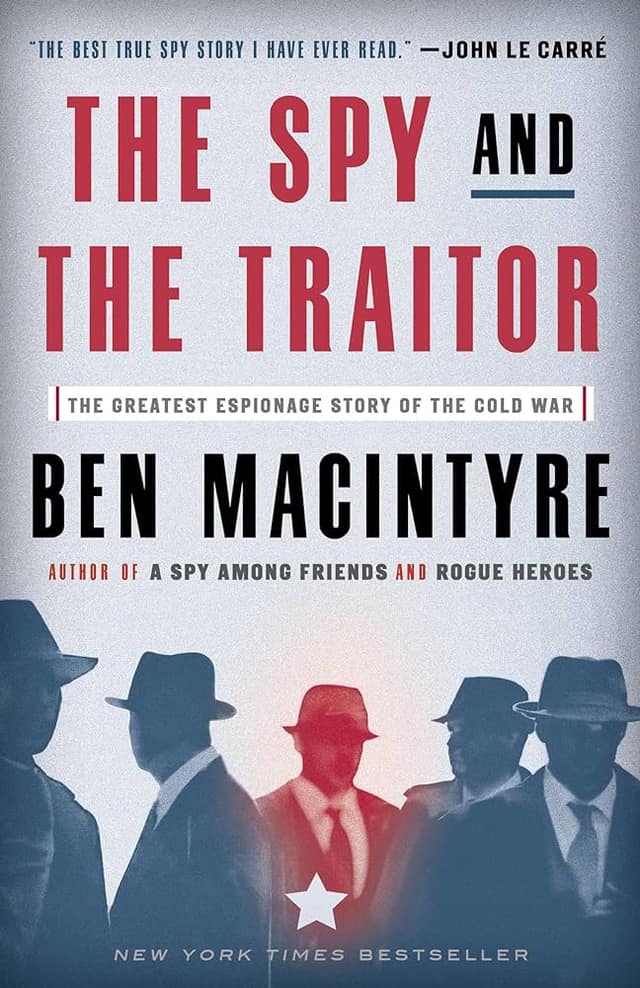
10. How does the title The Spy and the Traitor reflect the different perspectives on Gordievsky’s actions?
It captures the split identity at the heart of the story. Britain saw a courageous spy; the Soviet Union saw a treasonous traitor. The title reminds us that history’s judgment depends entirely on where you’re standing.