
AMC BOOK

UNITED WE READ

BOOK OF THE MONTH
* April, 2026 *
Post Image

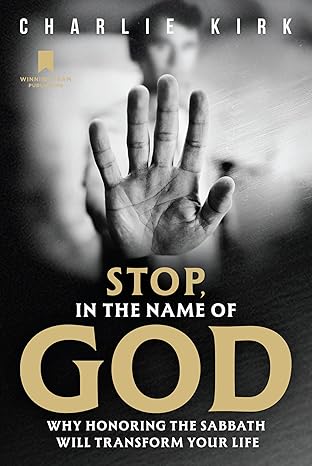
"Stop, in the Name of God"

Why Honoring the Sabbath Will Transform Your Life

By Charlie Kirk | Published: December 9, 2025

AMAC'S ANALYSIS

Stop, in the Name of God is a spiritual and cultural call to rediscover the Sabbath—a weekly day of rest—as a transformative practice in a world overwhelmed by constant busyness and digital distraction. Kirk argues that honoring the Sabbath, rooted in biblical creation and command, isn’t outdated but a powerful way to recharge spiritually, emotionally, and relationally. The book presents Sabbath observance as a rebellion against modern hustle culture, helping readers unplug from screens, deepen relationships, reconnect with God, and find peace, balance, and purpose in life. Practical guidance is offered on how to integrate Sabbath rest meaningfully.

Buy Stop in the Name of God Now!

MEET THE AUTHOR

Charlie Kirk

Charles James Kirk (1993–2025) was an American conservative political activist, bestselling author, and influential media personality. He co-founded Turning Point USA at 18, building it into a nationwide conservative youth movement promoting free markets, limited government, and traditional values. Kirk also hosted The Charlie Kirk Show and wrote several books that energized young Republicans and shaped modern conservative discourse. A polarizing figure and key ally of Donald Trump, his bold rhetoric drew both fervent support and sharp criticism. Kirk was tragically assassinated in 2025 while speaking on a college campus, leaving a complex legacy in U.S. politics.

Author Image
AMC BOOK

Welcome
to the Club!

DISCUSSION QUESTIONS:
  • 1. What does Kirk argue is the highest spiritual cost of constant busyness in modern life? Did you find this convincing or relatable?
  • 2. How does Kirk frame Sabbath-keeping as a form of resistance against hustle culture? In what ways does that idea challenge our current lifestyle norms?
  • 3. What stood out to you most about the biblical foundation for the Sabbath? Did the book change how you view it as a command versus a gift?
  • 4. How does the author connect Sabbath rest to emotional and mental health? Have you experienced rest as something deeper than just “time off”?
  • 5. What role does technology play in the book’s discussion of distraction and burnout? What would it look like for you to truly unplug for a day?
  • 6. The book suggests Sabbath can strengthen relationships. Why do you think rest impacts community and family life?
  • 7. What obstacles make Sabbath observance difficult today (work, culture, expectations, guilt)? Which ones felt most relevant to your life?
  • 8. How does the author describe the difference between leisure and holy rest? Do you think modern “weekends” provide true Sabbath-like renewal?
  • 9. What practical advice in the book felt most realistic or most challenging to implement?
  • 10. After reading, what might a meaningful Sabbath look like for you personally? Would it require major lifestyle changes or small intentional shifts?
Join the discussion below:
Subscribe
Notify of
guest
2 Comments
Most Voted
Newest Oldest
Inline Feedbacks
View all comments
Jimmy Dale Davis
Jimmy Dale Davis
1 month ago

I have read this book A great book

2
0
Would love your thoughts, please comment.x
()
x