




Whether we are turning back socialist tendencies, rebuffing bad ideas, lifting good ones, limiting government, advancing growth, solvency, integrity in government, standing down moral or physical enemies, or just renewing our nation’s spiritual strength, engaging in moral combat – resolve matters.
Success is often a function of resolve, resolve a function of inexplicable optimism, often against odds. Examples are many, but the notion that one can get through, over, beyond the difficult – with enough belief, effort, and stomach for grief – are everywhere. In hard times, recalling them is vital.
Ronald Reagan came to office in 1981. In that year, Soviet ground forces hit 180 divisions, with 50,000 tanks, 20,000 artillery pieces, 5,200 helicopters, 3,500 tactical bombers, thousands of nuclear missiles, intermediate and intercontinental. They were leaning forward. International optimists were few.
Reagan inherited an economy in a dark recession. By 1980, Jimmy Carter’s uncorrected mismanagement of energy, economy, debt, spending, and taxes delivered an inflation rate of 18 percent, unemployment of 7.5 percent, interest rates at 20 percent, arrested growth. Domestic optimism was nowhere.
Yet Reagan resolved and never lost a can-do, keep-your-compass, “thumbs-up,” “morning in America” attitude. Looking back, his leadership and resolve – depthless optimism about America, our government, history, and people – rattled the Soviets.
Reagan seemed to have a window on destiny, know a secret they did not, understand the power of freedom-loving people to surmount obstacles, triumph. Washington had that same secret in the American Revolution, like Churchill, FDR, and the average American soldier in WWII.
Many in the media, doubters within and beyond the Republican Party, many seasoned Democrats, willing to indulge what Reagan was not – including fear, foreboding, end of time – thought he was nuts.
Reagan never wavered. He knew which side was up, where freedom – free people who believe in themselves, limited government, history, and future – leads. He knew tyranny, communism, government dictates, suppression of liberty, command-and-control economies ultimately failed.
In effect, his optimism was born of basic understandings, how human nature works, what lives quietly in Americans, and the timeless, profound instability inherent in government oppression or suppression.
People who know liberty will not, in the end, give it up. They will defend it, at home and abroad. People who do not have liberty, but have the example before them, will seek it, and secure it over time.
Reagan was right. Ten years after he took office, the Soviet Union – all its saber-rattling power, prestige, suppression, annexation, and centralization – was gone. Encouraged by freedom, people across Russia and Eastern Europe threw off the yoke, and history swung round hard to Reagan’s view, his optimism.
Colin Powell, Reagan’s National Security Advisor, later Chairman of the Joint Chiefs and Secretary of State, put the principle succinctly. Not without grounding, but with resolve, “perpetual optimism is a force multiplier.” In his time, he saw the Soviets fold, democracy rise, along with civil and human rights.
Winston Churchill, no stranger to hard realities, was of similar mind and cracker-jack wit. He intoned, “Success consists of going from failure to failure without loss of enthusiasm,” which reduces to resolve premised on inexhaustible optimism.
None of these three leaders – nor Washington, our Founders, or anyone between their time and ours – who has succeeded, missed the stinging reality: Hardship comes, courage is needed, a failure is an option.
But the chances of failure start shrinking, the moment resolve, based on perpetual optimism, kicks in. We know this from our own lives, in athletics, academics, project, and mission completion. When at last we resolve to finish the job, win, not give in, the entire calculus changes.
Whether we are turning back socialist tendencies, rebuffing bad ideas, lifting good ones, limiting government, advancing growth, solvency, integrity in government, standing down moral or physical enemies, or just renewing our nation’s spiritual strength, engaging in moral combat – resolve matters.
Reagan said, without need for amplification: “There are no easy answers, but there are simple answers. We must have the courage to do what we know is morally right.” Said Powell, “A dream does not become reality through magic – it takes sweat, determination and hard work.”
Nor was Churchill a stranger to the truth. He knew the power of can-do, summoning 100 percent from those used to giving 50, but he knew too the battle for the future is never won. He wrote, opening one of his books: “Success is not final, failure is not final: it is the courage to continue that counts.”
So, as we churn toward the end of the year, prepare for another, count blessings, fortify spirits, remember another Reagan truism, one as powerful as any he spoke: “The future doesn’t belong to the fainthearted – it belongs to the brave.” The future is where our resolve and optimism meet whatever comes our way.
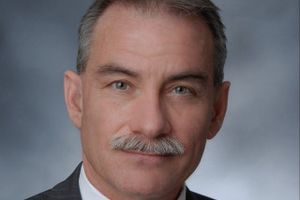
About the author
Robert B. Charles
National Spokesman, AMAC
@Bobby4MaineAll articles by Robert B. Charles →
Expertise
- • U.S. foreign policy and national security
- • Counter-narcotics and international law enforcement
- • American politics and government
- • Leadership, character, and American history
Credentials
- • Former U.S. Assistant Secretary of State, Bureau of International Narcotics and Law Enforcement Affairs (October 2003 - March 2005)
- • Reagan White House staffer (1981-1983)
- • Deputy Associate Director, Office of Domestic Policy, George H.W. Bush White House (1992-1993)
- • Staff Director and Chief Counsel, U.S. House Subcommittee on National Security, International Affairs, and Criminal Justice (1995-1999)


22 Comments