


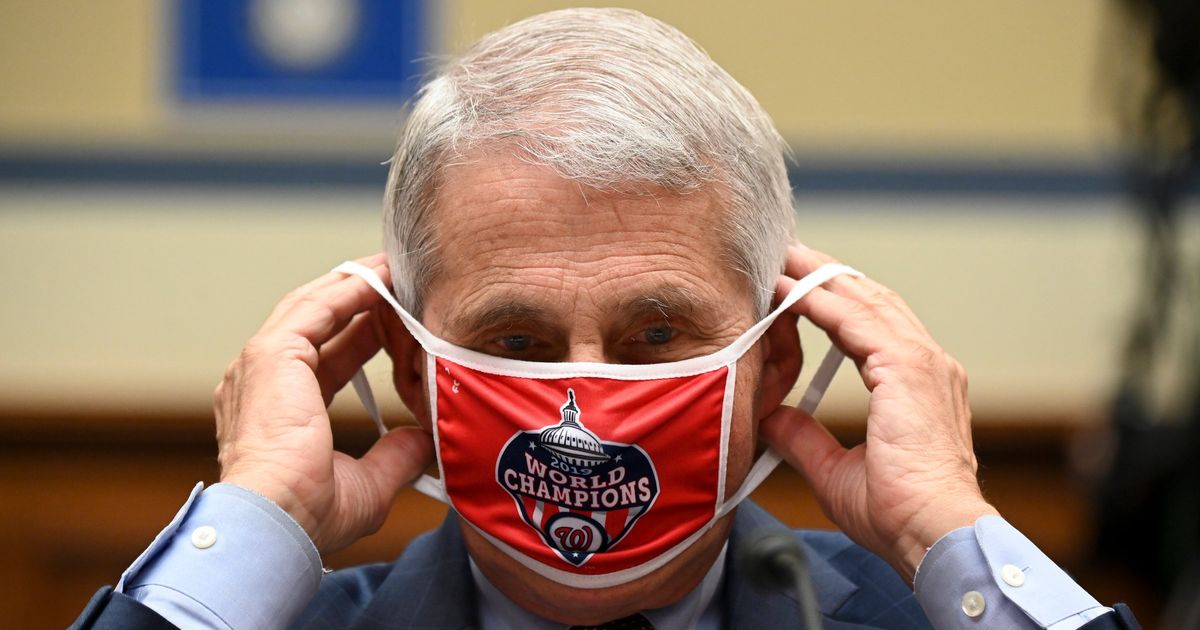
Photo: Erin Scott-Pool/Getty Images
Dr. Anthony Fauci is scheduled to testify before the Senate Homeland Security and Governmental Affairs Committee on Wednesday, July 29, after being subpoenaed by Committee Chairman Senator Rand Paul (R-KY). Lawmakers are expected to question the former Chief Medical Advisor to the President about the federal government’s response to the COVID-19 pandemic, including his public messaging and handling of information about the virus’s origins.
The hearing follows the late June release of newly declassified intelligence documents from outgoing Director of National Intelligence Tulsi Gabbard, which renewed scrutiny of Fauci’s role during the pandemic. The documents allege that Fauci’s public statements during the pandemic, particularly on the possible origins of the virus and its mortality rate, contradicted private information that he had access to.
Notably, the hearing also comes after Senator Paul’s office released thousands of pages from Fauci’s personal journals documenting the earliest months of the COVID-19 outbreak.

Dr. Fauci's own diary, in his own words, shows he knew the lab leak theory was credible from the very first weeks of the pandemic. 10 of 12 scientists on his call believed deliberate insertion was possible. He wrote that the wet market was never the real source. Then he spent the Show more
The journal entries describe internal discussions surrounding the virus’s origins, White House meetings, and Fauci’s interactions with President Donald Trump and other administration officials. They also provide insight into Fauci’s private views as the pandemic unfolded.
One entry dated January 31, 2020, recounts Fauci’s conversation with Jeremy Farrar, then director of the Wellcome Trust, a large nonprofit that funds health and science research, and other scientists about the possibility that the virus escaped from a Chinese lab.
Fauci wrote, “They bring up the possibility that this could have been deliberately inserted and either accidentally released or deliberately released by a crazy person in the lab.” According to the journal, leading scientists disagreed on the likelihood of a lab leak but agreed the theory warranted further investigation.
However, that is not what Fauci presented to the public – or to the country’s political leaders. Instead, Fauci dismissed the lab leak theory entirely, insisting that there was no evidence behind it. We now know that Fauci indeed had reason to suspect that the virus could have escaped from the Wuhan lab where the National Institute of Allergy and Infectious Diseases (NIAID) had funded gain-of-function research. As Director of NIAID, Fauci had signed off on the funding.
Other entries indicate Fauci opposed the Trump administration’s efforts to restrict travel from China in the early days of the outbreak.
The journals also reveal Fauci’s obsession with his growing public profile. In an April 2020 entry, he wrote, “Press still hot and heavy about me. Multiple stories per day directly or indirectly involving me.”
Weeks later, on May 21 – the same day he recorded the latest pandemic statistics of nearly 98,000 global deaths and more than 27,000 U.S. deaths – Fauci described his “national and international fame” as “explosive and really unimaginable,” adding that it was “not hyperbole” to say he had become the “most famous and talked about person in the country.” He also wrote that President Trump was “enamored” with him because, Fauci believed, he was drawing public attention away from the president and noted that he had even received an invitation to appear on Dancing with the Stars.
As the pandemic continued, Fauci expressed frustration over White House communications officials limiting his television appearances and wrote about media coverage portraying him at odds with President Trump.
Wednesday’s hearing will be Fauci’s first major appearance before Congress since the release of the newly declassified intelligence documents and his personal writings. Senators are expected to question him on the government’s pandemic response, the handling of information surrounding COVID-19’s origins, and the discrepancies critics allege exist between his private discussions and his public statements.


53 Comments