
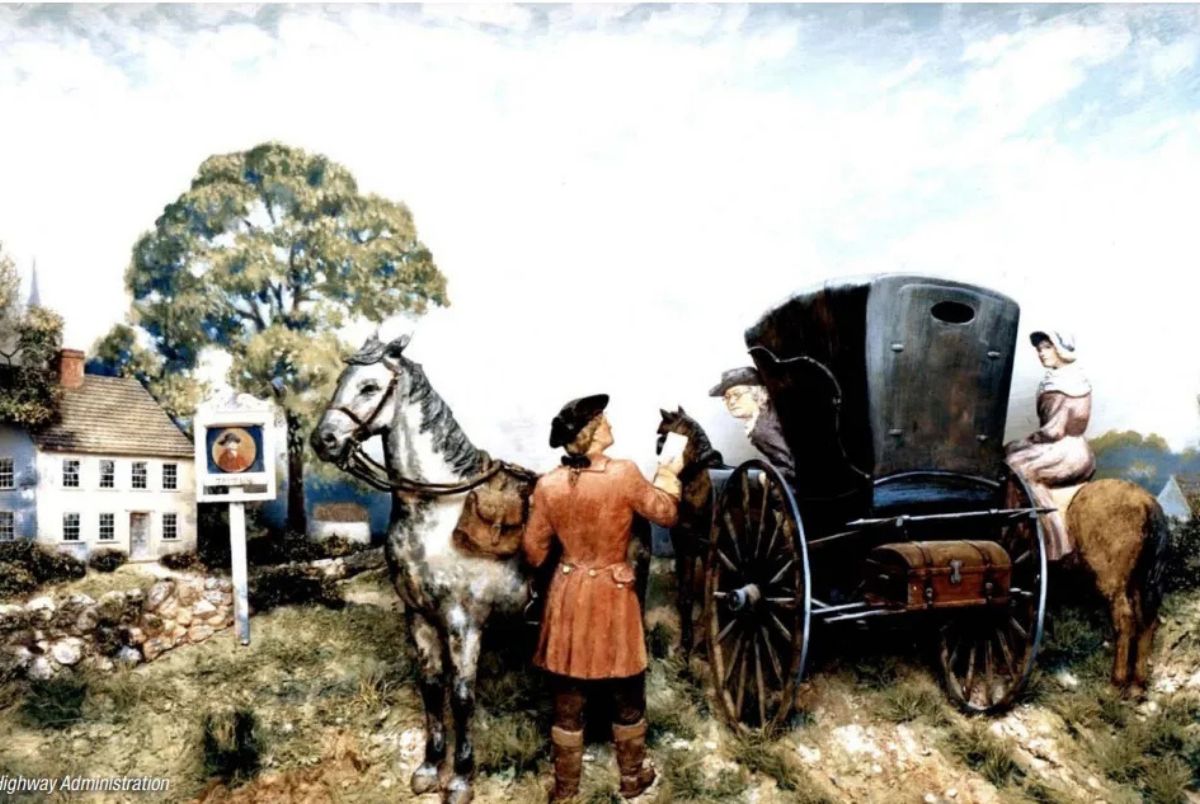

On January 22, 1673, a quiet but world-changing routine began in colonial America: the first regular mail delivery route in what is now the United States officially started, connecting New York and Boston. At the command of King Charles II, the service created a dependable communication link between two major colonies—an early backbone for trade, governance, and everyday life in a sprawling landscape where news once traveled only as fast as whoever happened to be heading your way.
This new “regular” delivery mattered because it introduced something people now take for granted: predictability. Instead of relying on informal couriers, ships, or travelers, colonists could expect messages to move on a schedule. The road that carried this early correspondence came to be known as the Boston Post Road—a name that stuck even though it eventually involved multiple branches and evolved routes. Over time, those paths influenced major transportation corridors that still shape the Northeast today.
The human side of this milestone is just as striking. According to historical accounts of the early mail run, the pioneering post rider’s name has been lost, but the expectations placed on the job were crystal clear: the rider was instructed to conduct himself with “sobriety and civility,” help travelers in distress, and carefully note river crossings, fords, and other practical details for those who would follow. In other words, early postal work wasn’t just delivery—it was navigation, public service, and endurance. The first run reportedly took just under three weeks, underscoring how demanding a “simple” trip between New York and Boston could be in winter, on rough roads, with limited infrastructure.
Importantly, this 1673 route wasn’t the modern U.S. Postal Service yet (that institution would come much later). But it set a precedent: governments recognized that keeping communities connected—politically, economically, and socially—required an organized system for moving information. That concept would expand dramatically over the centuries, as mail traveled by stagecoach, ship, rail, and eventually airplane, keeping pace with a growing nation’s ambitions and anxieties.
So while January 22, 1673, doesn’t come with the drama of a battlefield or the spectacle of a presidential inauguration, it marks a different kind of turning point: the moment communication began to shift from chance encounters to public infrastructure. Every letter dropped in a mailbox today—holiday cards, legal notices, love notes, bills—traces part of its lineage back to that early route and the determination to make distance a little less isolating.

Comments
Do you remember? Share your memory.