
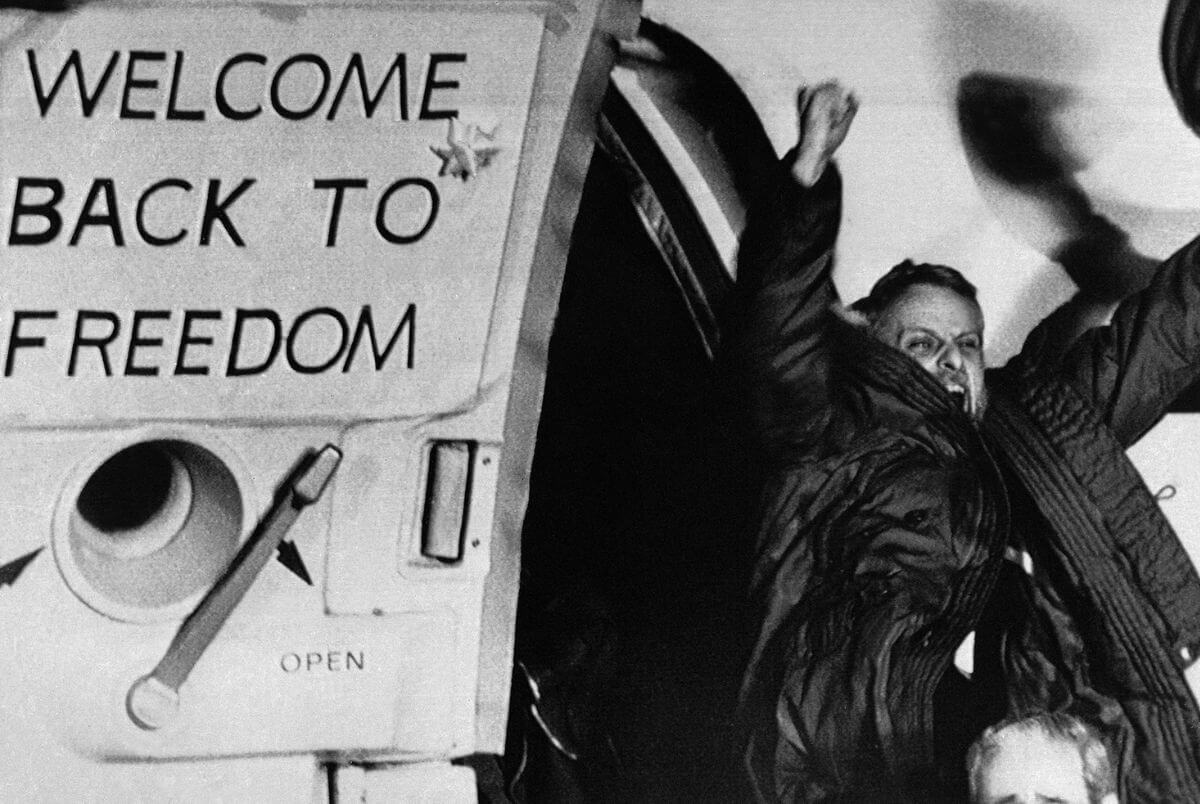

On January 20, 1981, the Iran Hostage Crisis—one of the most tense and televised diplomatic standoffs in modern U.S. history—finally came to an end. Minutes after Ronald Reagan was inaugurated as the 40th president of the United States, 52 Americans held captive in Iran were released, closing the book on an ordeal that lasted 444 days.
The crisis began on November 4, 1979, when militant Iranian students stormed the U.S. Embassy in Tehran (then commonly spelled “Teheran” in American reporting). The attackers were enraged that the United States had allowed Iran’s ousted shah to enter New York City for medical treatment, a decision many Iranians viewed as proof that Washington still intended to prop up a regime they had overthrown.
Soon, Iran’s revolutionary leader, Ayatollah Ruhollah Khomeini, took control of the situation. Appeals from the U.S. government and the international community went nowhere—even after the U.N. Security Council voted unanimously to demand an end to the hostage-taking. Within weeks, however, the captors began selectively releasing some prisoners: all non-U.S. captives, along with female and minority American hostages, whom Khomeini characterized as groups oppressed by the United States. The remaining 52 Americans stayed in captivity for the next 14 months, becoming symbols of a broader geopolitical rupture between the two countries.
The prolonged standoff dominated headlines and weighed heavily on President Jimmy Carter’s administration. A dramatic turning point came on April 24, 1980, when Carter authorized a rescue mission that ended in disaster: eight U.S. military personnel were killed, and no hostages were freed. Even after the shah died of cancer in Egypt three months later, the crisis dragged on.
In November 1980, Carter lost his reelection bid to Reagan, but the diplomatic gears finally began to move. With Algerian intermediaries helping facilitate talks, the U.S. and Iran reached an agreement. On inauguration day, the United States released nearly $8 billion in frozen Iranian assets, and Iran freed the hostages—timed so precisely that their departure came just after Reagan took the oath of office. The following day, Carter traveled to West Germany to greet the Americans as they began their journey home.

1 comment
Do you remember? Share your memory.