
AMAC Action · Advocacy Update
Landmark Victory for AMAC Action & Seniors as President Trump Signs PBM Reform into Law
A major PBM reform victory led by AMAC Action has been signed into law, delivering transparency, accountability, and lower prescription drug costs for millions of seniors.
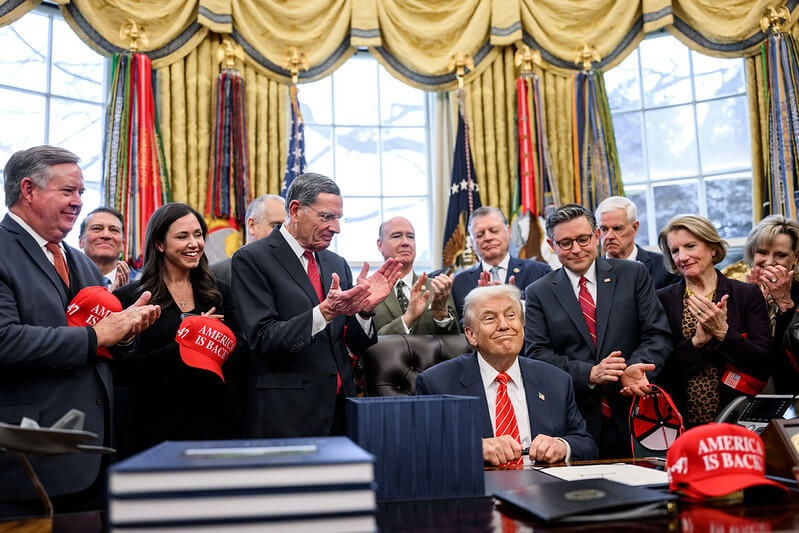
Yesterday marked a decisive victory for AMAC members and millions of seniors nationwide. President Donald Trump signed meaningful pharmacy benefit manager (PBM) reform into law, validating a years-long effort led by AMAC Action and powered by tens of thousands of AMAC members who refused to accept a broken system that drives up prescription drug costs for seniors.
The reforms were enacted as part of legislation funding the Department of Health and Human Services, and they strike directly at the opaque and abusive PBM practices that have distorted drug costs for years. For seniors standing at the pharmacy counter and wondering why their prescriptions keep getting more expensive, this law delivers real accountability, long-overdue transparency, and meaningful relief.
At its core, the new law restores oversight to a Medicare Part D system that has operated in the shadows for far too long. It requires the Centers for Medicare & Medicaid Services (CMS) to clearly define and enforce “reasonable and relevant” contract terms in Medicare Part D, ending the era of vague, one-sided agreements that PBMs have used to squeeze pharmacies and undermine patient access.
Just as importantly, CMS is also now granted enforcement authority to ensure those protections are real and enforceable, not just words on paper.
The law also sheds light on PBM business practices by allowing CMS to track pharmacy payment trends and monitor which pharmacies are included – or excluded – from PBM networks. That transparency is critical for protecting seniors’ access to trusted community pharmacies, particularly in rural and underserved areas where independent pharmacies are often the only source of care.
Perhaps most significantly, the legislation prohibits PBM compensation from being tied to a drug’s list price, a practice commonly referred to as “delinking.” By breaking the link between PBM profits and inflated list prices, the law removes a powerful incentive to favor higher-priced drugs and will help lower costs for Medicare beneficiaries while saving taxpayer dollars.
This victory did not happen overnight. AMAC Action entered the fight against PBM middlemen in 2018, long before PBM reform became a popular idea in Washington. Since then, AMAC Action has launched countless grassroots campaigns, held numerous meetings on Capitol Hill, worked closely with physician and patient advocates, produced in-depth educational content, and activated tens of thousands of AMAC members to demand reform. Yesterday’s signing is the direct result of that sustained pressure.
PBMs were originally created to negotiate lower drug prices, and in their early years, they helped make Medicare Part D one of the most successful public-private partnerships in modern health policy. Today, however, the PBM industry bears little resemblance to that model. Most PBMs are now owned by massive insurance conglomerates and function as profit-generating middlemen embedded throughout the pharmaceutical supply chain. A single insurer-owned PBM can act as a benefit designer, wholesaler, mail-order pharmacy, specialty pharmacy, and more – giving it end-to-end control and end-to-end profit long before a medication ever reaches a patient.
That consolidation has had real consequences for seniors. While brand-name drug prices have risen modestly in recent years, seniors’ out-of-pocket costs have skyrocketed. That gap is no accident. It reflects how PBMs and their affiliates decide which drugs patients can access, how cost-sharing is structured, and how little of a manufacturer’s discount actually reaches the consumer. Premiums rise, formularies narrow, benefits shrink, and seniors are left paying more, often at the very moment they can least afford it.
AMAC members have been instrumental in exposing those abuses. In 2022, AMAC members helped spark a Federal Trade Commission investigation into PBM practices by submitting an overwhelming number of public comments. Of the roughly 24,000 comments the FTC received, 17,000 came from AMAC members. Subsequent FTC interim reports confirmed what AMAC Action had been warning for years: the dominant PBMs marked up specialty generic drugs by hundreds or even thousands of percent, generated billions through spread pricing, and steered highly profitable prescriptions to their own affiliated pharmacies while independent pharmacies were driven out of business. Those costs, inevitably, were passed on to patients.
AMAC Action Senior Vice President Andy Mangione said the reforms signed into law represent a long-overdue turning point for seniors and patients. “For years, PBMs have exploited a lack of transparency and accountability in Medicare Part D to pad their profits while seniors paid more at the pharmacy counter,” Mangione said. “By requiring CMS to define and enforce reasonable contract terms, granting real enforcement authority, shining a light on payment and network practices, and delinking PBM compensation from drug list prices, Congress has finally taken meaningful steps to put patients first. This law will lower costs, protect access to community pharmacies, and deliver long-overdue savings to millions of Medicare beneficiaries, including countless AMAC members who fought tirelessly to make this happen.”
While this law represents a major milestone, the work is not finished. These reforms focus on Medicare Part D, and AMAC Action is already turning its attention to PBM business practices in the private insurance market, where many of the same tactics continue to harm patients and families. Still, yesterday’s signing stands as a powerful reminder of what sustained grassroots advocacy can achieve. When AMAC members speak, Washington listens – and seniors across America are better off because of it.

-768x512.jpg)

11 comments
Join the conversation
Comments