



Photo: Hulton Archive/Getty Images
Edmund Burke, the father of modern conservatism, was outspoken in defense of liberty. His words remain – 250 years later – a prod to action. He felt liberty was only safe in a moral, engaged, active republic. What would he say about our prospects for keeping freedom today? He would warn us.
Wrote Burke, in defense of American freedom: “The only thing necessary for the triumph of evil is for good men to do nothing.” The thought is timeless, argues for action against evil, and vigilance.
When laws are broken with impunity, when lives are imperiled, someone must speak up. When borders are ignored, children and drugs trafficked, and spending is excessive, we must become active.
What else did Burke say? A number of things, each relevant to our moment – oddly, but definitely. He had words for modern political, economic, moral, and cultural debates.
Expanding on his observation above, he said “Liberty does not exist in the absence of morality,” a sentiment strongly held by Washington, Adams, Jefferson, and Madison.
Put differently, if we do not know the difference between right and wrong, actively teach that difference, the two opposites become interchangeable. “Moral relevancy” rises, the notion that untruth, envy, resentment, greed, and oppression are equal – or no worse than – truth, humility, grace, forgiveness, and selflessness. Obviously, a society on that track is doomed, unless corrected.
This leads to a third observation by Burke, proved by events closer to his time, and even in ours. On a personal, state, and national level, “Those who don’t know history are bound to repeat it.” Personally, in a corporate and government setting, we must learn from mistakes, or we repeat them.
Burke has words on “mistakes,” too. While he guides us to study history – our own and governments – he says inaction driven by discouragement, ambivalence, being tired, or willfully lazy is the death of success. Thus, “Nobody makes a greater mistake than he who did nothing because he could only do a little.” In other words, if all you can do is vote, speak, or influence a small circle, do so.
Burke reserves his strongest condemnation for those who enjoy the benefits of others’ sacrifices, who live in a world made good and even great by the work of others, who ignore their duty to preserve it. “The hottest fires in hell are reserved for those who remain neutral in a moral crisis.”
Does that warning not resonate? Are we not in that moment, accosted by those who wish to normalize corruption, laziness, indifference, and indulgence at the price of the past and future? Is this republic, viewed through a political, economic, moral, or cultural lens, not in trouble?
Notably, Burke was as positive as he was cautionary. He had advice for those who – facing long odds, hardship, or personal fear – felt hard pressed to act. He wrote, for example: “When you fear something, learn as much about it as you can – knowledge conquers fear.”
This is how true this is, whether battling a health condition, impending challenge, requirement to act, concern for another, or just daily obligations. We conquer fear by knowing, with perspective.
Finally, Burke – a conservative whose words echo down through the centuries – advised respect for words that echo down through the centuries, and did even in his time. Patience and respect for traditions, the notion that we are the bridge between past and future generations, governed him.
He wrote: “Rage and frenzy will pull down more in half an hour than prudence, deliberation, and foresight can build up in a hundred years.” While he had the French Revolution in mind, the words ring true in our time also. May we not forget that wisdom is piled up from those who lived before us – and free for the asking.
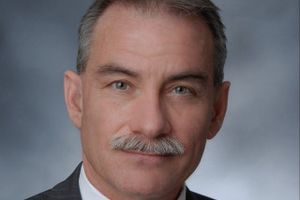
About the author
Robert B. Charles
National Spokesman, AMAC
@Bobby4MaineAll articles by Robert B. Charles →
Expertise
- • U.S. foreign policy and national security
- • Counter-narcotics and international law enforcement
- • American politics and government
- • Leadership, character, and American history
Credentials
- • Former U.S. Assistant Secretary of State, Bureau of International Narcotics and Law Enforcement Affairs (October 2003 - March 2005)
- • Reagan White House staffer (1981-1983)
- • Deputy Associate Director, Office of Domestic Policy, George H.W. Bush White House (1992-1993)
- • Staff Director and Chief Counsel, U.S. House Subcommittee on National Security, International Affairs, and Criminal Justice (1995-1999)


11 Comments