
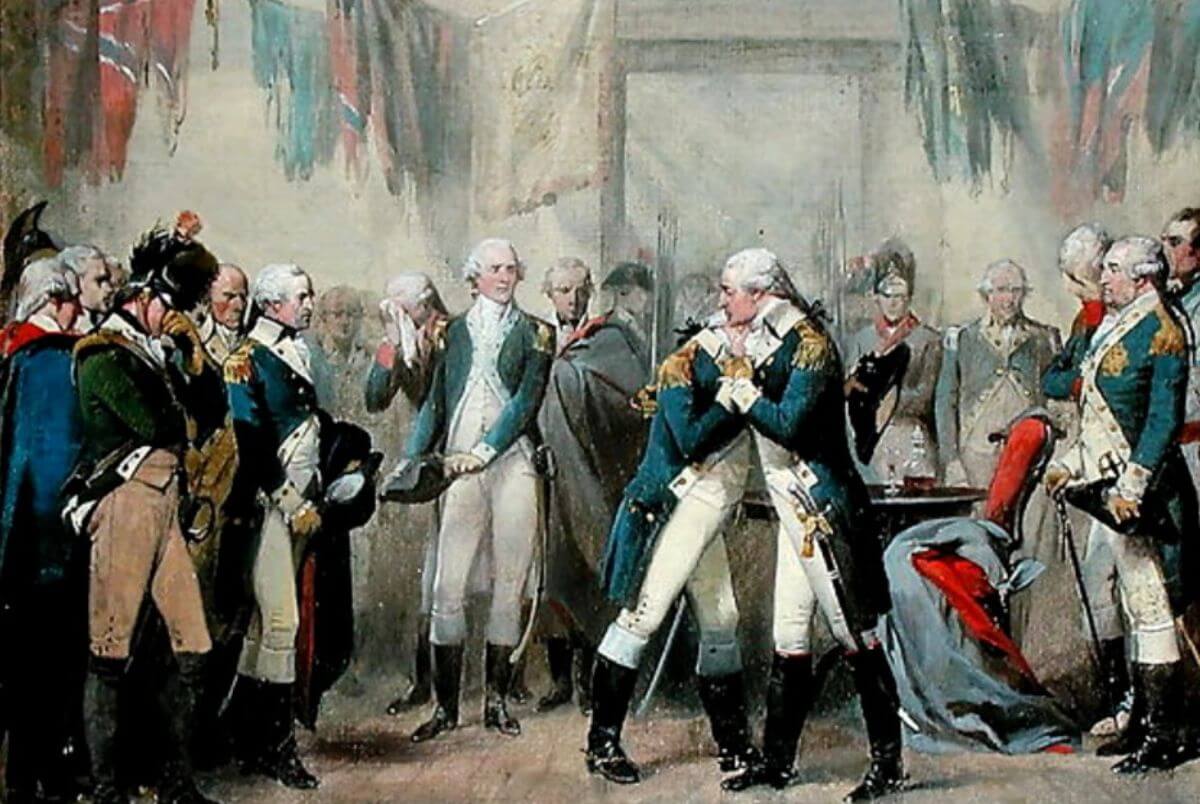

On December 4, 1783, George Washington — then Commanding General of the Continental Army — summoned his senior officers to the Long Room of Fraunces Tavern in New York City. It was here that he delivered an emotionally charged farewell, announcing his intention to relinquish his military commission and return to civilian life.
The Revolutionary War was effectively over: British troops had evacuated New York just days earlier, restoring American control over the city. Washington’s gesture was deeply symbolic — instead of seizing power as many victorious generals might, he chose humility, service, and civilian rule.
At the gathering, Washington addressed the officers with profound sincerity. He reportedly said:
With a heart full of love and gratitude, I now take leave of you. I most devoutly wish that your latter days may be as prosperous and happy as your former ones have been glorious and honorable.
He then invited each officer to come forward and take him by the hand. One by one, the officers rose, many moved to tears, clasped hands, and embraced their leader. Contemporary accounts describe the scene as “a sorrow and weeping…never before witnessed.”
Following the farewell, Washington walked out into the New York streets, greeted by a silent guard of honor lining Whitehall Street; a barge awaited him at the wharf. He boarded and silently departed, bound for Annapolis, Maryland — where on December 23, he would formally resign his commission before Congress.
This act of relinquishing military power stands as one of the most remarkable and influential gestures in American history. In an era when victorious military leaders often seized or clung to power, Washington’s voluntary resignation demonstrated a deep commitment to republican ideals, civilian governance, and the notion that governance should rest in the hands of the people — not a military elite.
The farewell at Fraunces Tavern remains a defining moment: a pause between the birth of a new nation and the start of its experiment in self-governance. Washington’s willingness to surrender power — and walk away — helped set the tone for American democracy and established a powerful precedent. The man who would later become the first President of the United States left behind not only a victorious army, but a lasting legacy: that true leadership often lies not in holding power, but in knowing when to give it back.


3 comments
Do you remember? Share your memory.