
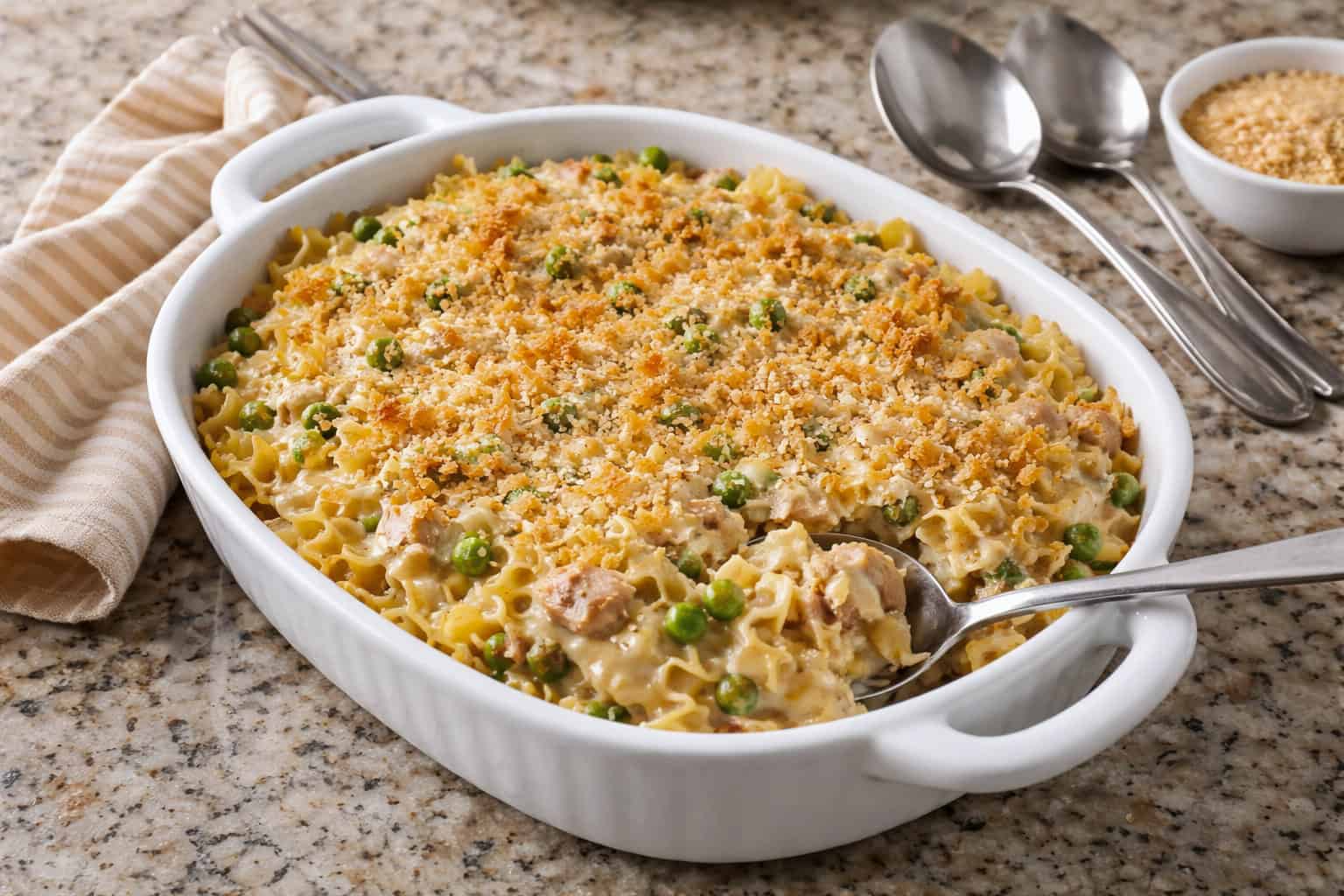

Few dishes evoke the nostalgia of mid-century America quite like Tuna Noodle Casserole. Creamy, hearty, economical, and easy to prepare, it became a staple of family dinners during the 1950s and 1960s. Made with pantry staples like canned tuna, egg noodles, and cream of mushroom soup, the casserole represented a new era of convenience cooking while remaining warm, comforting, and satisfying.
Today, Tuna Noodle Casserole is celebrated as one of America's quintessential comfort foods—a reminder of church potlucks, busy weeknight dinners, and recipes lovingly passed down through generations.
Humble Beginnings
The casserole itself has deep roots in American cooking. The word casserole comes from the French term for a deep baking dish, but one-dish baked meals became especially popular in the United States during the late nineteenth and early twentieth centuries.
Home economists encouraged casseroles because they were practical, affordable, and an excellent way to stretch ingredients. Leftover meats, vegetables, rice, or pasta could all be combined into a single hearty meal that fed an entire family.
When canned tuna became widely available in the early 1900s, it quickly found its way into these baked dishes.
The Rise of Canned Tuna
Before refrigeration became commonplace, canned foods revolutionized American kitchens. Tuna, packed in oil and later in water, offered families an inexpensive source of protein that required no preparation and had a long shelf life.
During both World Wars, canned tuna became even more popular as Americans sought affordable alternatives to fresh meat. By the 1940s, it had become one of the nation's favorite pantry staples.
Its mild flavor and versatility made it ideal for sandwiches, salads, casseroles, and countless other family recipes.
The Convenience Food Revolution
The true rise of Tuna Noodle Casserole came after World War II.
America experienced an explosion of convenience foods that promised to save busy homemakers time in the kitchen. One of the most influential innovations arrived in 1934 with the introduction of condensed cream soups. By the 1950s, cream of mushroom soup had become a pantry essential and the foundation for countless casseroles.
Combined with cooked egg noodles, canned tuna, vegetables, and a creamy sauce, it created a filling meal using ingredients most families already had on hand.
Women's magazines, community cookbooks, and newspaper food columns regularly featured Tuna Noodle Casserole as the perfect weeknight supper. It was economical enough for growing families yet comforting enough to become a household favorite.
A Potluck Favorite
Part of the casserole's enduring popularity was its versatility.
Some cooks added sweet peas, while others preferred celery, onions, mushrooms, or water chestnuts for extra texture. Toppings varied as well. Buttered breadcrumbs created a crisp golden crust, while crushed potato chips or buttery crackers became equally beloved alternatives.
Because it traveled well and could easily feed a crowd, Tuna Noodle Casserole became a fixture at church suppers, neighborhood potlucks, school events, and family reunions throughout the 1950s and 1960s.
For many Americans, the aroma of a bubbling casserole fresh from the oven remains one of the defining scents of home cooking.
A Timeless Classic
Although food trends have changed over the decades, Tuna Noodle Casserole continues to enjoy a loyal following. Many families still prepare the same recipe handed down by parents and grandparents, often with small personal touches that make it uniquely their own.
Today, it stands as a symbol of resourcefulness, comfort, and the enduring appeal of simple home-cooked meals. Whether served on a busy weeknight or at a nostalgic retro dinner party, Tuna Noodle Casserole remains one of America's most beloved culinary classics.



1 comment
Made it? Tell us how it went — or share your family’s version.