

Perhaps the most significant story relating to the U.S. Social Security system these days is the onerous projection of its looming insolvency. Who hasn’t seen the headlines proclaiming Social Security’s impending “bankruptcy” or the incessant warnings of a major benefit cut in just a few years? As most who are following this unfolding story are aware, the root of the problem lies in the steadily evaporating trust fund reserves that have allowed the program to operate in deficit mode since 2021.
A Snapshot of the Problem
Social Security’s combined trust fund balances at the end of 2020 totaled just over $2.9 trillion — reserves that had accumulated over nearly four decades. Then, in 2021, the program reached a point where total incoming revenue was less than the cost of operating the system, marking the beginning of what is projected to be a steady drawdown of these financial reserves. When the trust fund reserves are fully depleted, Social Security benefits will be forced to move to a cash basis, where benefits paid must equal revenues received. The reality of this situation puts program beneficiaries at risk of severe consequences in just a few years. This shift to cash-in/cash-out is projected to result in a substantial across-the-board cut in benefits that will grow as more retirees enter the program.
Why is this Happening?
Depletion of Social Security’s trust fund cash reserves can be attributed to several key factors, beginning with the length of time benefits need to be paid to a growing number of beneficiaries. For example, since 1940 life expectancy for those reaching age 65 has grown substantially, increasing by 9.7% for females and 8.5% for males, a trend expected to continue increasing through the end of the century.
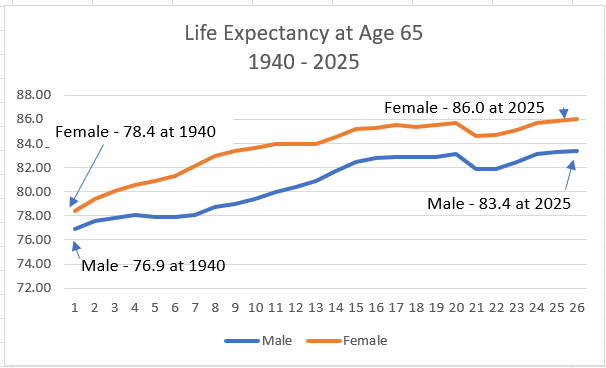
Figure 5 – 2025 Social Security Trustees Report, Table VA4. https://www.ssa.gov/OACT/tr/2025/V_A_demo.html#226697
The fact that American seniors are living longer is indeed a positive societal development, but it presents a challenge to ensuring long-term Social Security solvency. When coupled with another key reason for the insolvency problem — the steadily decreasing taxpayer-to-beneficiary ratio — a clear perspective on the demographic challenges facing Social Security emerges. This ratio has steadily declined from 42:1 in 1945 to 2.7:1 today, with projections indicating continued decline in the years ahead.1
The Old-Age Dependency Ratio
Researchers working to address Social Security’s viability as a retirement support system often point to America’s aging population, using a metric called the Old-Age Dependency Ratio (OADR). This metric compares the share of the population aged 65+ with the share of working-age individuals (15-64), providing a picture of the social service, pension, and health care burden that needs to be addressed to sustain a retirement system effectively. The OADR is calculated by dividing the population aged 65 and over by the population aged 15-64, then multiplying by 100.
Statistics published by the World Bank Group2, an organization dedicated to creating “a world free of poverty on a livable planet,” place the U.S. OADR at 27.7, up from 21.5 a decade ago. By definition, this ratio indicates that for every 100 people of working age, there are 27.7 people over the age of 64. Mathematically, this ratio indicates that there are roughly 3.6 U.S. working-age people for each senior (100 / 27.7 = 3.61). This metric, of course, differs from the taxpayer-to-beneficiary ratio cited above, since not all those aged 15-64 are actually in the workforce. In fact, the labor force participation rate for this age group is roughly 74%, according to some sources. (It is perhaps statistical irony that 74% of the 3.61 factor equals 2.7, the most recently reported taxpayer-to-beneficiary ratio.)
The OADR, in essence, measures the trend toward greater economic and social responsibility shouldered by the working-age population and, as such, aids researchers in developing plans for the long-term sustainability of various retirement programs.
So, How Does the U.S. OADR Relate to Insolvency?
While there’s no direct correlation between OADR and Social Security financing, it’s reasonable to equate an upward trend in OADR with increased financial strain on the system’s pay-as-you-go financing structure. As the proportion of the retirement-age population continues to grow, and as the proportion of the total population — especially the taxpaying portion of the workforce — lags behind this growth, it becomes clear that program changes are needed to reshape Social Security to meet the demands of the 21st-century — and beyond — economy.
It’s a puzzle now confronting Congress, and the steadily turning calendar pages make the search for palatable solutions to Social Security’s financing problems an ever-increasing priority, certainly in the minds of current and future retirees.
[1] Mercatus Center, How Many Workers Support One Social Security Retiree?, https://www.mercatus.org/sites/default/files/worker-per-beneficiary-chart-jpeg.jpg.
[2] https://databank.worldbank.org/source/health-nutrition-and-population-statistics/Series/SP.POP.DPND.OL







Ponzi schemes tend to reveal themselves eventually. I paid in for someone else and when it’s my turn, someone pays for me. However government never gets anything right, they never considered actuary tables that all insurance companies use to determine life expectancy. But I’ve known more people who passed before they received any benefits than people living receiving them. Everything is tied to commerce and the job markets, no jobs no social security taxes, it’s simple but the gov bureaucratic agencies cannot figure that out? Put more people to work. The social security agency is always looking at people who died and are extremely quick to stop and if necessary reverse that last payment. So they are watching, however people who are not entitled or have not contributed but are receiving benefits that’s another story.
In the 1970s, the concern of Social Security funds evaporating was big news. Again in the 1990s … and now as well. I find it uniquely strange that such insolvency is only discussed relative to Social Security. Welfare programs never seem to face such pending catastrophic conditions. And there never seems to be an end for dollars set aside for useless drug abusers, perverted and deviant sexual programs to pour on our children, and the countless free-stuff giveaways available to so-called immigrants. In fact, the fraud in just one of these programs in just one state is now estimated between $20-30 Billion. And there are 49 other states. Yet the big problem always seems to be Social Security. FraGiven that our hapless congress, unable to establish a federal budget, let alone perform in the constraints of one should it ever be defined, have never provided the confidence of Americans to address the future of so-called Social Security.
Reimburse the fund for all the fraud that has gone on for years.
Congress, and any other federal worker, need to pay into Social Security, as any other working American, if they will be drawing from the fund when they retire. If welfare or disability recipients will be drawing from social security, then they need to pay into the fund as well.
Let’s face it, we are well beyond a functioning congress. They can’t get a budget done and we keep going with continuing resolutions. I suspect they will continue to decline in what they can get done and eventually there will be a total economic and societal crash and burn. Too many America hating democrats and too many RINOs. There are probably solutions to most problems, but at this point they will be draconian in nature to get done. And, of course, that will never happen because politicians want to stay in power so they will keep kicking the can down the road until it all comes crashing down. Since I’m only 70 I suspect I will still be here when it happens. Seniors will be the first to die because it will be everybody for themselves. Who will protect us? No one. Chaos will ensue. Ruthless gangs will take over. Raping and pillaging; murder and mayhem. Other countries will invade and try to take advantage of what technology and resources we have. Then the rest of the world will begin declining with the US gone. Doesn’t that sound like such fun? Well, it’s all part of God’s plan. We are basically sinful people and with the moral base of biblical principles that used to guide us gone, what else can you expect. Put your faith in Christ and become a citizen of God’s kingdom so you can live in paradise for the rest of eternity after the end of the world. Time is getting short. Don’t wait!
Eliminating the cap on earnings will shore up some of the deficit but the fraud needs to be addressed also. If people didn’t/don’t pay into it, they should not receive a dime. Looking at you Congressmen and other government workers.
When there’s less people contributing taxes to the fund pool, because they have found ways to earn cash income–undeclared income that they don’t report to IRS as earnings and it also enables these same individuals to qualify for government benefits which also are funded by taxes paid from reported income. So eliminating those who fraud claim on the system and collecting taxes owed should fill up the fund gap
What really bothers me is the event of The North America Free Trade Agreement, which caused so many hiring companies to take jobs over-seas. So many of working age, suddenly were disabled, claimed their benefits. So now we have to rely on foreign imports is so many areas of consumer life. Our jobs base, manufacturing, needs to come back to our shores. Also what about the low birth rate in our country?
Like all other socialist programs, it is not sustainable, because eventually you run out of OPM. Surely this is no surprise to anyone with at least 2 neurons. I would have opted out of SS if permitted, like I opted out of Medicare Part B.
I believe in self-reliance, and self-insurance, not govt programs.
SSI and illegal aliens. I wonder if the brilliant minds who conducted this research accounted for them. When you have more people taking than there are people contributing, then duh. That’s a huge problem. Those of us who paid into the system for 35+ years (or however long your career) are the ones who get shafted.
How about putting the near-future incorporation of AI robots in the place of human workers into this equation? Will FICA/Soc Sec be taken out of their pay? Or if those AI robots belong to the company, they won’t be receiving a paycheck. Anybody even remotely thinking about/considering those ramifications?
That prospect means Soc Sec will be null and void, not only for future retirees but those already retired. And from what I’ve been reading lately, those AI replacements for humans could be in effect by 2030.