
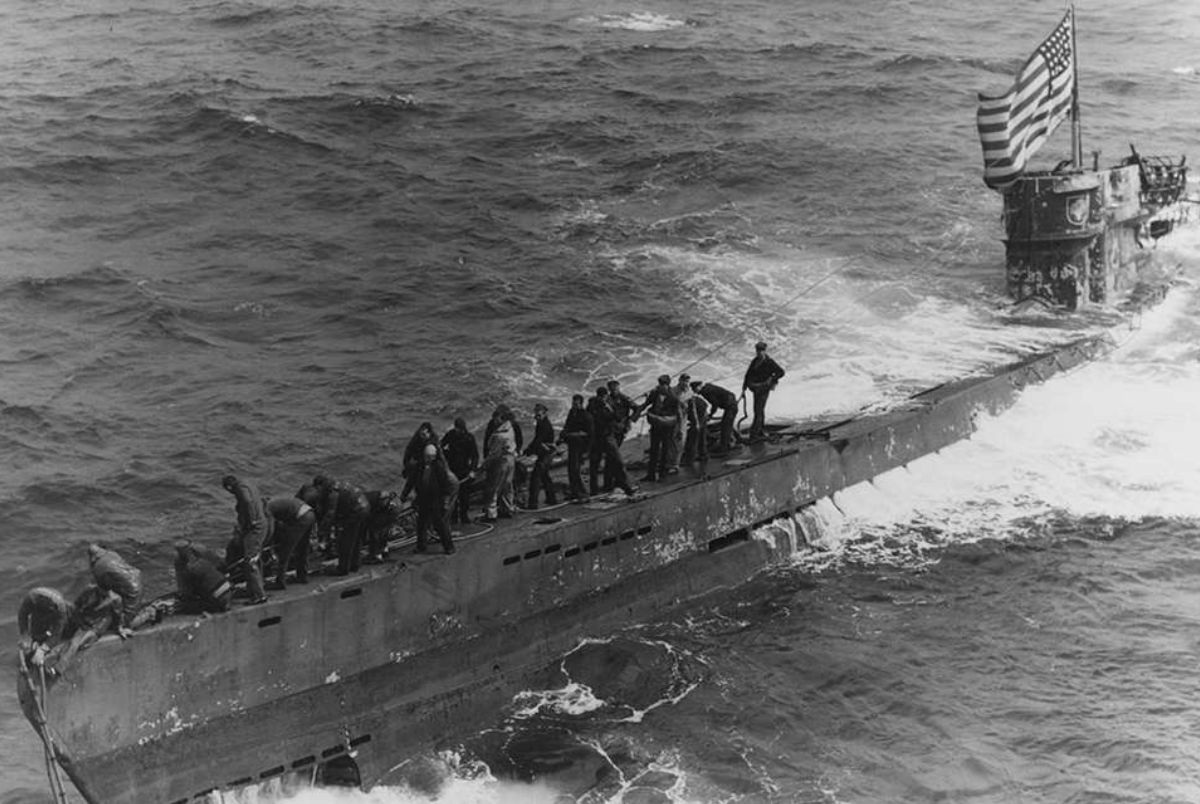
On June 4, 1944, during the height of World War II, the United States Navy achieved one of the most remarkable naval victories of the conflict when it captured the German submarine U-505 off the coast of West Africa. The seizure marked the first time since the War of 1812 that the U.S. Navy had captured an enemy vessel on the high seas. More importantly, the operation provided Allied forces with valuable intelligence that helped strengthen the campaign against Nazi Germany in the Atlantic.
U-505 was a German Type IXC submarine operating as part of the Kriegsmarine’s U-boat fleet, which had spent years targeting Allied shipping routes across the Atlantic Ocean. By 1944, however, Germany’s submarine campaign was weakening as Allied anti-submarine tactics, aircraft patrols, and naval technology became increasingly effective. The capture of U-505 occurred during one of these aggressive Allied anti-submarine operations led by Task Group 22.3, commanded by Captain Daniel V. Gallery aboard the escort carrier USS Guadalcanal.
On the morning of June 4, American ships detected U-505 using sonar and quickly launched an attack. Depth charges damaged the submarine, forcing it to surface unexpectedly. Believing the vessel was doomed, the German crew abandoned ship and jumped into the ocean. In the confusion, however, they failed to properly scuttle the submarine, leaving it vulnerable to capture. Recognizing the opportunity, Captain Gallery ordered a daring boarding operation.
A small team of American sailors crossed to the abandoned submarine while it was still moving in the water. Led by Lieutenant Albert David, the boarding party entered the vessel despite the risk that hidden explosives or flooding could sink it at any moment. Working quickly, they closed valves, disconnected demolition charges, and prevented the submarine from filling with water. Their actions saved the vessel from destruction and allowed Allied forces to tow it to safety.
The capture yielded a treasure trove of intelligence. Inside the submarine, American forces recovered secret codebooks, operational orders, charts, and an Enigma cipher machine used by the German military to encode communications. Although Allied codebreakers had already made significant progress in deciphering German messages, the materials obtained from U-505 provided valuable confirmation of existing intelligence and helped maintain Allied advantages in the Battle of the Atlantic.
Because of the intelligence value of the capture, the operation was kept highly secret. German authorities were never informed that U-505 had been seized intact. The captured crew was isolated in prisoner-of-war camps where their presence remained concealed to prevent news of the submarine’s fate from reaching Germany. This secrecy allowed Allied intelligence efforts to continue without alerting German commanders that sensitive materials had fallen into enemy hands.
Today, U-505 remains one of the most famous captured warships in history. Preserved at Chicago’s Museum of Science and Industry, it serves as a powerful reminder of Allied ingenuity, courage, and determination during World War II. The dramatic capture stands as one of the war’s most successful and daring naval operations.





Important part of. the history concerning the Battle of the Atlantic sounds like the right things were done, at the right time and in the right way. And the courage of the American sailors in.carrying out this mission. to capture that submarine made it possible .
How proud I was to have been able to walk through U-505 with my father who was a US Navy submariner in WWII. I can clearly remember him telling me the German U-Boats were like hotels compared to the US submarines.