
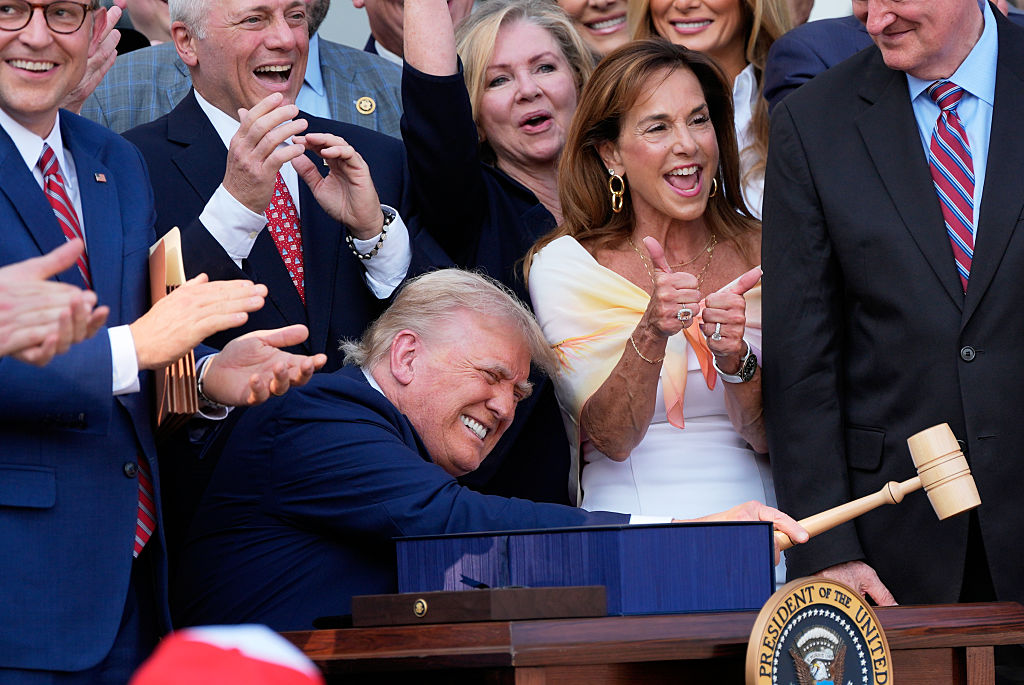
The One, Big, Beautiful Bill Act, OBBB, was signed into law on July 4, 2025, as Public Law 119-21. This act, which takes effect in 2025, has a significant impact on federal taxes, credits, and deductions. Due to the complexity of tax laws, taxpayers are encouraged to visit irs.gov to gain details. Here’s a brief look at some changes that may affect your taxes.
What Does One, Big Beautiful Bill Mean for Tax Season?
The OBBB introduces updated tax provisions that will expand certain deductions and credits on federal tax returns, impacting a broad range of taxpayers by affecting their filings. The Big Beautiful Bill, as it is also called, was passed by the 119th United States Congress and largely reflects U.S. President Donald J. Trump’s second-term agenda. Due to the complexity of the changes, it’s advisable to access resources offered by the IRS, providing online tools and resources to help with tax filing.
Tax Season Timeline and Preparation
Believe it or not, tax season is underway! Officially opening on Monday, January 26, 2026, and ending on April 15, the IRS is ready to accept and process electronic and paper returns for filing 2025 taxes. This means that taxpayers who have all the documents they need (like W-2s and 1099s) can turn their information over to a professional tax preparer or file a tax return themselves. But, ahead of this, it’s helpful to know about new tax rules implemented through President Trump’s One Big, Beautiful Bill Act (OBBB).
Interesting Changes Introduced by OBBB
According to the Bipartisan Policy Center, “Tens of millions of taxpayers are expected to receive larger refunds due to the 2025 One Big Beautiful Bill Act (OBBB), which increased the standard deduction and the Child Tax Credit (CTC). Millions more can claim new deductions for tips, overtime income, and auto loan interest, while Americans 65 and older can claim a $6,000 seniors deduction.” Other changes include higher caps on state and local tax (SALT) deductions that can benefit taxpayers who itemize. Because President Trump signed OBBB into law in 2025, some changes became retroactive effective from January 1 of that year, benefiting taxpayers for the entire year.
Key Provisions of the OBBB
Let’s break down some of these changes:
Increase in Standard Deduction for Individuals
A standard deduction is a fixed amount that non-itemizers can subtract from their income before income tax is applied. OBBB has increased this amount from $15,000 (for a single taxpayer filing an individual return) and $30,000 (for married taxpayers filing a joint return) to $15,750 and $31,500, respectively. And it goes up in 2026 to adjust for inflation. If you can itemize your tax return, meaning you use valid expenses to claim a deduction, that may give you a bigger tax benefit overall. There are some main expenses that can be itemized, such as home mortgage interest, state/local taxes, gifts to charity, medical and dental, losses in a disaster area, and some other specialized deductions. If you itemize, and your itemized deductions are lower than the standard deduction, you should take the standard deduction. Understand that if you take the standard deduction, you cannot itemize. Increasing the standard deduction is beneficial for many low-to moderate-income households as it reduces the amount of income subject to taxation. Unsure of what to do? Head to the IRS website to see who must itemize and learn more about the difference between standard and itemized deductions.
Child Tax Credit (CTC) Updates
This is a tax credit for parents with dependent children that reduces tax liability. In the preceding tax year, it was $2,000 per child. The OBBB bumped it up permanently to $2,200 per eligible child (under age 17 at the end of the tax year) and indexed it for inflation so that it can grow. CTC is designed to make the cost of raising children more affordable by offsetting federal income tax owed. Designed for low-to-middle income families, the value increases with earnings but is phased out at higher income levels. Per the Center on Budget and Policy Priorities, “The Child Tax Credit boosts families’ incomes and is an effective tool for reducing poverty nationwide. The credit lifted 4.1 million people – including 2.4 million children – above the poverty line in 2024.”
Reduced Tax on Tips/Overtime
The OBBB allows millions more taxpayers to claim new deductions for tips and overtime income, reducing their overall tax liability. Though called “No Tax on Tips” and “No Tax on Overtime,” it essentially means that certain workers can claim a dollar-for-dollar deduction for a designated amount of tips and/or overtime pay. For instance, income eligible for the tips deduction is capped at $25,000, and higher-income workers may only be able to claim a partial deduction as benefits phase out. Likewise, there is a cap for income eligible for “No Tax on Overtime,” at $12,500 (Single) and $25,000 (Married Filing Jointly). Higher-income workers may claim partial deductions as benefits phase out. Also, neither deduction is available for people using the Married Filing Separately status. The person receiving tips or overtime must have a valid Social Security number, plus an employer designation on a W-2 or other applicable form. However, a special rule in 2025 allows employers to approximate overtime. Talk to your CPA or visit the IRS website for more information.
Auto Loan Interest Deduction
If you’re buying a new car and taking out a loan, this new tax deduction, effective from 2025 to 2028, can help by allowing you to deduct your loan interest. However, there are some caveats. For instance, automobiles must be used for personal and non-commercial purposes and must have a “final assembly” in the U.S. To qualify, the Vehicle Identification Number (VIN) must be presented on the tax return. Additionally, the deduction is limited to $10,000 of qualified interest, and the rule is phased out at 20% for Modified Adjusted Gross Income (MAGI) over $100,000 (Single) and $200,000 (Married Filing Jointly). Per Taxcontroversy.com, “For many people planning to buy a new car during this period, the deduction provides a simple way to reduce their taxable income while supporting American-made vehicles.”
The Seniors’ Deduction
Some good news is here for seniors, but for a limited time only, unless extended in the future. Effective from 2025 to 2028, in addition to the standard deduction (or itemized deduction), taxpayers aged 65 and up can take an additional $6,000 off their taxable income ($12,000 for married couples). Of course, seniors who take this deduction must have a valid Social Security number and be filing single or joint tax returns. Excluded are those who are using the Married Filing Separately status. Note that the increased deduction for seniors has limitations and begins to decrease for taxpayers with a Modified Adjusted Gross Income (MAGI) over $75,000 (single) and $150,000 (joint). Overall, the temporary senior deduction can tremendously help qualifying seniors within certain income thresholds. Per an article shared by CNBC, Miklos Ringbauer, CPA, founder and principal of MiklosCPA, Inc., said, “This three-year window is an incredible, valuable opportunity.” He explains, “It’s three times $12,000, plus adjusted inflation,” a whopping yet limited-time savings for seniors. It’s important to underscore that the bill did not eliminate federal income taxes on Social Security benefits.
SALT Deduction
SALT is an acronym for state and local taxes. This includes income, sales, and property taxes paid to state/local governments. The SALT deduction affects qualifying individuals who itemize their taxes on their federal tax return by allowing for a larger deduction of property taxes and state income taxes. For the 2025 tax year, the State and Local Tax (SALT) deduction cap is increased to $40,000 for single and joint filers with incomes below $500,000. This temporary big increase, which stems from OBBB’s new legislation and runs from 2025 to 2029, rose from $10,000 – quadrupling the previous limit. This increased cap can provide significant tax relief for homeowners, especially for residents living in high-tax states. This can help reduce taxpayers’ overall tax liability, which basically means that taxpayers will owe less federal income tax or receive a larger refund, a win for those who qualify.
Additional OBBB Tax Provisions
- Trump Accounts for children: This offers a new tax-deferred savings account for children under 18 and allows contributions up to $5,000 annually. The government will also contribute a one-time $1,000 for eligible children born between 2025 and 2028. The goal is to build long-term financial security for millions of children under the age of 18.
- Real estate investors can realize a permanent 100% additional first-year depreciation deduction for qualifying property improvements and equipment, which delivers tax benefits.
- Homeowners with specific types of loans (FHA, VA & conventional) can now permanently deduct mortgage insurance premiums, which can help reduce the cost of low-down-payment loans.
- Charitable Deduction for non-itemizers: Beginning in 2026, taxpayers who don’t itemize can now deduct up to $1,000 (single) or $2,000 (joint) in cash donations.
- The 20% qualified business income (QBI) deduction will become permanent, with phase-in ranges for limitations. The deduction would have expired at the end of 2025, along with other provisions of the Tax Cuts and Jobs Act of 2017. This change allows pass-through business owners to deduct up to 20% of their qualified business income. Additional benefits include preservation of the 1031 exchange and enhancement of Opportunity Zone benefits.
The Importance of Understanding OBBB
President Trump’s “Beautiful” bill introduces new tax laws affecting U.S. individuals and businesses required to file returns. A major goal is to get the country on a better track and to deliver hardworking people an improved way of living. Though largely beneficial, these and other changes in tax laws and regulations may complicate self-filing, particularly for business owners or high earners with multi-state income. Since taxpayers are responsible for their filings, and errors can lead to penalties or missed deductions, those unfamiliar with the updates are encouraged to consult a CPA or tax professional.
For more detailed information regarding OBBB, visit www.irs.gov
Disclosure: This article is purely informational and is not intended as a substitute for tax or other professional advice. People are encouraged to talk to their tax advisors and understand IRS rules and regulations as they apply to personal or business interests.
[adrotate banner=”1094″]






Thank you President Trump.
Do we have to pay taxes on Social Security? The place that I went to have my taxes done added the Social Security amount to my TRS amount. That is why I am asking.
You want to know what it meant to me. My Dear Wife Wife of over 45 years Died Last March. Less than three months work. I filed our / her last taxes…. 2345.00 I owe the IRS. Can someone please explain this to me ??? People need to look into what happens with taxes through their life’s. May God above please have Mercy on us. In Christ’s holy name I pray.
Such a great article, it is so informative. I use a tax professional, but even I can see more $$, in my life. Thank you AMAC, and thank The leadership of our excellent, man of the people, Donald J Trump.