
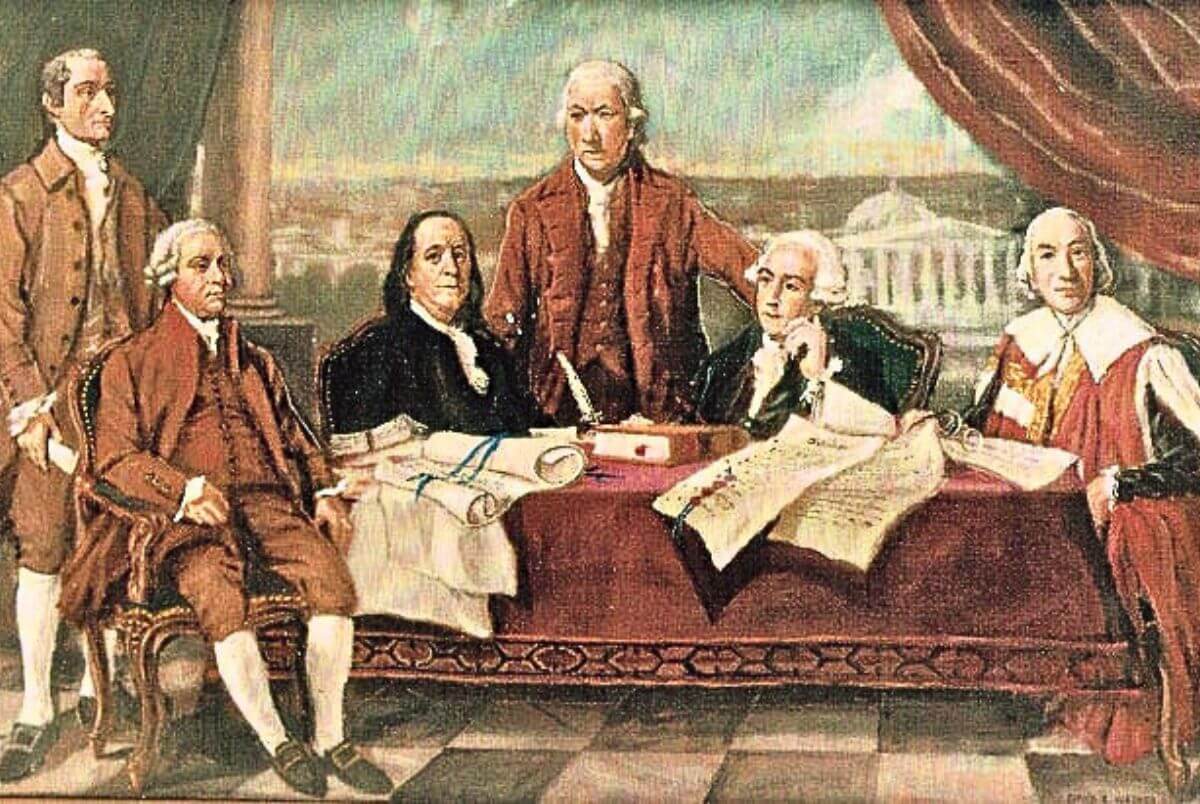
On September 3, 1783, the Treaty of Paris was signed at the Hotel d’York in Paris, a townhouse located at what is today 56 Rue Jacob in the city’s 6th arrondissement. This document marked the official end of the American Revolutionary War and represented a turning point in world history: the formal recognition by Great Britain of the independence of the United States of America.
Although open hostilities had effectively ceased after the British surrender at Yorktown in October 1781, the process of achieving peace was long and complex. Preliminary articles of peace had been signed on November 30, 1782, but it took nearly another year for negotiators to finalize the terms and secure approval from all sides. The definitive treaty was not completed until the following September.
On the American side, three of the new nation’s most skilled diplomats—Benjamin Franklin, John Adams, and John Jay—represented the United States. Across the table sat David Hartley, a member of Parliament and close friend of the American cause, who represented Great Britain. Their signatures on the Treaty of Paris signaled not just the end of eight years of conflict but also the beginning of a new chapter in international relations.
The treaty’s provisions went far beyond simply declaring peace. Britain acknowledged the United States as a “free, sovereign, and independent” nation and granted generous territorial boundaries that extended westward to the Mississippi River, north to Canada, and south to Spanish Florida. This vast territorial concession more than doubled the size of the young republic and laid the groundwork for future expansion. The treaty also guaranteed Americans valuable fishing rights off Newfoundland and Nova Scotia, which were vital to the economy of New England.
Other provisions included agreements that creditors on both sides would be able to collect debts owed before the war, and that Congress would recommend the restitution of property to Loyalists who had supported Britain. While these measures were not fully honored in practice, they highlighted the treaty’s attempt to mend the deep divisions caused by the war.
Ratification was the final step in making peace official. The Continental Congress ratified the treaty on January 14, 1784, a date later commemorated as Ratification Day. Britain ratified it soon after, on April 9, 1784, and the formal exchange of documents took place in Paris on May 12, 1784. With these final acts, the Revolutionary War was legally concluded.
The signing of the Treaty of Paris remains a defining moment in both American and global history. It not only secured independence for the United States but also reshaped the balance of power, inspiring movements for self-determination around the world.



Join the conversation
Comments