
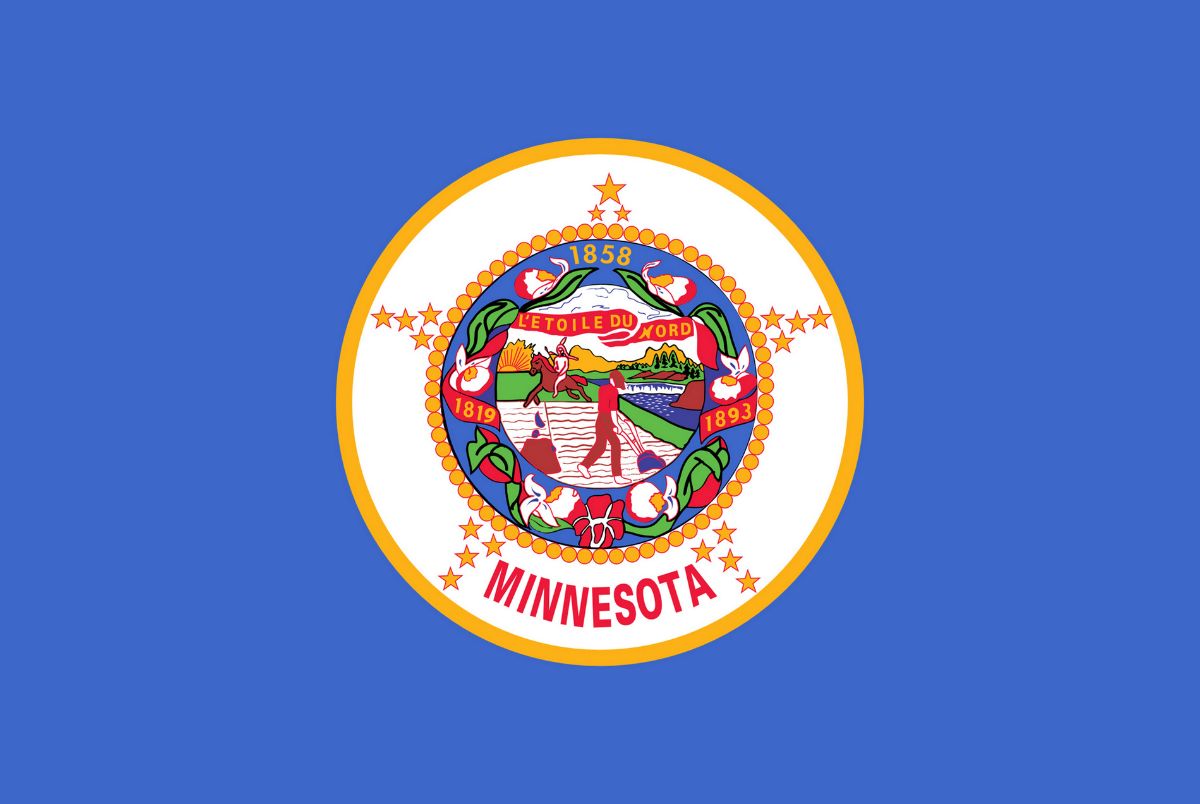
On May 11, 1858, Minnesota officially entered the United States as the nation’s 32nd state, marking a major milestone in America’s westward expansion and the rapid development of the Upper Midwest. Known as the “Land of 10,000 Lakes,” Minnesota’s admission reflected both its strategic geographic importance and the explosive population growth that had transformed it from a remote frontier into a thriving territory in less than a decade.
Long before statehood, the region was home to Indigenous peoples, particularly the Dakota (Sioux) and Ojibwe (Chippewa), who lived across the land without the fixed borders later imposed by settlers. European influence began in the 17th century with French explorers and fur traders, followed by British control and eventually American acquisition after the Revolutionary War and the Louisiana Purchase. Over time, these transitions laid the groundwork for settlement, trade, and eventual incorporation into the United States.
By the mid-19th century, Minnesota’s transformation was dramatic. After becoming a U.S. territory in 1849, the population surged from about 6,000 residents in 1850 to more than 150,000 by 1857. This rapid growth was fueled by migration from eastern states and Europe, particularly from Germany, Ireland, and Scandinavia. Settlers were drawn by fertile farmland, access to waterways, and the promise of economic opportunity. Railroads, river routes, and trade networks helped turn small settlements into growing communities, especially around Fort Snelling and the emerging cities of Minneapolis and St. Paul.
Despite its growth, Minnesota’s path to statehood was not without obstacles. The application for admission became entangled in the national debate over slavery, particularly the controversial issue of Kansas statehood. At the time, Congress often admitted states in pairs—one free and one slave—to maintain political balance. Minnesota, a free state, faced delays as lawmakers argued over whether Kansas would enter the Union as a slave state under a disputed constitution. These tensions, part of the broader sectional conflicts leading to the Civil War, postponed Minnesota’s approval for several months.
When Congress finally approved Minnesota’s admission on May 11, 1858, President James Buchanan signed it into law, formally welcoming the state into the Union. However, due to limited communication networks—no telegraph lines or railroads—news of statehood did not reach St. Paul for nearly two weeks. The announcement had to travel by steamboat along the Mississippi River, a reminder of how distant and undeveloped the region still was despite its rapid growth.
Minnesota quickly established itself as a vital contributor to the nation. Its agricultural output, particularly wheat, would become crucial during the Civil War, and its residents strongly supported the Union cause. Over time, the state’s economy expanded through farming, logging, and industry, helping to shape the broader development of the American Midwest.
Today, Minnesota’s admission is remembered as a key moment in U.S. history—one that reflects the complex forces of expansion, migration, and political conflict that defined the 19th century. On that May day in 1858, a frontier territory became a state, helping to shape the nation’s future while embodying both its opportunities and its challenges.







“Despite its growth, Minnesota’s path to statehood was not without obstacles. The application for admission became entangled in the national debate over slavery. . . . ”
”Today, Minnesota’s admission is remembered as a key moment in U.S. history—one that reflects the complex forces of expansion, migration, and political conflict that defined the 19th century.”
Who knew, back in 1858, that Minnesota would become the cradle of The Quality Learing Center and placing tampoons in boy’s bathrooms.
(Of course, this is what the Left calls “progress”).
My dad was born in Loman, MN in 1903 – near the Canadian border. Now we need a solid businessman and patriot like Mike Lindell to take over as governor.
All great notions start out with good intentions however greed, lust and power has overshadowed what could have been. Career politicians without term limits, lobbyists and payouts have always destroyed government from the inside and integrity has been replaced with business as usual corruption.