
Stress is something we all deal with—but not all stress affects the body the same way. Whether it’s short-lived or ongoing, stress has a powerful impact on how you eat, what you crave, and how your body stores energy.
Acute vs. Chronic Stress
Acute stress is short-term. It’s the kind you feel when you’re stuck in traffic, running late, or dealing with a stressful moment in your day. Even though it’s temporary, it can still increase your urge to eat, even if you’re not physically hungry.
Chronic stress, on the other hand, is ongoing. It builds over weeks or months and takes a much bigger toll on your health. Over time, it creates a pro-inflammatory state in the body and is strongly linked to chronic conditions like obesity, metabolic dysfunction, and fatigue.
How Stress Impacts Your Diet and Body
Stress influences your health in two major ways:
- It changes your eating behaviors.
When you’re stressed, you’re more likely to reach for comfort foods, typically those high in sugar, fat, and calories. - It promotes fat storage.
Stress hormones like cortisol create an environment that favors fat storage and weight gain, often referred to as an obesogenic state.
If you’ve ever noticed stronger cravings for “comfort foods” during stressful periods, there’s a reason. These foods trigger the release of dopamine, the brain’s “feel-good” chemical, which can temporarily improve your mood.
Why Nutrition Matters More During Stress
Stress depletes key nutrients your body relies on to function well.
If you don’t replenish these nutrients, you may start to feel:
- More fatigued
- Mentally foggy
- Overwhelmed or burned out
A nutrient-dense, balanced diet can help regulate appetite, support hormone balance, and improve your resilience to stress. In alignment with the new U.S. dietary guidelines, focus on eating a wide variety of whole, colorful foods to give your body what it needs to think clearly and feel your best.

Key Nutrients to Prioritize During Stress
Vitamin C
What it does:
- Supports adrenal function and helps regulate cortisol
- Boosts immune health during times of stress
- Acts as an antioxidant to reduce inflammation
Signs you may be low:
- Frequent colds or slow healing
- Fatigue or low energy
- Bleeding gums or easy bruising
Eat more of:
- Bell peppers
- Oranges, strawberries
- Broccoli
Magnesium
What it does:
- Calms the nervous system and promotes relaxation
- Supports sleep quality
- Helps regulate blood sugar and stress hormones
Signs you may be low:
- Trouble sleeping
- Muscle cramps or tension
- Anxiety or irritability
Eat more of:
- Leafy greens (kale, Swiss chard)
- Almonds
- Pumpkin seeds
B Vitamins
What they do:
- Support energy production at the cellular level
- Help regulate mood and brain function
- Aid in stress hormone metabolism
Signs you may be low:
- Low energy or burnout
- Brain fog or poor focus
- Mood changes or irritability
Eat more of:
- Avocado
- Legumes
- Poultry
Electrolytes
What they do:
- Maintain hydration and fluid balance
- Support nerve signaling and muscle function
- Help regulate blood pressure
Signs you may be low:
- Fatigue or dizziness
- Headaches
- Muscle weakness or cramps
Eat more of:
- Avocado
- Coconut water
- Sea salt
Zinc
What it does:
- Supports immune function
- Helps regulate stress response
- Aids in hormone production
Signs you may be low:
- Frequent illness
- Hair thinning
- Poor wound healing
Eat more of:
- Oysters
- Beef
- Pumpkin seeds
Vitamin E
What it does:
- Protects cells from oxidative stress
- Supports brain and skin health
- Works alongside vitamin C as an antioxidant
Signs you may be low:
- Dry skin
- Weak immune function
- Nerve-related symptoms
Eat more of:
- Almonds
- Salmon
- Sunflower seeds
Amino Acids (Protein)
What they do:
- Build neurotransmitters like serotonin and dopamine
- Support muscle repair and recovery
- Help stabilize blood sugar
Signs you may be low:
- Low mood or motivation
- Cravings for sugar
- Weakness or slow recovery
Eat more of:
- Animal proteins
- Legumes
- Nuts and seeds
Choline
What it does:
- Supports brain function and memory
- Helps regulate the nervous system
- Aids in liver detoxification
Signs you may be low:
- Brain fog
- Memory issues
- Fatigue
Eat more of:
- Eggs
- Liver
- Salmon
Omega-3 Fatty Acids
What they do:
- Reduce inflammation
- Support brain and mood health
- Help regulate stress hormones
Signs you may be low:
- Mood swings or depression
- Dry skin
- Joint pain
Eat more of:
- Wild salmon, sardines
- Chia seeds
- Grass-fed beef
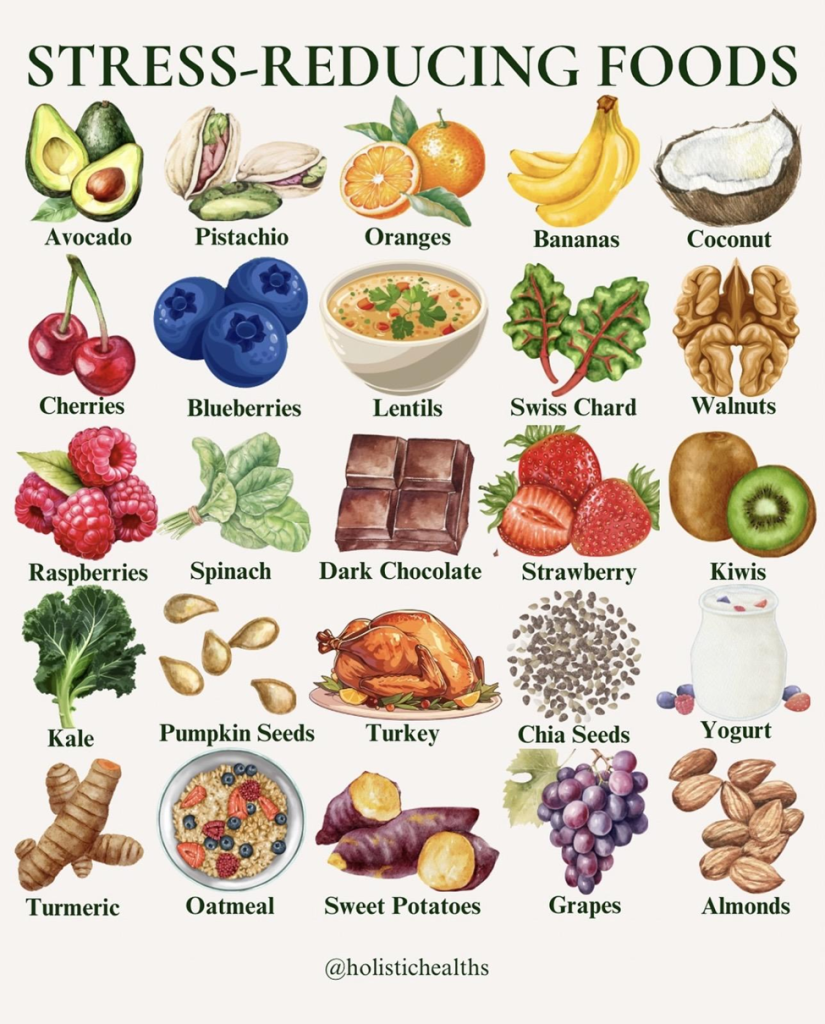
This infographic from @holistichealths can be a helpful resource:
One-Day Stress-Reducing Sample Meal Plan
Breakfast
- Scrambled eggs with sautéed Swiss chard and mushrooms
- Half an avocado
- Fresh berries
Lunch
- Grilled chicken salad with:
- Mixed greens (kale + arugula)
- Pumpkin seeds
- Bell peppers
- Olive oil + lemon dressing
Snack
- Apple + almond butter
- Handful of sunflower seeds
Dinner
- Wild salmon
- Roasted broccoli
- Small portion of roasted sweet potato
- Sprinkle of sea salt
Evening
- Magnesium-rich herbal tea (like chamomile)
- Small handful of almonds
When life feels overwhelming, your nutrition can either work against you or support you. Consistently choosing whole, nutrient-dense foods can help stabilize your mood, improve your energy, and make you more resilient to stress over time.
Looking for more inspiration? Don’t forget to register for the free AMAC Active webinar, ‘The Stress Reset Workshop: Practical Strategies for Energy, Heart Health & Longevity with Dr. Sanjay Bhojraj,’ on April 29, 2026, at 2pm EST.
Melanie Griffin is a health and wellness professional with over 20 years of experience in fitness, nutrition, and chronic disease prevention for midlife and older adults. She holds a B.S. in Sports & Fitness, is a NASM Certified Fitness Nutritionist, ACE Senior Fitness Specialist, Certified Brain Health Trainer, and an IIN Hormone Health Specialist, and is currently pursuing a Master of Science in Integrative and Functional Nutrition. Her work focuses on whole-person health, integrating nutrition, movement, and lifestyle factors to support long-term vitality and quality of life.





Finally advice on healthy eating that doesn’t follow the dangerous Vegan diet recommendations!
Great comment on what Robert said. I think this is a great example of a healthy diet, and like it said.. it is an example. Other people need to research instead of criticizing. Personally I have bookmarked this article. Kudos to the writer, and Thank you!
Grass feed beef should be on the list. I hope the author of this article is biased toward beef.
I still like to eat eggs with a little piece of toast for breakfast or a homemade pancake made from scratch. I feel hungry in an hour when I don’t eat any carbs at all. And I’m not going to eat 5 or 6 eggs at a time. I had to add them back in and now i am fine.This would be a starvation diet not an anti inflammatory one
..