


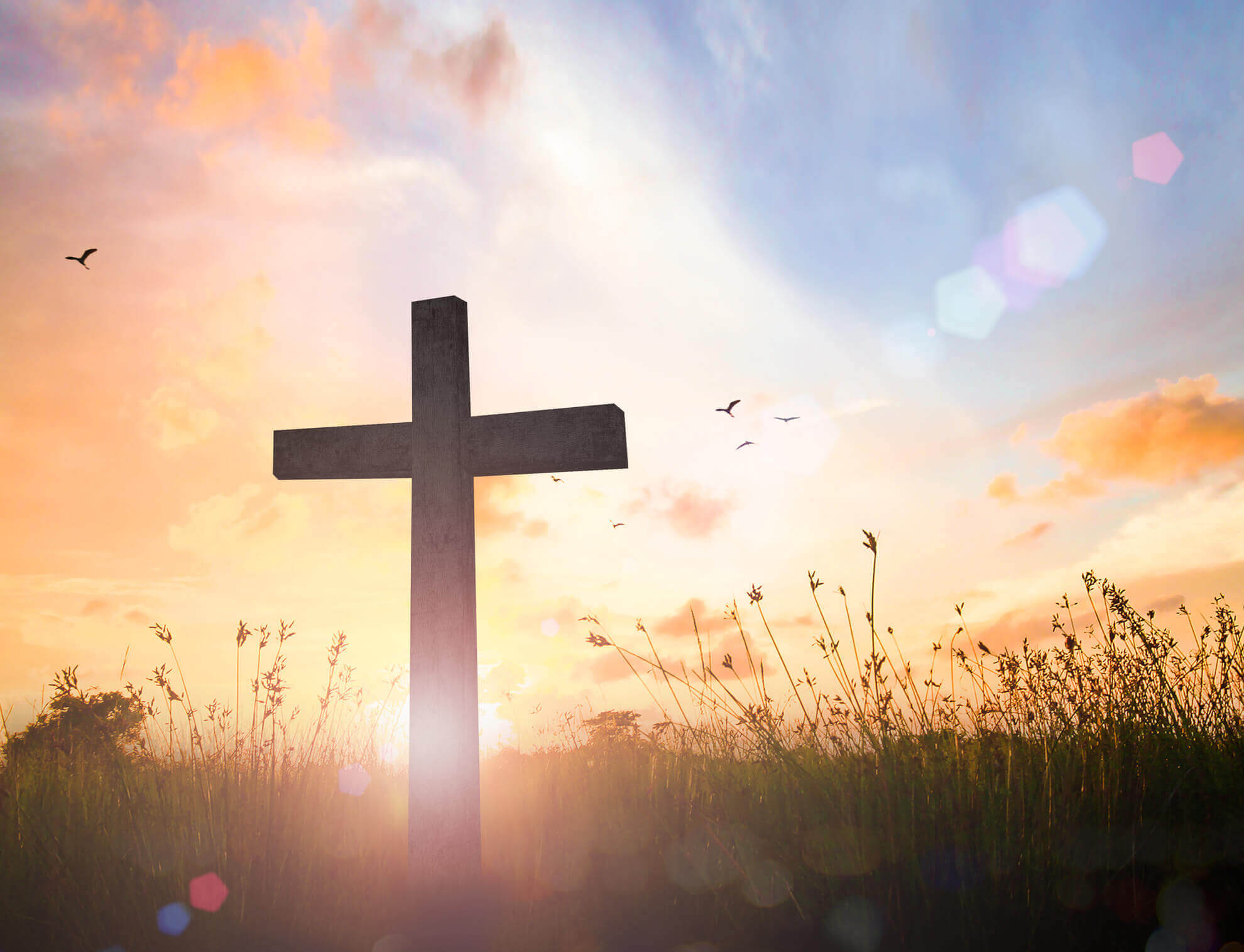
“There are people who say they wish Christianity to remain as a spirit. They mean, very literally, that they wish it to remain as a ghost. But it is not going to remain as a ghost. What follows this process of apparent death is not the lingerings of the shade; it is the resurrection of the body.”
—G. K. Chesterton, The Everlasting Man
Easter Sunday recounts how Jesus of Nazareth rose from the dead, an unlikely and hard-to-believe event. At the same time, many people today are talking about a Christian “revival,” by which they mean the unlikely and hard-to-believe resurrection of a living and active Christian faith. Like those who heard the first reports of the one called “Christ,” many are asking of the ones called little Christs, or “Christians,” is it true?
For several generations, Americans have been told that we are living in a secular age that is destined to continue. Whereas before modern times, dated differently depending on who is giving the narrative, people could believe in the Resurrection, today we can’t. German scholar Rudolf Bultmann famously claimed that anybody who uses electric lights or technology cannot accept biblical miracles.
While it is certainly true that American culture and, particularly, our legal culture has been less religious, a funny thing happened on the way to the godless end of history that many were predicting. Despite the growth of public secularization and the decline of many Christian churches and communities, many Americans who have been swimming in technology under their electric lights have continued to discover Christian faith.
At the very least, the percentage of secular people has declined. Social scientist Ryan Burge reported in March that the percentage of “nones,” those who identify as “atheist, agnostic, or nothing in particular,” has declined for a third consecutive year according to at least two large statistical surveys. These changes are “statistically significant,” Burge says. Further, the drops include drops in all three kinds of “none.”
And the drops in those stating they are absolute non-believers have been accompanied by a lot of reports of growth in many groups. Reports on Evangelicals, Catholics, and Orthodox Christians have all shown growth of various sorts, either in terms of those who consistently practice or of growth in the number of converts.
If you check in on social media, you will find adherents of each group attempting to brag about their own or downplay the good news being reported by the other groups. Of course, all sides will have something with which to argue. The growth in converts and strong adherents in all three Christian groups is also accompanied by a growth in those who are effectively leaving their traditions.
If there are fewer out-and-out atheists and agnostics, there are still a great many Christians of all sorts who are only semi-practicing and others who have effectively ceased to practice even if they identify as Christians.
Younger conservatives tend to complain about Boomers and even Gen-X, but the reality is that the younger generations starting with Millennials are significantly less religious than previous generations. Ryan Burge points to data showing that when Gen-X were 18-29 years old, only 18 percent identified as “non-religious.” 34 percent of Millennials identified that way and 41 percent of Gen-Z, today’s 18-29 year olds, identify that way now.
Pew Research’s 2023-24 Religious Landscape report highlighted these trends and predicted that the short-term looks more like a plateau and the longer-term might well be a decrease in Christian identification, even as some trends look promising. Indeed, that report showed what most reports are showing—large-scale revival is hard to see in the entire population.
So, are the reports of revival false? Looking at the big picture, Ross Douthat offered the suggestion that, “It’s entirely possible for a faith to experience revival and decline simultaneously.” For the Christian communions getting a great deal of attention lately, namely the Catholics and Orthodox, their adherents may well be dropping off in greater numbers even as small but vocal minorities of people are returning to or becoming Catholic and Orthodox. The same might be said of Evangelicals, where larger percentages report worshiping weekly and larger percentages also report worshiping fewer than once a year.
We may not be able to say a Christian revival has happened that will show up in large-scale demographic data. But, it is perfectly sane to say that something is indeed happening. What became known as the Asbury College revival was a sign of young people seeking a greater and deeper Christian faith than they had. The many adults seeking out a deeper faith in Catholic and Orthodox congregations over the last few years—many undergoing long periods of instruction and formation in the faith—shows the same phenomenon. While the numbers may not seem like much right now in a country of close to 350 million people, that doesn’t seem so far from Christian origins.
Even in first-century Nazareth, Jesus’ small flock of about 500 followers would not have seemed large at all in comparison with the larger groups of Sadducees and Pharisees, much less the millions of pagans in the greater Roman Empire.
Yet, those first few followers told others, who were also convinced and told still others until, a few centuries later, the Roman Empire itself was governed by them. Most estimates put the Christian population at about 10 percent of the Empire’s 60 million people before Constantine’s actions freed the Church to act publicly—at which point it grew very quickly.
The small body of followers who affirmed Jesus’ Resurrection may have been compact. They were also committed to preaching the Risen Christ to others and living out His teaching. It was that image of Christ that had been imprinted in their minds and stamped on their lives that drew many, many others in time.
Ask not simply about the quantity of those experiencing conversion from without or from within the Christian fold. Ask about the quality of those who are proclaiming the Resurrected Christ by their tongues and their lives. That will tell us much more about the future growth of the body of Christians than statistics that can only tell us about the recent past.

About the author
David P. Deavel
Associate Professor of Theology, University of St. Thomas (Houston)
@davidpdeavelAll articles by David P. Deavel →
Expertise
- • Catholic theology and thought
- • Conservative political and cultural commentary
- • John Henry Newman, G.K. Chesterton, and Aleksandr Solzhenitsyn studies
- • Education and higher education
Credentials
- • Associate Professor of Theology, University of St. Thomas, Houston, Texas
- • Associate Editor, VoegelinView
- • Senior Contributor, The Imaginative Conservative
- • 2019 Lincoln Fellow, Claremont Institute


9 Comments