
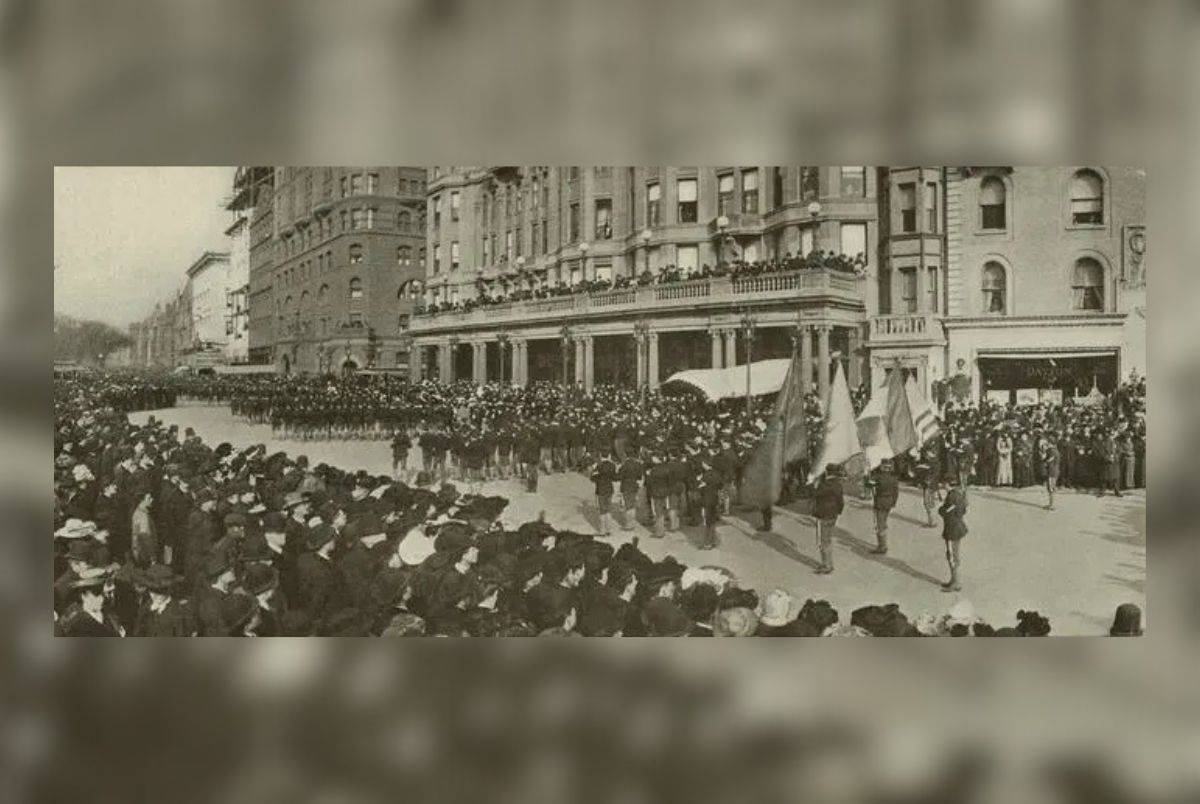

On March 17, 1762, a simple march through the streets of colonial New York City began a tradition that would grow into one of the most famous celebrations of Irish culture in the world: the New York City St. Patrick’s Day Parade. Organized by Irish soldiers serving in the British Army and Irish expatriates living in the city, the event is widely recognized as the first St. Patrick’s Day parade in New York—and one of the earliest public celebrations of the holiday anywhere.
At the time, New York was still a British colony, and many Irishmen were stationed there as part of British regiments. These soldiers and immigrants were far from home and eager to celebrate the feast day of St. Patrick, the patron saint of Ireland. In Ireland itself, expressions of Irish identity—such as wearing green or openly celebrating Irish culture—were often restricted under British rule. In contrast, marching in New York offered these Irish expatriates a rare opportunity to display pride in their heritage and connect with fellow countrymen.
The first parade was far smaller than the grand processions that fill New York’s Fifth Avenue today. Rather than elaborate floats and massive crowds, the early celebration was a modest march of camaraderie. Participants walked together through the streets—likely along Lower Broadway—wearing their military uniforms, playing pipes and drums, and singing traditional Irish songs. For these soldiers and immigrants, the parade was more than just a celebration; it was a meaningful expression of cultural identity in a new land.
In the decades that followed, the tradition continued to grow. As Irish immigration to the United States increased, especially in the 19th century, St. Patrick’s Day parades became a powerful symbol of community and unity for Irish Americans. What began as a military march gradually transformed into a civic event led by Irish fraternal organizations and community groups. These groups organized larger parades and encouraged participation from Irish societies, musicians, and cultural organizations.
Over time, the parade evolved into one of New York City’s most enduring public traditions. Today, the annual St. Patrick’s Day Parade is considered the oldest and largest of its kind in the world, drawing thousands of participants and millions of spectators each year. Marchers include bands, cultural organizations, military units, and representatives from across the city’s Irish-American community.
More than two centuries after that first march in 1762, the New York City St. Patrick’s Day Parade remains a powerful celebration of heritage, history, and community. What began as a small gathering of homesick soldiers has grown into a global symbol of Irish pride—and a reminder of how immigrant traditions can shape the cultural identity of a city and a nation.

Comments
Do you remember? Share your memory.