
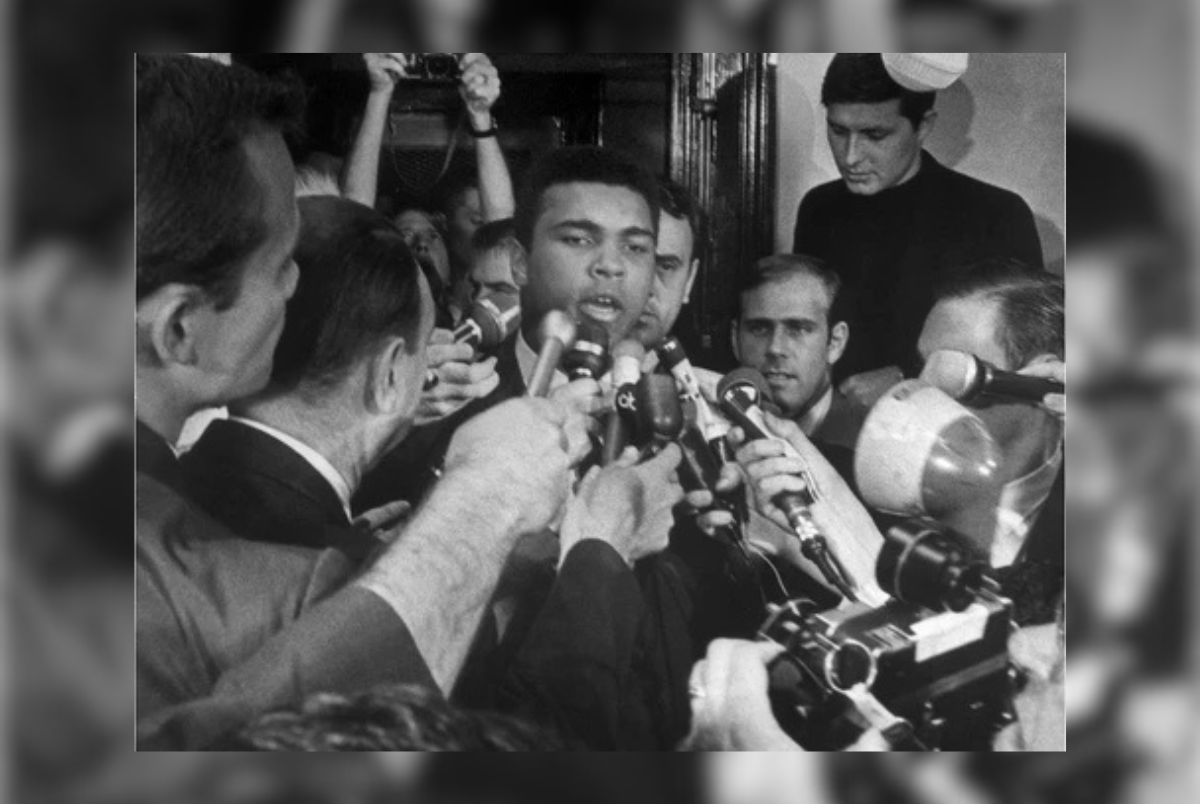

On April 28, 1967, at the height of the Vietnam War, heavyweight boxing champion Muhammad Ali made a decision that would forever redefine his legacy—not just as an athlete, but as a symbol of conviction and resistance. Standing at an induction center in Houston, Texas, Ali refused to step forward when his name was called to join the U.S. Army, an act of defiance that shocked the nation and reverberated far beyond the world of sports.
Ali’s refusal was rooted in both religious belief and moral opposition to the war. Having converted to Islam in 1964, he argued that his faith prohibited him from participating in violence, particularly in a conflict he did not believe was just. He famously declared that he had “no quarrel” with the Vietnamese, questioning why he should fight abroad while Black Americans at home were still denied basic rights.
The consequences were immediate and severe. Within hours of his refusal, Ali was stripped of his heavyweight title and suspended from boxing. Soon after, he was arrested and charged with draft evasion. In June 1967, he was convicted, sentenced to five years in prison, fined $10,000, and effectively banned from the sport during what should have been the prime of his career.
Though he remained free while appealing the case, Ali lost nearly four years of professional boxing—an extraordinary sacrifice for an athlete at the top of his game. During this period, he became a polarizing figure. Many Americans viewed his actions as unpatriotic, especially during a time of war. Yet others, particularly within the civil rights and antiwar movements, saw him as a courageous voice standing up for principle in the face of overwhelming pressure.
Ali used his time away from the ring to speak out on college campuses and in public forums, addressing issues of racial injustice, war, and personal conscience. His stance helped inspire a broader conversation about the Vietnam War and the rights of individuals to dissent. What began as a personal decision soon evolved into a defining moment in American social and political history.
In 1971, the U.S. Supreme Court unanimously overturned his conviction, vindicating his position and allowing him to return to boxing. Ali would go on to reclaim the heavyweight title and cement his reputation as one of the greatest athletes of all time.
Today, Muhammad Ali’s refusal to be inducted into the Army is remembered as more than an act of protest—it was a bold assertion of identity, faith, and moral courage. In choosing principle over personal gain, Ali transformed himself from a sports icon into a global symbol of resistance, leaving a legacy that continues to inspire generations.

1 comment
Do you remember? Share your memory.