

I learned a new word this week: Semiquincentennial (go ahead, try saying it three times fast). It refers to the 250th anniversary of a significant event.
This month, our nation celebrates the semiquincentennial of the Declaration of Independence – 250 years since America declared its independence. Throughout July, our Word of the Month is Liberty.
When most people hear the word liberty, they think of political freedom or the rights guaranteed by our Constitution. Those blessings are certainly worth celebrating. But before liberty became an American ideal, it was a biblical one. Scripture reveals that true liberty originates with God and finds its fullest expression in Jesus Christ.
As we celebrate our nation’s 250th anniversary, it is fitting to reflect on the One who is the true Author of liberty.
Liberty: A Desire Placed Within Us
The Bible tells us that God “has put eternity into man’s heart” (Ecclesiastes 3:11 (opens BibleGateway in a new tab), ESV).
What does this have to do with Liberty? This verse declares that every person carries a longing for something beyond this broken world. We instinctively desire freedom from sin, suffering, injustice, and death because these were never part of God’s original design. Deep within us is a yearning for the perfect fellowship humanity once enjoyed with God in the Garden of Eden – a fellowship that will one day be fully restored when Christ makes all things new.
That longing for liberty is not accidental. It is part of how God created us.
God’s Plan of Liberty
Throughout Scripture, God progressively reveals what true liberty looks like.
When God delivered Israel from slavery in Egypt, He was doing more than rescuing a nation. He was revealing His heart as a Deliverer. “I will redeem you with an outstretched arm and with great acts of judgment” (Exodus 6:6 (opens BibleGateway in a new tab), ESV).
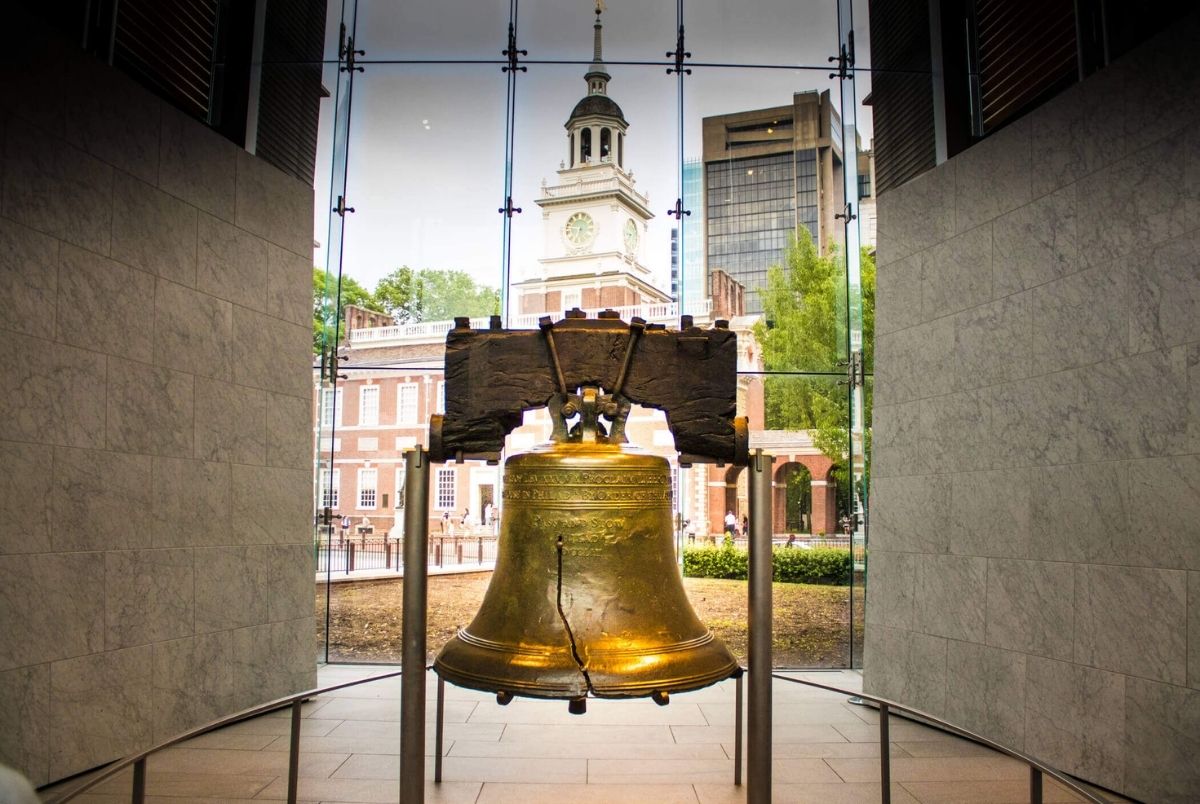
Centuries later, the Year of Jubilee proclaimed liberty throughout the land every fifty years. Debts were forgiven, slaves were released, and families were restored (Leviticus 25). It is no coincidence that the famous inscription on the Liberty Bell comes directly from this passage: “Proclaim liberty throughout the land to all its inhabitants.” (Leviticus 25:10 (opens BibleGateway in a new tab), ESV)
The prophets looked forward to an even greater liberation. Isaiah foretold the coming Messiah who would “proclaim liberty to the captives” (Isaiah 61:1 (opens BibleGateway in a new tab), ESV).
Jesus fulfilled that promise. Standing in the synagogue in Nazareth, He read Isaiah’s prophecy and declared that it had been fulfilled in Him (Luke 4:16–21 (opens BibleGateway in a new tab)). Later He proclaimed, “So if the Son sets you free, you will be free indeed.” (John 8:36 (opens BibleGateway in a new tab), ESV)
The Apostle Paul echoed this truth: “For freedom Christ has set us free; stand firm therefore, and do not submit again to a yoke of slavery” (Galatians 5:1 (opens BibleGateway in a new tab), ESV).
He also reminds us, “Now the Lord is the Spirit, and where the Spirit of the Lord is, there is freedom” (2 Corinthians 3:17 (opens BibleGateway in a new tab), ESV).
Biblical liberty is not the freedom to do whatever we please. It is freedom from the power and penalty of sin so that we can joyfully live as God created us to live. While that freedom will one day be perfected in Christ’s eternal kingdom, its transforming power is available to every believer today.
Liberty and the American Experiment
It should not surprise us that these biblical truths profoundly influenced the men who founded the United States.
Rather than grounding human rights in kings or governments, America’s Founders declared that our rights come from God Himself. The Declaration of Independence boldly affirms that we are “endowed by Creator with certain unalienable Rights,” among them “Life, Liberty and the pursuit of Happiness.”
Thomas Jefferson recognized this connection when he wrote, “The God who gave us life gave us liberty at the same time.” Noah Webster similarly observed, “The Christian religion... is the basis, or rather the source, of all genuine freedom in government.”
For 250 years, America has stood – despite its imperfections – as one of history’s greatest examples of what can happen when a nation acknowledges that our rights are gifts from God rather than privileges granted by government.
Our country has never been perfect, nor is it the Kingdom of God. Yet the American experiment has demonstrated the remarkable blessings that flourish when liberty is understood as a God-given responsibility rather than merely a political right.
Living in Liberty Today
As we celebrate this historic anniversary, let us remember that liberty is both a blessing and a responsibility.
As Americans, we should cherish and defend the freedoms that generations before us sacrificed to preserve. Around the world, millions still live under tyranny and oppression. The liberties we often take for granted are extraordinary gifts worthy of gratitude and faithful stewardship. Yet even greater than our national liberty is the spiritual freedom we have in Christ. Earthly freedom can be threatened. Governments rise and fall. Constitutions can be amended. Nations come and go. But the liberty Christ gives is eternal.
Because He has set us free, we are called to use that freedom wisely – not as an excuse for selfishness, but as an opportunity to love our neighbors, pursue justice, defend truth, and glorify the One who has truly set us free.
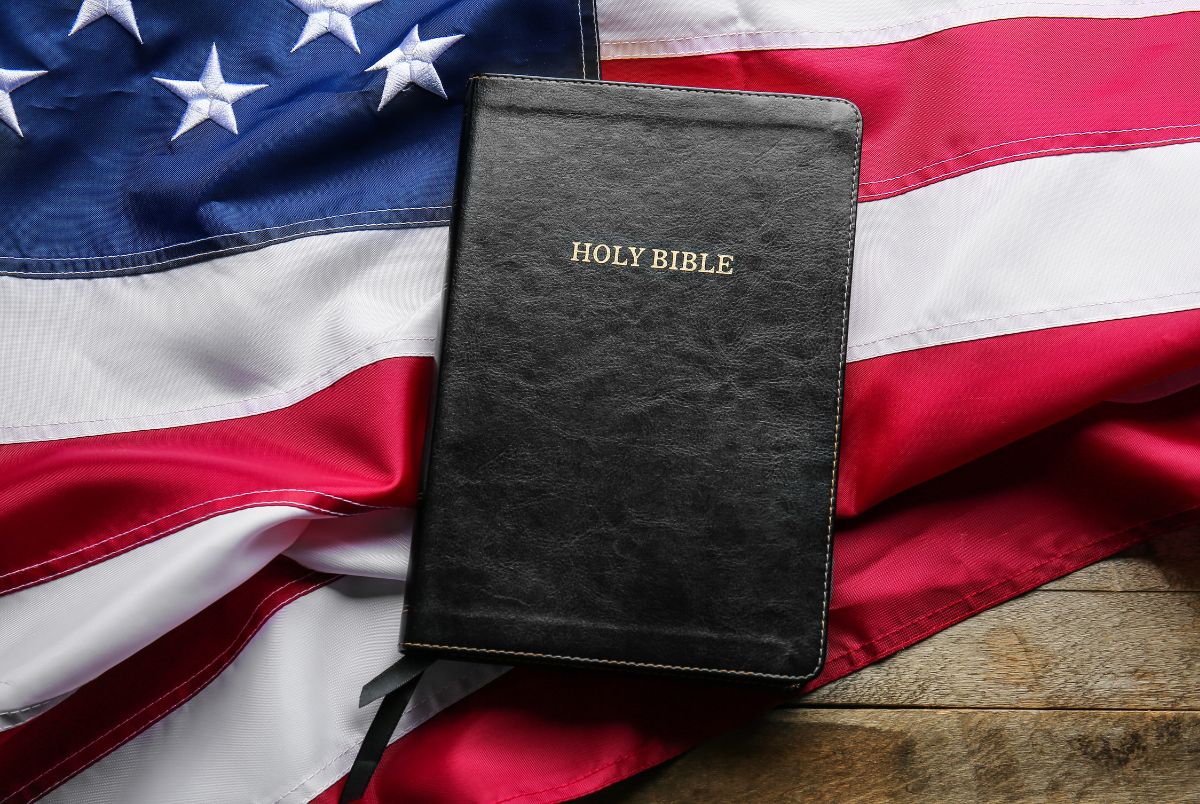
This July, as flags fly in celebration of America’s 250th anniversary, may they also remind us to give thanks to the Author of Liberty. May we celebrate the remarkable blessings of living in a free nation while never forgetting the far greater freedom found in Jesus Christ.
God bless you, and God bless the United States of America as we celebrate this historic milestone.
Jonathan Griffin is the Director of Advertising & Partner Development at AMAC and a former pastor with a passion for biblical teaching. He lives in the Dallas-Fort Worth area with his wife and their two pups, Hank and Kirby.



6 comments
What did this stir in you this week?