

Fear, death, and hellfire rained down between 1861 and 1865 in this blessed country, leaving 750,000 Americans dead, countless wounded, millions of hearts broken, lives shattered – to achieve the moral, political, and economic imperative, freedom for all, “one nation under God.”
But go back in time with me, and understand that – for all the necessity of our Civil War, white men and black fighting to end the scourge of slavery, finish with the 13th and 14th Amendments what was left unfinished at our Nation’s founding, President Abraham Lincoln had earlier hoped to avoid war.
In his first inaugural, using words that echo with fresh significance – as open appeals to communism and violence appear from Minnesota to Maine – Lincoln spoke plainly.
He urged his countrymen to understand the miracle of the American republic, all the blood already spilled to make it real, the labors of those long gone, yet still spiritually afoot, in their midst. He asked Americans to choose conversation over consternation, patience over political violence.
His first inaugural is often skimmed, specifics forgotten, but the specifics matter. He was laboring with all the selfless strength and personal courage he could muster to get people to calm down.
Lincoln knew what was likely. He was not naïve. He knew the menace of civil war hung like a dark shadow over the republic. He knew well the polarization and the speed with which secessionist forces were building. No states had seceded in November 1860, yet seven had by March 1861.
Still, he appealed to the Nation’s “better angels,” this president whose most profound learning came from the Bible and Constitution, who was born in a time when most of the founding fathers were still alive and who lived to preserve what they had – with such difficulty – created.
“It is seventy-two years since the first inauguration of a President under our National Constitution. During that period, fifteen different and greatly distinguished citizens have in succession administered the executive branch of the Government. They have conducted it through many perils…I now enter upon the same task…with great and peculiar difficulty.”
He says he is sworn to uphold the Constitution, talks about its God-given and inviolate nature. “I trust this will not be regarded as a menace … but only as the declared purpose of the Union…that it will constitutionally defend and maintain itself. In doing this, there needs to be no bloodshed or violence, and there shall be none…unless it be forced upon the national authority.”
In short, even as storm clouds form to his south, he appeals to Americans to think about the downside, potential devastation, destruction of the union and Constitution on which it rests, that follows violence. He warns that violence will produce irretrievable loss, regret, and remorse.
In a paragraph often forgotten, he writes: “Before entering upon so grave a matter as the destruction of our national fabric, with all its benefits, its memories, and its hopes, would it not be wise to ascertain precisely why we do it? Will you hazard so desperate a step while there is any possibility that any portion of the ills you fly from has no real existence? Will you, while the certain ills you fly to are greater than all the real ones you fly from, will you risk the commission of so fearful a mistake?”
He ends with another appeal to rationality, patriotism, and faith. “I am loath to close. We are not enemies, but friends. We must not be enemies. Though passion may have strained it must not break our bonds of affection. The mystic chords of memory, stretching from every battlefield and patriot grave to every living heart and hearthstone all over this broad land, will yet swell the chorus of the Union, when again touched, as surely they will be, by the better angels of our nature.”
Of course, while Lincoln is epic, his appeals do not stop the war. He himself falls to an assassin’s bullet, leaving him a martyr to freedom. Still, his idealism – tempered by realism – remains a beacon.
One of his best quotes, a shaft of light worth following, was his response to critics who said he gave opponents too many chances. “Do I not destroy my enemies when I make them my friends?” Do we not all benefit from choosing persuasion over violence? Ours are fraught times, but Americans settle their differences peaceably – most of the time.
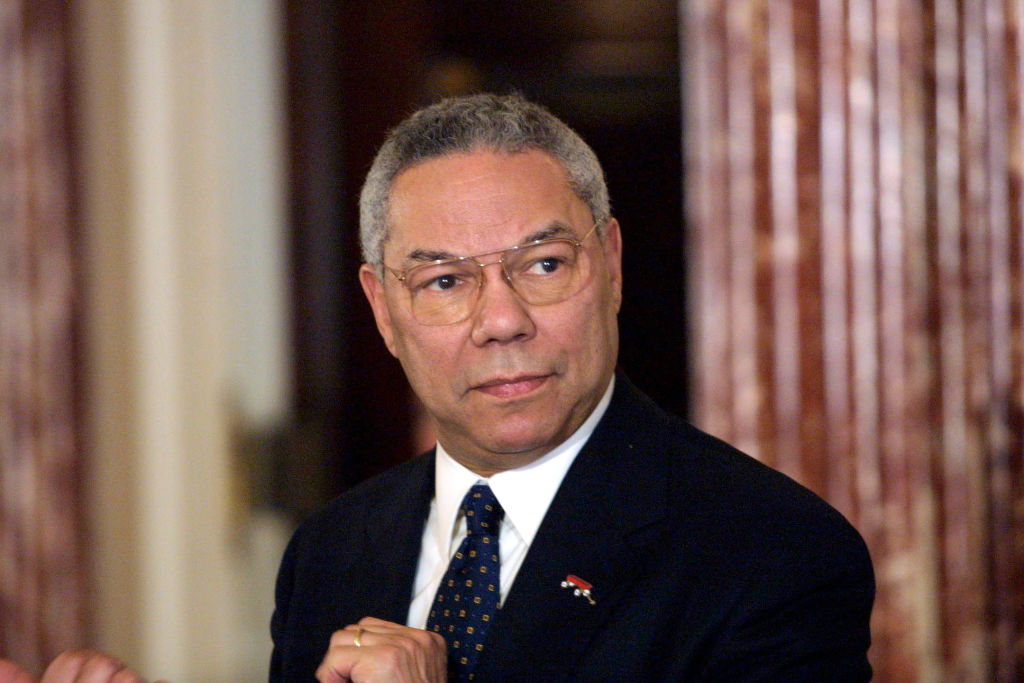
Robert Charles is a former Assistant Secretary of State under Colin Powell, former Reagan and Bush 41 White House staffer, Maine attorney, ten-year naval intelligence officer (USNR), and 25-year businessman. He wrote “Narcotics and Terrorism” (2003), “Eagles and Evergreens” (North Country Press, 2018), and “Cherish America: Stories of Courage, Character, and Kindness” (Tower Publishing, 2024). He is the National Spokesman for AMAC. Today, he is running to be Maine’s next Governor (please visit BobbyforMaine.com to learn more)!





When Robert Charles is elected Governor of Maine….I doubt he’ll have time to write so many wonderful articles! I will miss reading his eloquent words several times a week. Good luck and go get ’em Bobby!!!
In 1859 Abraham Lincoln sent a letter to Henry ,L. Pierce who was active in Massachusetts politics. Lincoln wrote ” Those who deny freedom to others deserve it not for themselves and under a just God cannot long retain it .” H.L Pierce was a Republican who was against slavery, he served in the Massachusetts House of Representatives , and was a mayor of Boston. This article is a very good look at what Abraham Lincoln was going through in his effort to get people to calm down. Stressing the value of thinking about the consequences of a civil war , before the Civil.War started .
The “Civil War” was not fought over slavery. Please get educated about the Morrill Tariff and the Corwin Amendment.
Lincoln’s message,I believe,is far more relevant today than it was then. Especially because so many of our indoctrinated young see violence as an hacceptable solution to those who disagree with them.
Gosh. Upholding the Constitution. What a concept…
Why don’t/can’t “We, The People” frazzlin’ DO that, in this day and age?
Thank You, RBC. Keep it comin’, sir. We, as a people, evidently need CONSTANT reminders of our history.
The 4th from the end and the last paragraph should be tattooed on leftists foreheads, so they can read it as they consult with each other.
I am not a big fan of Lincoln. I realize that this flies in the face of the opinion vast majority of people. The southern states had the right to withdraw from the union, but Lincoln and his supporters insisted that they knew better.
With all due respect, this article is little more than the standard, yet totally false, praising of a President that exploited specific for states to fund the extravagant spending of other states. This divisive administration forced the Southern states to stand up and resist. The Corwin Amendment clearly proved that Lincoln did not intend to end slavery. The Morrill Tarriff could be described as a targeted tax on the Southern states which Lincoln gleefully exploited as a blessing from former President James Buchanan. The combination of these two documents clearly demonstrates that Abraham Lincoln entered into the War for Southern Independence fully realizing that slavery was of little concern to him. It only became “Biblically” and “Constitutionally” important to him when he realized the Union army was losing the war and needed and the support of black people to man his battered army. The Emancipation Proclamation arguably freed not a single slave but did cause the European support to the Confederate States of America to disappear. The only “better angels” that Lincoln cultivated had nothing to do with ending slavery. It centered on maintaining access to Southern money and holding them in slavery to the Union at all costs!
I believe that the Civil War came about for many reasons. The South saw it as a property rights issue, and decided to separate from the United States of America. The North initially insisted on keeping the USA together, because our Republic could not be allowed to fail. Southern troops fired first and started the war. The slave issue was not part of it until later in the war, when it became clear to the North that in a nation of free people, all the people had to be free. There were black and white slaves (An indentured servant was a slave), and there were some slave owners in the North, so it was a touchy issue. The North did not start winning until they passed legislation that freed all slaves. By the way, only nine of the many slave owners were republican.
Being from Texas I must say this…. The fact is the Victor writes the history that is taught in school. My family on my father’s mother side was Southern. You have to really look hard but the real history can be found. Confederate General Robert E. Lees gave freedom to more slaves than Lincoln. Just read the Lincoln Douglas debates. Either Lincoln was not telling the truth, as a lot of lying politicians do, or he was saying what he thought. It just does not fit the Leftist Narrative, so it’s shoved to the side. Lincoln had a SLAVE state enter the Union. Yep, West Virginia. No laws were passed after the Southern States left that ended slavery even though they had control of both houses of congress and the White House. The first 13 Amendment that Lincoln supported made SLAVERY Constitutionally Protected. It was an attempt to get the South not to exit. The south was just trying to exit in Peace just as New England States had talked about doing during the War of 1812. It was Taxation with a 49 percent tariffs on Southern imports to support the Northeast manufacturing at the expense of the South and the West. Lincoln broke the truce agreements in South Carolina by reenforcing the fort unlawfully occupied in Charleston Harbor. The fort was empty and was not occupied by South Carolina troops per the agreement. But the US troops broke that agreement and occupied it. Lets just say there is two sides in everything. We are still having the same arguments. Taxes, States Rights but now the State no longer is able to stands in defense of its citizens as a buffer to an ALL POWERFUL central government.