
AMAC Magazine Exclusive – By Shane Harris
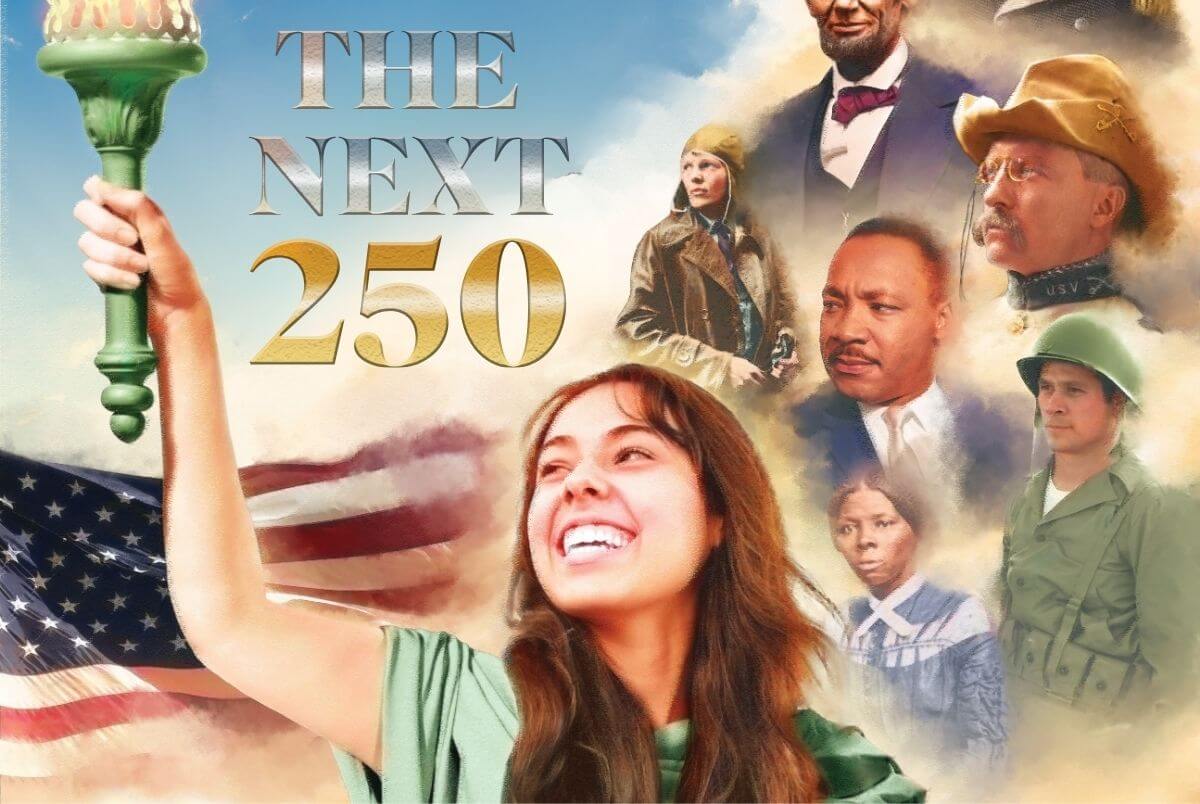
As the United States marks 250 years of independence, there is much to celebrate from our past—a quarter millennium of American exceptionalism filled with larger-than-life heroes, thrilling victories, and unyielding resolve in times of struggle.
But if we are to truly honor this legacy, it is just as important for Americans to take stock of where we are and refocus on the hard work ahead to preserve our nation and its founding ideals for the next 250 years. At every pivotal moment in our history, the fate of the republic has depended on a critical number of men and women rising to carry the torch of liberty forward for a new generation.
That responsibility to secure America’s future falls to every patriotic citizen alive today.
It is easy to descend into cynicism and hopelessness about the many crises facing the country. But our trials and tribulations are surely no more daunting than those our forefathers overcame.
The first generation of American patriots faced down the greatest empire on Earth with ragtag bands of farmer-soldiers. Their grandchildren fought a bloody civil war that decimated the young nation, then they knit it back together again.
Nor are our challenges as existential as those that Americans faced in the last century. Their numbers are dwindling, but we still have living legends among us who liberated Europe from Nazi tyranny and defeated Imperial Japan. They came back and started families, and their children and grandchildren (including you, perhaps!) built the most prosperous society in human history, ultimately destroying the great evil of Soviet communism along the way.
This generation also made great strides toward fulfilling the central creed in the Declaration of Independence that “all men are created equal.” They cemented the United States’ status as the world’s preeminent superpower, setting the stage for a 21st century of American dominance.
Now it is time to tackle the next set of challenges with the same determination shown by those who came before us. If America is to thrive over the next 250 years, here are a few key areas that today’s patriots must focus on.
Preserving American History
History is the foundation of American society. While other nations are bound together by ethnicity, language, or religion, America has always been united first and foremost by a shared understanding of its past—by the stories we tell about ourselves and the heroes we choose to honor.
Those stories matter. They shape how Americans see themselves, what they believe is possible, and what they are willing to fight for. When those stories are distorted or erased, the cultural glue that binds our nation together begins to dissolve.
Ronald Reagan understood this as well as any modern president. In his farewell address, he warned, “If we forget what we did, we won’t know who we are.” He also posed a question that has become even more urgent today: “Are we doing a good enough job teaching our children what America is and what she represents in the long history of the world?”
Too often, the answer is no. There are powerful forces in American society today that seek to recast our history not as a story of liberty and progress, but as one of oppression and injustice. Their aim is not simply to critique the past, but to undermine confidence in the American project itself.
The response must be a renewed commitment to truth. That means teaching the next generation about the courage of George Washington, the vision of Thomas Jefferson, the resolve of Abraham Lincoln, and the leadership of Theodore Roosevelt. It means honoring the Americans who stormed the beaches of Normandy, walked on the moon, and built the most powerful economy the world has ever known.
This effort cannot be confined to classrooms alone. Parents and grandparents must take ownership of this responsibility. Young Americans will inevitably encounter anti-American narratives in media, in entertainment, and even among their peers. The question is whether they will be equipped with the knowledge and confidence to recognize those narratives for what they are and then ultimately reject them.
Protecting America’s Borders and Sovereignty
A nation without borders is no nation at all. For any country to endure, it must maintain control over who enters its territory and ensure that those who do so embrace its values.
This principle has nothing to do with race or ethnicity. It is about allegiance. As Theodore Roosevelt put it more than a century ago, “Americanism is a matter of the spirit and of the soul. Our allegiance must be purely to the United States.”
That outlook is more relevant today than ever. The United States faces a growing threat of cultural fragmentation, as waves of illegal immigration and a complete lack of assimilation policies have produced communities that are increasingly disconnected from a shared national identity.
The traditional “melting pot” ideal—where people from different backgrounds come together to form a unified culture—has been replaced with a “chopped salad” vision of society. That shift may sound benign, but it carries dangerous implications. A balkanized nation divided into competing identities is a nation destined for conflict.
Reversing this trend begins with restoring control over the border. That means enforcing existing immigration laws, completing physical barriers where necessary, and ensuring that future administrations cannot simply undo those efforts. It also means reaffirming the expectation that those who come to America come here to become Americans.
Revitalizing the American Dream
At its core, the American experiment has always rested on the simple promise that hard work and personal responsibility will be rewarded with opportunity and upward mobility.
Today, that promise feels increasingly out of reach for many Americans.
Decades of globalization has hollowed out entire regions of the country, leaving behind economic stagnation and social decay. Now technological disruption—particularly the rise of artificial intelligence—threatens to upend white-collar professions as well.
At the same time, younger generations face unprecedented financial burdens. Student loan debt continues to climb, credit card balances are soaring, and the dream of homeownership is slipping further away for today’s young adults. Indeed, the average age of a first-time homebuyer has climbed to 40, compared to just 28 in 1990.
These trends have profound social consequences. When people feel they have no stake in the future, they disengage. Marriage rates decline. Birth rates fall. Anxiety and depression rise.
Reversing this trajectory must be a national priority. That means pursuing policies that promote ownership—ownership of homes, of savings, and of one’s own future. Initiatives like President Donald Trump’s investment accounts for newborn Americans represent a step in the right direction, but far more must be done.
Expanding access to homeownership is particularly important. Property ownership is not just an economic milestone; it is a cultural bedrock. It gives people a tangible stake in their communities and a reason to invest in the country’s long-term success.
Restoring Election Integrity
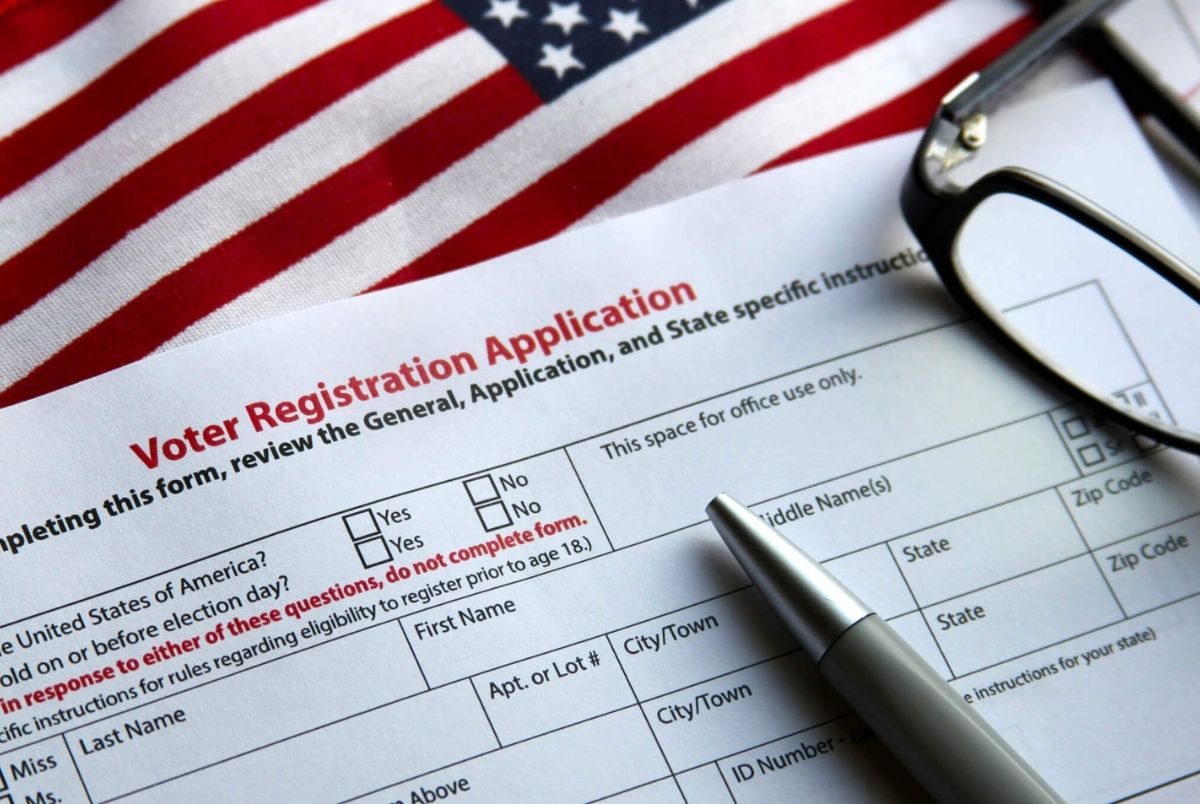
For a republic to function, its citizens must have confidence that elections are free, fair, and secure.
The Founding Fathers understood the dangers of concentrated power and therefore entrusted the administration of elections to the states. But they also recognized that this decentralization carried risks.
As Alexander Hamilton wrote in Federalist 59, “Nothing can be more evident, than that an exclusive power of regulating elections for the national government, in the hands of the State legislatures, would leave the existence of the Union entirely at their mercy.” It is for this reason that the Constitution specifically empowers the federal government to override the states on the administration of elections when necessary.
Hamilton’s observation speaks directly to the present moment.
In recent years, many states have weakened long-standing safeguards in the name of convenience, expanding mail-in voting, extending ballot deadlines, and permitting practices like ballot harvesting. Whatever the intent, the result has been a decline in public confidence in election outcomes.
Restoring trust requires a return to the basic principles of clear rules, transparent processes, and firm deadlines. Election Day should once again mean Election Day, not a week or a month of uncertainty. Safeguards should be strengthened, not dismantled.
Without confidence in the integrity of elections, the legitimacy of government itself is called into question—and with it, the stability of the republic.
Reviving the Power of the States
The American system was designed to balance power between the federal government and the states, ensuring that no single authority could dominate the others. As James Madison famously wrote, “Ambition must be made to counteract ambition.”
Over time, however, that balance has eroded. Power has steadily consolidated in Washington, DC, leaving states increasingly dependent on federal funding and subject to federal mandates.
This shift accelerated in the 20th century, particularly after the ratification of the 17th Amendment and the expansion of federal agencies. Today, a vast administrative state exerts influence over nearly every aspect of American life, from education to health care and energy policy.
Reversing this trend is essential for the long-term health of the republic. States must reclaim a role as laboratories of democracy, capable of experimenting with policies and responding to the unique needs of their citizens.
A renewed emphasis on federalism would not only restore constitutional balance, but also make government more responsive and accountable to the people.
A Revival of Faith
No discussion of America’s future is complete without acknowledging the necessary role of faith.
From the founding era to the present day, religious belief has been a cornerstone of American life. It has provided the moral framework that sustains self-governance and the sense of purpose that drives national progress.
As John Adams wrote, “Our Constitution was made only for a moral and religious people. It is wholly inadequate to the government of any other.”
In recent decades, however, religiosity in the United States has declined sharply. The consequences are visible across society, from rising crime and family breakdown to increasing levels of despair and disconnection.
Government alone cannot solve these problems. Laws can enforce order, but they cannot instill virtue. That work must come from families, communities, and faith institutions.
If America is to endure for another 250 years, it must rediscover the moral and spiritual foundations that made its success possible in the first place.
The Work Ahead
These challenges are significant, but they are not insurmountable. Indeed, they are in many ways less daunting than those confronted by previous generations of Americans, who overcame war, division, and global conflict to preserve and expand the promise of liberty.
This list is far from exhaustive. The next 250 years will undoubtedly bring new challenges that we cannot anticipate. But the principles that guided the nation through its first 250 years remain as relevant today as they were in 1776.
The question is not whether America will face trials. It is whether Americans will meet them with the same courage, conviction, and clarity of purpose that defined those who came before.
If we remain grounded in our history, committed to our principles, and confident in our identity as a free and faithful people, there is every reason to believe that the flame of liberty will continue to burn brightly for generations to come.






If America can face the trial will depend on whom she will chose to lead, if it will have enough wits and guts to choose a man over an adult child it will stand a chance.
…ditto…
June 13 , 2026 – Keeping that spirit that is in the last sentence of this article that will help greatly in the achievement of everything else you wrote about Shane. Would like to add that the idea of Americans making the things they need instead of having so many important. products being made in other countries will help matters greatly. Being resourceful, developing a high level of intelligence and practicing the qualities that are part of having good character will add strength to the Nation’s sense of purpose . With just some basic tools mechanical skills can be developed and the same applies to mathematical knowledge. Independence requires many things all working together . Faith in God surely at the top, knowledge of biology, chemistry, anatomy, physiology, Mathematics and physics , even just the fundamentals of those topics will bring about a genuine understanding of history and that will bring about a picture of the future that is good and right respectful of the traditions that started with the Declaration of Independence.
I agree with everything that was written!! I’m not sure what is going to happen with the next generation!! I pray with all my heart that Americans wake up and get closer to God’s grace,mercy and peace ???????????????????????????????? God Bless America ????????????????????????????????????????
You have the right to pay Bills and Taxes , and you will never own your home because the Government always has a lean against it , Property Tax .