
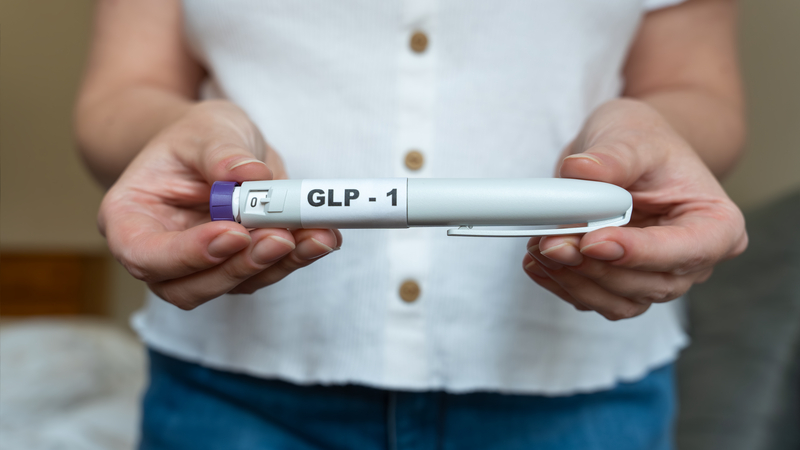
CMS Launches Temporary Demonstration Program Beginning July 1
This July, Medicare beneficiaries seeking GLP-1 medications for weight loss will have a clearer path to coverage. Although Medicare covers GLP-1 medications for certain medical conditions (like Type 2 diabetes and obstructive sleep apnea), it does not cover drugs for weight management purposes.
That long-standing restriction remains in federal law. However, the Centers for Medicare & Medicaid Services (CMS) introduced a new demonstration initiative that expands access to eligible beneficiaries. Known as the Medicare GLP-1 Bridge, the program officially begins on July 1, 2026.
A Temporary Pathway to Weight-Loss Coverage
CMS announced the Medicare GLP-1 Bridge on December 23, 2025, as a temporary demonstration project. It’s purpose is to help beneficiaries obtain coverage for certain GLP-1 weight-loss medications when those drugs are not otherwise covered through their prescription drug (Part D) plans.
The initiative will operate from July 1, 2026, through December 31, 2027.
How Much Will I Pay for Weight-Loss Drugs Under the GLP-1 Bridge?
Unlike traditional prescription drug coverage, the Medicare GLP-1 Bridge functions independently of Medicare Part D. Drug plans do not administer the benefit, assume financial risk, or decide whether to participate. Instead, CMS oversees the program through a centralized administrative system.
Beneficiaries who qualify will pay a flat copayment of $50 per prescription fill. Because the benefit exists outside Part D, those payments do not count toward deductibles or true out-of-pocket spending calculations.
Who Is Eligible?
Eligibility is designed primarily for Medicare beneficiaries who cannot obtain GLP-1 coverage for weight management through their existing prescription drug plan.
To participate, individuals must meet both plan-related and clinical requirements established by CMS.
A healthcare provider must certify that the patient:
- Is at least 18 years old.
- Is receiving the medication specifically for weight management.
- Meets CMS-established body mass index (BMI) requirements.
An important detail is that CMS evaluates BMI eligibility based on the patient’s weight and BMI when GLP-1 treatment originally began—not necessarily at the time of the authorization request. As a result, beneficiaries who have already lost weight while using a GLP-1 medication may still qualify if they met the required BMI threshold when treatment started.
Certain Medical Conditions Exclude Participation
Not everyone seeking a GLP-1 medication will qualify for the Bridge program.
Individuals diagnosed with Type 2 diabetes, moderate-to-severe obstructive sleep apnea, or non-cirrhotic metabolic dysfunction-associated steatohepatitis (MASH) with moderate-to-advanced liver fibrosis are excluded from the demonstration. Those who have cardiovascular disease and take GLP-1’s to manage cardiovascular risk are also excluded from the program.
Which Drugs Are Included?
CMS has identified three GLP-1 products that may be covered through the demonstration:
- Foundayo (oral tablet)
- Wegovy (including approved formulations)
- Zepbound (KwikPen presentation)
Coverage applies only when these medications are prescribed for reducing excess body weight and supporting long-term weight management. Prescriptions written for other FDA-approved uses must be processed through standard Medicare Part D channels.
Understanding the Costs
Beneficiaries enrolled in the program will pay a fixed $50 copayment for each prescription fill, regardless of income status or eligibility for Medicare’s Low-Income Subsidy program.
Several important financial rules apply:
- The copayment does not count toward Part D deductibles.
- It does not apply to true out-of-pocket spending totals.
- It cannot be included under the Medicare Prescription Payment Plan.
- Manufacturer coupons and discount assistance programs cannot be used.
CMS has established a separate payment arrangement with participating manufacturers and pharmacies to support the demonstration.
Looking Ahead
The Medicare GLP-1 Bridge creates a new opportunity for eligible beneficiaries to access certain weight-loss medications. Over the next 18 months, utilization trends, patient outcomes, and program costs could play a significant role in shaping how Medicare approaches GLP-1 coverage in the future.
Beneficiaries interested in the program should speak with their healthcare provider to determine whether they meet eligibility requirements and whether a GLP-1 medication may be appropriate for their situation.






This is good news for obese individuals, but for diabetics who can’t afford the outrageous co-pays through their Medicare Part D plan, it’s still a no-win situation. I’m talking about people who are diabetic and overweight/obese. The way I see this is, the people who are in the diabetic/obese category are just as much, maybe more in need of help in losing weight. If a person isn’t able to lose weight, and they are diabetic, the diabetes will just worsen over time without weight loss, making them at higher risk of many complications. In my opinion, people with diabetes are even more at risk and should be included in the GLP-1 Bridge.
I guess people didn’t learn their lesson the first time around, putting drugs in to your bodies that you know nothing about because somebody, you don’t even know, claims it’s safe. Do you remember when they were pushing the drug, fen-phen, for weight loss? Doctors and pharmaceutical companies claimed it was safe. They lied. Have you already forgotten that doctors and pharmaceutical companies lied about covid shots? I used my common sense and did my research for a year and a half. I refused to get it, but my very good friend got one poisonous death jab, died within “six months” from Stage IV cancer (not Stage I, not Stage II, not Stage III), he had hundreds of cancerous tumors throughout his body and brain. He had one tumor the size of a grapefruit attached to his spine, he was in so much pain. The kicker is that he had a physical at the VA previous to getting the covid shot. There was no sign of cancer.
Do you even know the risks of putting GLP-1 in to your body?
Serious risks linked to GLP-1 medications include thyroid carcinomas, retinopathy and other vision-related complications, and potential psychiatric complications, according to a 2026 review in the Journal of Clinical Investigation.
But, hey, I’m not a doctor, so what do I know…
However helpful these medications are for achieving needed weight loss—I worry about the potential impact on drug coverage when these expensive medications are added as planned to drug coverage plans after this trial period. I am referring specifically to what financial arrangements are being made between the drug manufacturers and the insurance companies that involve how they will pass on costs to those who have drug coverage under the cover term -out-of -pocket costs. We already have had the drug coverage plans changed by the addition other drugs that affect cost of certain medications that are maintenance medications that were formerly covered with no cost and now have copayments and restrictions. I just hope that with adding these drugs to covered drugs along with the copayments, that those who are on these drugs will be monitored intensely by their doctors and these drugs be used as the sole means to achieve ideal weight because that’s not how a body functions. Basically what I am saying is that adding these drugs to the drug coverage plans should not be done for profit but for making people healthier.
I am glad you all seem to be healthy, my husband was diabetic and took control of his diet & didn’t need these shots, he did use insulin, & not all diabetics are because of wrong choices, many are inherited.
Medical establishment , schools, were quiet on the obesity amongst children and adults, and now that very same establishment will introduce the drug, not the self discipline, change in menu, portions and eating habits, not getting off the couch but drugs, how sick are we, there were excuses for obesity , everything but personal responsibility and life style change. Sick.
The problem with these weight loss drugs is the weight loss is not all from fat but also from muscle, which is what our hearts are!
SNAP needs to ONLY pay for healthy food-NO MORE JUNK and soda and candy etc. We subsidize people getting fat, now we have to pay to get them not fat? Our tax dollars at work. And just watch the libs use this as a reason to have “Medicare for all!”