
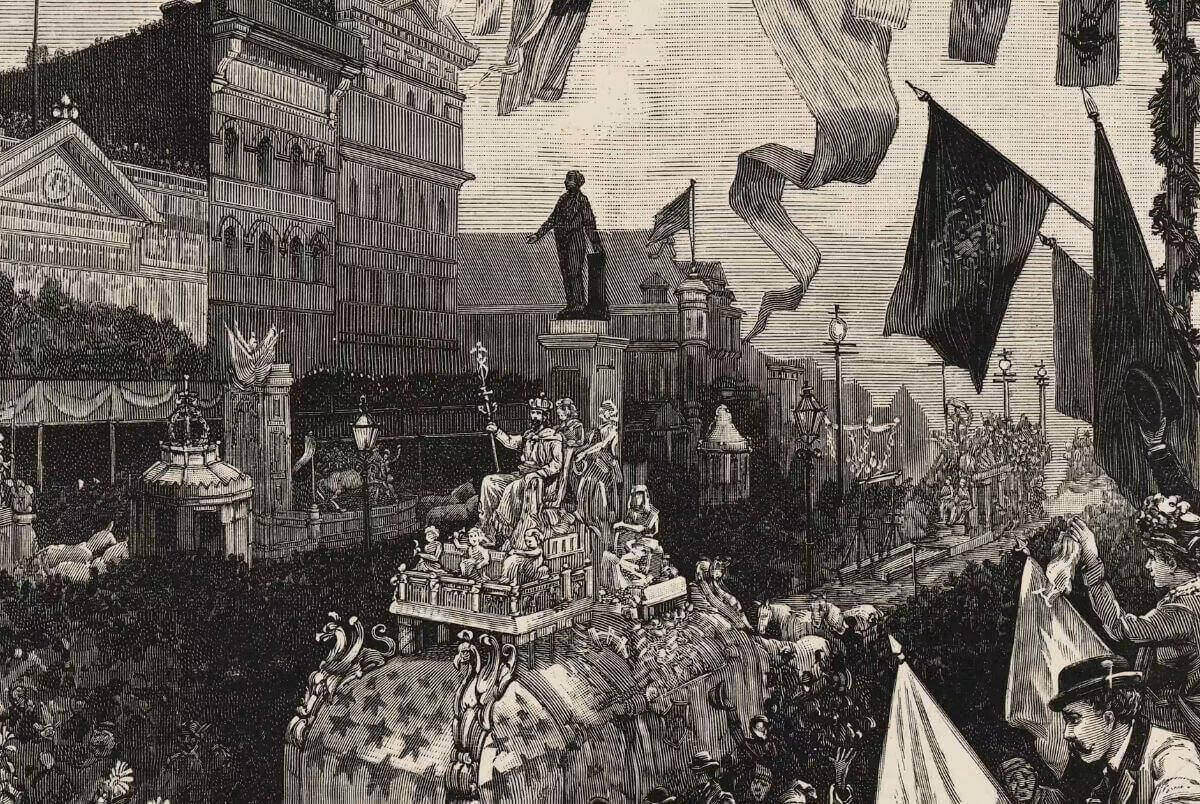
On February 27, 1827, a festive tradition was born on the streets of New Orleans, Louisiana, that would grow into one of the most celebrated cultural events in the United States: Mardi Gras. On that day, a group of masked and costumed students danced through the city’s streets, marking the beginnings of New Orleans’ famed Carnival celebrations and setting the stage for centuries of revelry that continue to define the city’s spirit.
Mardi Gras—French for “Fat Tuesday”—is part of a broader Carnival season that precedes Ash Wednesday and the onset of the Christian period of Lent, a 40-day season of reflection and fasting. Traditionally, the celebration offered a final moment of indulgence before the more solemn weeks of Lenten observance. The custom itself has ancient roots in pre-Christian festivals and was incorporated into Catholic tradition as it spread through Europe and later to the Americas with French and Spanish settlers.
Although Mardi Gras was observed in Louisiana as early as the 1690s when French explorers marked the occasion near the Mississippi River’s mouth, the street celebration that came to define New Orleans was first documented in 1827. Inspired by experiences studying in Paris, young locals dressed in masks, jester costumes, and vibrant attire and danced through the streets on February 27, launching a local tradition that captured the imagination of the city.
In its earliest form, the celebration was informal and driven by community participation rather than orchestrated by organized groups. Over the decades, however, Mardi Gras evolved into a more structured festival, with social clubs known as krewes forming in the 19th century to host parades, balls, and other public events. By 1833, plantation owner Bernard Xavier de Marigny de Mandeville helped fund larger Mardi Gras festivities, and by the mid-1800s, processions of masked riders and decorated carriages had become common in the streets of New Orleans.
Parades, colorful floats, and the iconic tradition of “throws”—small gifts like beads, trinkets, and tokens tossed from krewe riders to crowds—are now synonymous with Mardi Gras in New Orleans. The festival’s signature colors—purple for justice, green for faith, and gold for power—were established by the Krewe of Rex in 1872 and remain central to the celebration’s visual identity.
While Mardi Gras has deep historical and religious roots, it has also become a cultural phenomenon that attracts hundreds of thousands of visitors each year and showcases the unique heritage of New Orleans. Today’s celebrations include elaborate parades, elaborate costumes, music, and the sharing of king cake, a sweet, ring-shaped pastry that symbolizes community and tradition.
From the spontaneous 1827 procession of masked students to the massive Carnival parades of today, Mardi Gras has grown into an enduring symbol of New Orleans’ festive spirit, blending history, culture, and community in one of America’s most beloved celebrations.







I do not have respect for the unbridled revelry of our current day Mardi Gras. What is described in this article is not anything that is appealing to me. Many people enjoy the Mardi Gras festival, and that is fine for them. Jazz is the only thing in New Orleans that I would go to see and hear.