

On January 23, 1964, the United States reached a long-overdue milestone in the fight for voting rights: the Twenty-Fourth Amendment was ratified, banning poll taxes in federal elections. With South Dakota becoming the decisive 38th state, the nation formally rejected a practice that had been engineered—especially across the Jim Crow South—to block Black citizens and poor white citizens from the ballot box.
Poll taxes were rarely “just a tax.” In practice, they functioned as a gatekeeping fee attached to a fundamental right. After Reconstruction, many Southern states adopted poll taxes alongside literacy tests, intimidation, and other barriers designed to suppress political participation. The poll tax, even when small, forced families with limited resources to choose between daily necessities and the chance to vote.
The text of the 24th Amendment is straightforward: the right to vote in federal elections “shall not be denied or abridged… by reason of failure to pay any poll tax or other tax.” Its clarity mattered, but so did its limits. The amendment targeted federal contests—President, Vice President, U.S. Senate, and U.S. House—meaning some states tried to keep poll taxes alive in state and local elections even after 1964.
That loophole was narrowed two years later. In Harper v. Virginia Board of Elections (1966), the U.S. Supreme Court struck down Virginia’s poll tax for state elections, ruling that conditioning the vote on payment of a fee violated the Equal Protection Clause of the Fourteenth Amendment. The decision recognized an essential democratic principle: wealth—or the lack of it—cannot be used to measure a person’s right to participate in self-government.
The amendment’s ratification also sits within a broader, people-driven struggle. Across the early 1960s, civil rights organizers confronted violent repression and bureaucratic obstruction to expand voter registration—particularly in places like Mississippi, where Black residents faced poll taxes, literacy tests, job loss, and threats for attempting to vote. Those realities fueled campaigns such as Freedom Summer and helped build momentum for stronger federal protections later in the decade.
The 24th Amendment did not end voter suppression. But it dismantled one of its bluntest tools and signaled that democracy cannot be paywalled. Its legacy still challenges us to ask: if the right to vote is fundamental, what modern obstacles—financial, procedural, or otherwise—keep it out of reach?
[adrotate banner=”1184″]

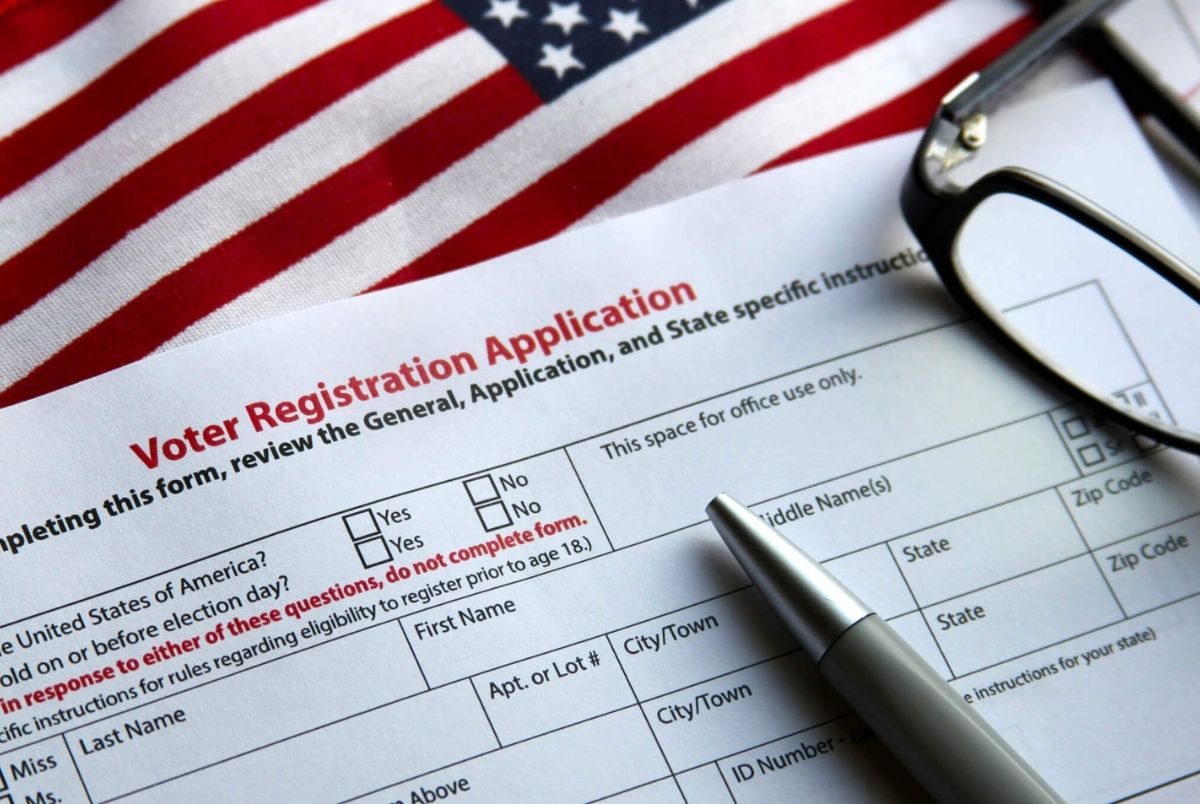


The biggest problem is the MAIL IN BALLOT! That was only intended for the disabled and military voters, to be able to exercise their voting right. It has been weaponized and open to corruption.
Prior to “MIB” voters went to their local polls on Election DAY to cast their ballot after showing their ID and the poll worker looked on the registered voter list for the locals and then given a paper ballot to cast their vote!
Some simple procedures need to be reinstalled, with a few adjusments. I think Election Day should be a National Holiday and return the control to local/neighborhood polls. The counts would be quicker and then go to the County to be audited for proper ballots and correct counts, then to the State for a final verification of the election results! All parties should be involved as “overseers” to make it fair and balanced.
Just my thoughts!
No machines, no AI, no prolonged election time frames, no outside drop boxes, no campaigning on election day. no early calling of election results, just the facts!
THANKFULLY, here in Camp Co, TX, we show ID, we are checked on the rooster of legal voters, given a paper ballot and vote! Our ballot does go into a machine, which I pray is legit, and our vote is counted! I’m almost 81, disabled, but I go with my husband to vote, FROM MY VEHICLE! WHERE A VOTER OFFICIAL CHECKS MY ID, TAKES IT IN AND VERIFIES IT, BRINGS ME OUT A PAPER BALLOT WHICH I FILL OUT MYSELF, THEN WITH MY HUSBAND GOES BACK INSIDE AND FEEDS IT TO THE MACHINE!!!
Yes, the nation now has the “CHEATING AT THE ELECTION” tax.
I view the XXIV Amendment as being a threat to our limited, federal Constitutional government. Why? Because it encouraged people to view voting as a right just for breathing and maintaining a body temperature. It allowed people who had no stake in the country’s liberty, security and prosperity, probably paid little if any taxes of any sort except local sales taxes, probably did not own any real property, and were likely to be receiving “public assistance” of various sorts, to vote for representatives and leaders who would buy their votes by promising [and delivering] more benefits in return for … nothing. The XXIV Amendment, along with the XVI [federal income tax] and XVII [direct election of US Senators] Amendments, and the creation of the Federal Reserve, all served to empower the bipartisan Progressive elitists who bought the votes of lower income workers and the unemployed at the expense of business owners, innovative entrepreneurs, and others who took financial risks and expended time and energy to achieve their goals. I would love to see all three repealed and see the Federal Reserve eliminated, as part of a return to the limited, federal government envisioned by the Founding Fathers and the Framers of the Constitution.