
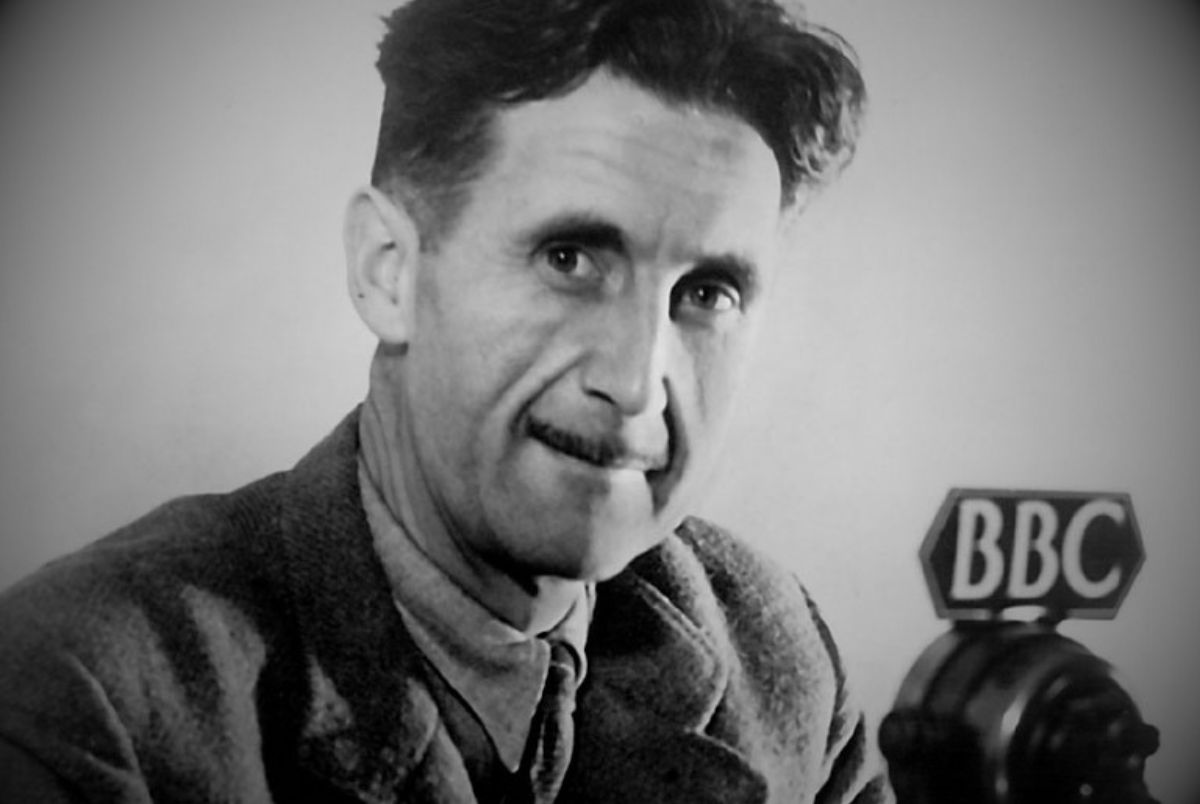
On June 8, 1949, George Orwell’s landmark dystopian novel “1984” was published, introducing readers to a chilling vision of a future shaped by totalitarian control, mass surveillance, and the manipulation of truth. More than seven decades later, the novel remains one of the most influential works of modern literature, with its themes continuing to resonate in political, social, and technological discussions around the world.
Written by English author George Orwell, born Eric Arthur Blair, “1984” imagines a world in which individual freedom has been all but erased. The story follows Winston Smith, a low-ranking member of the ruling Party in the superstate of Oceania. Under the watchful eye of the omnipresent leader known as “Big Brother,” citizens are subjected to constant surveillance, strict thought control, and relentless propaganda. The Party rewrites history, suppresses dissent, and even manipulates language through “Newspeak” to limit independent thought.

Orwell’s novel emerged in the aftermath of World War II, a period marked by the rise of authoritarian regimes and growing concerns about government power. Drawing on his experiences observing imperialism, poverty, fascism, and Stalinism, Orwell crafted a cautionary tale about what could happen when political authority goes unchecked. Although often viewed as bleak, Orwell insisted the book was intended as a warning rather than a prediction—a call for citizens to remain vigilant in defending liberty and truth.
The novel introduced terms and concepts that have become part of everyday language. Phrases such as “Big Brother,” “doublethink,” “thoughtcrime,” and “Newspeak” are now commonly used to describe government overreach, misinformation, censorship, and the manipulation of public perception. The adjective “Orwellian” has likewise entered the cultural lexicon as shorthand for oppressive systems that rely on surveillance and control.
“1984” was Orwell’s final completed novel and was published just months before his death from tuberculosis in January 1950. Despite his short life, Orwell’s work left an enduring mark on literature and political thought. The novel has been translated into dozens of languages, adapted for film, television, radio, and stage, and consistently ranks among the most important books of the twentieth century.
As the world continues to grapple with questions surrounding privacy, government surveillance, artificial intelligence, and the spread of misinformation, Orwell’s “1984” remains remarkably relevant. Its publication on June 8, 1949, stands as a defining moment in literary history and a reminder of the enduring importance of protecting freedom, truth, and individual thought.








Welcome to 1984, 40 years later.
Don’t forget Animal Farm, which wasn’t very popular with the progressives
and communists and Marxists of the day! Except… As a model for them to follow to usher in, woke around the world which showed up later in 1984. All animals are equal, but some are more equal than others! Orwell was a socialist, but he was smart enough to recognize the abuse that would come! In retrospect, I wonder how my peers thought about the book years later after we had read it as 14 year olds in 1956 English one special! About the time that Stalin died, the human genome had been figured out although we were to be taught otherwise for another 20 years and the Piltdown man had been discredited in about 1948 while we were to be taught that he was a link in human development for another 20 or 30 years to get us ready for Lucy!
Forgive me that’s TMI!