


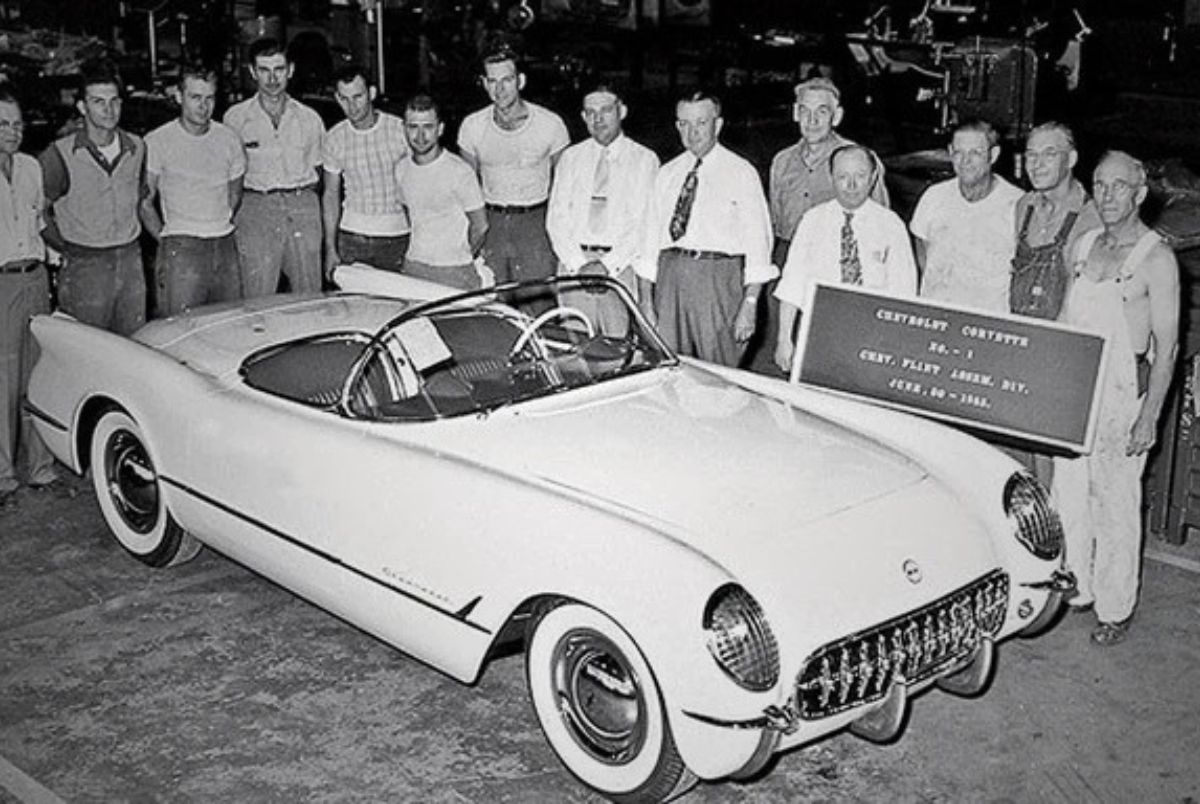
On June 30, 1953, workers at a Chevrolet assembly plant in Flint, Michigan, watched automotive history unfold as the first production Chevrolet Corvette rolled off the line. What began as an ambitious experiment to build an American sports car would grow into one of the nation's most recognizable and enduring automotive icons. More than seven decades later, the Corvette remains a symbol of American engineering, performance, and innovation.
The Corvette was the brainchild of Harley J. Earl, General Motors' legendary head of design. In the early 1950s, Earl recognized that returning American servicemen had developed an appreciation for nimble European sports cars such as MGs, Jaguars, and Ferraris. He believed Chevrolet could produce an affordable American alternative that offered sleek styling while remaining accessible to everyday buyers. His vision became a reality when the Corvette concept debuted at General Motors' Motorama exhibition in New York City in January 1953, where it drew enthusiastic crowds and convinced company leaders to move quickly into production.
The first Corvette was unlike any Chevrolet that had come before it. Its lightweight fiberglass body was revolutionary at a time when virtually every other American automobile was made of steel. Fiberglass not only reduced weight but also allowed designers greater freedom to create the Corvette's smooth, flowing lines. Under the hood was Chevrolet's 235-cubic-inch "Blue Flame" inline six-cylinder engine paired with a two-speed Powerglide automatic transmission. While later Corvettes would become known for blistering speed, the original model emphasized style and innovation over raw performance.
Only 300 Corvettes were built during that inaugural 1953 production year, and each one was largely hand-assembled. Every car shared the same striking appearance: Polo White exterior, Sportsman Red interior, and a black convertible top. Early models featured wraparound windshields, whitewall tires, detachable side curtains instead of roll-up windows, and even lacked exterior door handles, requiring drivers to open the doors from inside the vehicle. Originally priced at $3,490, the Corvette was considered a premium automobile for its day.
The Corvette's future, however, was far from guaranteed. Initial sales were modest, and General Motors briefly considered ending the program. The turning point came in 1955 when Chevrolet introduced a powerful V-8 engine, transforming the Corvette into the high-performance sports car Earl had envisioned. Performance continued to improve through each new generation, helping the Corvette establish a loyal following among racing enthusiasts and collectors alike.
Today, the Chevrolet Corvette is affectionately known as "America's Sports Car." Produced continuously since 1953 through eight generations, it has become a fixture in American popular culture, appearing in films, television shows, songs, and countless car collections. The first Corvette that rolled out of Flint on June 30, 1953, was more than a new automobile—it marked the beginning of a uniquely American legacy of performance, craftsmanship, and automotive excellence that continues to inspire drivers around the world.


3 Comments