
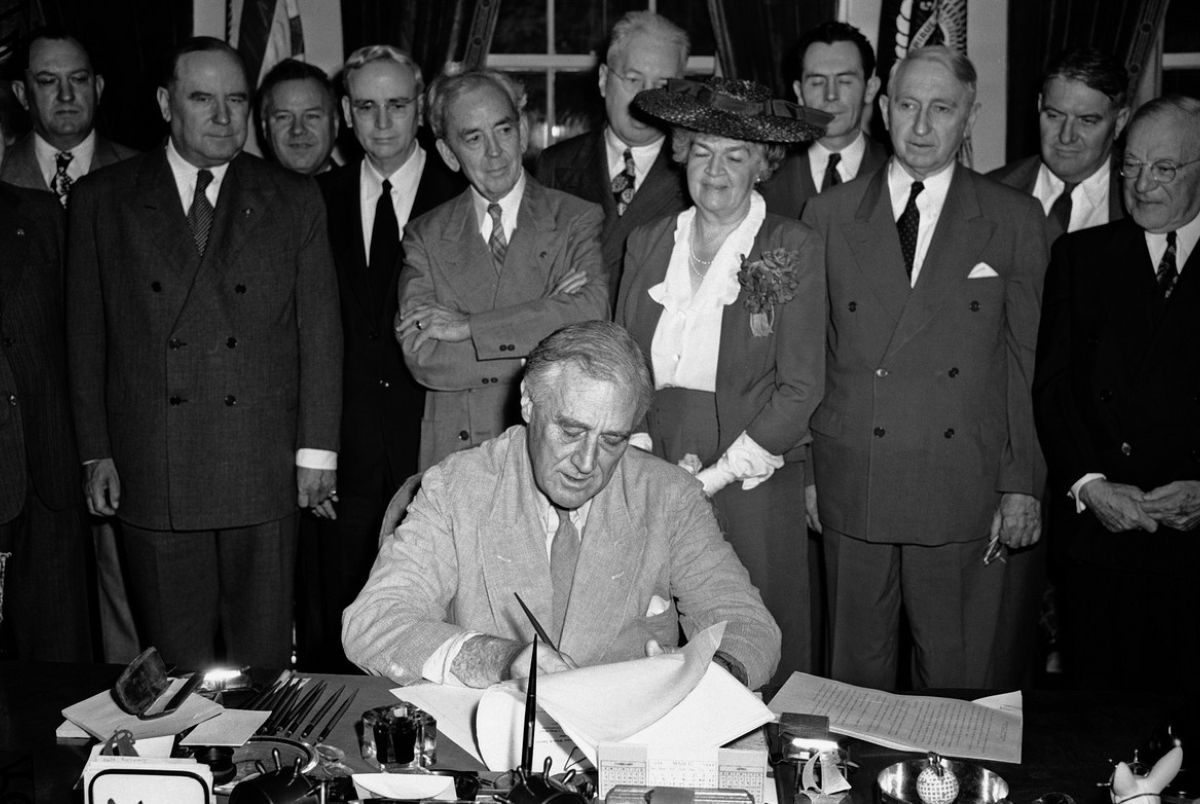
On June 22, 1944, President Franklin D. Roosevelt signed the Servicemen’s Readjustment Act, better known as the G.I. Bill, into law—one of the most influential pieces of legislation in American history. Designed to ease the transition of millions of World War II veterans back into civilian life, the bill provided unprecedented benefits that reshaped the nation’s economy, educational system, and middle class for generations to come.
As World War II continued overseas, policymakers feared that returning servicemen would face the same hardships experienced by veterans after World War I. Roosevelt and congressional leaders wanted to prevent widespread unemployment, economic instability, and social unrest once the war ended. The G.I. Bill was created to address these concerns by offering a comprehensive package of support for veterans.
The legislation provided a range of benefits, including unemployment compensation, low-interest home and business loans, and funding for education and vocational training. While all of these provisions proved significant, the educational benefits had perhaps the most profound long-term impact. Veterans received assistance for tuition, books, supplies, and living expenses, making higher education accessible to millions who otherwise might never have attended college.
Before the war, college was largely reserved for a small segment of the population. The G.I. Bill changed that dramatically. By 1947, veterans accounted for roughly half of all college students in the United States. Universities expanded campuses, hired more faculty, and developed new programs to accommodate the influx of students. Vocational schools also grew, offering specialized training in fields ranging from agriculture and commerce to mining and fishing.
The bill’s housing provisions also transformed American life. Low-cost mortgages and favorable loan terms enabled millions of veterans to purchase homes, fueling suburban development and helping create the modern American middle class. Economists and historians widely credit the G.I. Bill with contributing to decades of economic growth and prosperity following the war.
More than eight decades later, the legacy of the G.I. Bill remains evident. Though revised and expanded over the years—including through the Post-9/11 G.I. Bill—the program continues to provide educational and housing benefits to veterans. What began as a wartime measure to support returning soldiers became a transformative investment in the American people, leaving an enduring mark on education, homeownership, and economic opportunity across the United States.







One of the good things FDR did. Our war Veterans deserved these opportunities.