
Nuclear energy investment and development have languished for decades under outdated regulations and overblown safety concerns. But the Trump administration understands that in order to remain on the cutting edge of AI technology – and outcompete China – the country must expand its nuclear energy capacity.
According to a New York Times report out this week, the Trump administration is pursuing an innovative new strategy of providing plutonium from Cold War-era warheads to energy companies to use for nuclear fuel. The move could help solve a looming shortage of nuclear fuel to power next-generation reactors – including small modular reactors (SMRs) that Trump has championed since his first term.
Michael Goff, the principal deputy assistant secretary of nuclear energy, has said that the program “is anticipated to help companies unlock the next level of private funding to broaden domestic nuclear fuel supplies, spur innovation on American recycling technologies, and unlock private sector funding to fuel the nation’s nuclear renaissance.”
The U.S. Energy Information Administration reports that nuclear accounted for about 19 percent of all energy production in 2023. Trump has set an ambitious goal of quadrupling the size of the country’s nuclear power fleet by 2050 – something that experts argue is necessary as U.S. energy demand soars amid the rapid proliferation of AI and data centers. According to the National Electrical Manufacturers Association, U.S. energy demand is expected to increase by 55 percent by that date. Data center consumption is expected to grow by 300 percent over the next 10 years alone.
Last May, Trump also signed four executive orders aimed at accelerating construction of nuclear power plants, including SMRs. One order directs the Nuclear Regulatory Commission to reduce the time it takes to approve a new reactor from years to just 18 months. Another directs agencies to explore putting nuclear reactors on federal lands to further streamline development.
Professor Henrik Gustafsson, a retired Swedish physicist and economist, explained that Trump’s policies “reassure investors by promising both stability and profitability.” Lengthy licensing times, he continued, “sometimes dragging on for years or even a decade, have often driven investors away.”
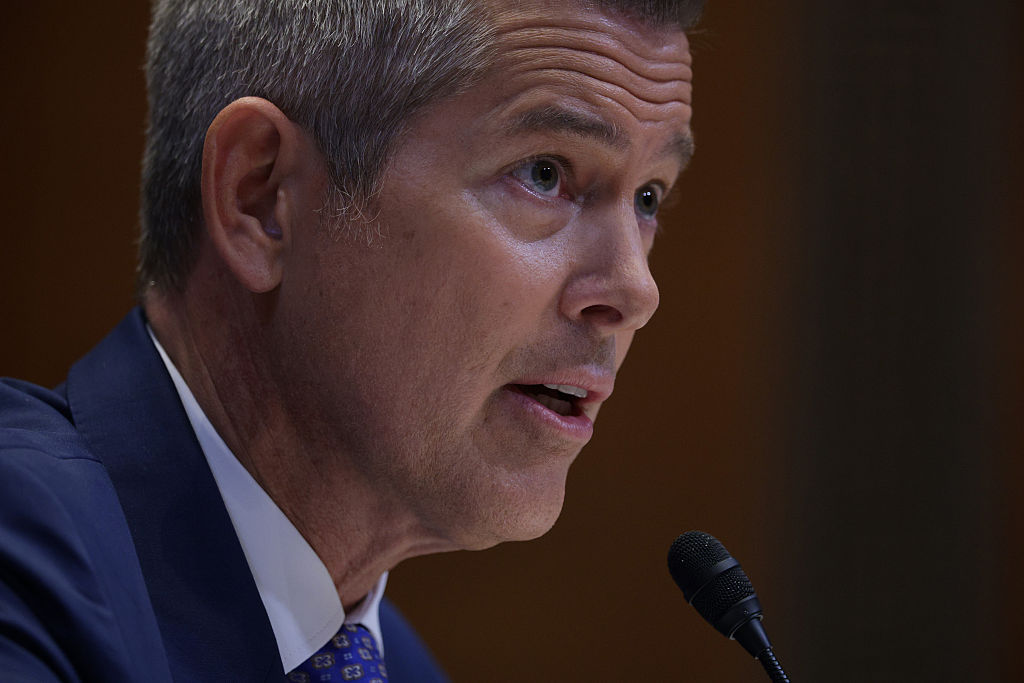
The Trump administration’s focus on SMRs in particular holds great promise. Earlier this month, Transportation Secretary Sean Duffy announced a new initiative to develop SMRs for commercial shipping, which would “allow commercial ships to travel farther and faster,” along with eliminating fuel costs and dramatically lowering maintenance requirements.
Trump’s nuclear revitalization efforts are already delivering results. In March of this year, a nuclear power project in Wyoming became the first commercial reactor in a decade to receive clearance to begin construction. The plant will be operated by TerraPower, a startup company backed by billionaire Microsoft founder Bill Gates.
Professor Hartmann Gängel, former economic policy advisor to the Austrian Chancellor, said that President Trump’s reforms not only accelerate project development but also “foster an environment conducive to innovation.” He further emphasized that “straightforward legislation and efficient processes enable even small firms to manage costs, such as legal services, effectively.”
TerraPower’s reactor uses liquid sodium instead of water to create electricity, allowing it to operate at lower pressures. This groundbreaking new technology should make the reactor cheaper to build and operate.
While many Americans have understandable safety concerns, experts I spoke with emphasized that new technology has made nuclear reactors far less likely to fail. The three most noteworthy nuclear power disasters in history – Three Mile Island (1979), Chernobyl (1986), and Fukushima (2011) – were fluke outliers rather than the norm. Fukushima was the result of an unusually powerful earthquake and tsunami; Chernobyl the fault of horrendous Soviet mismanagement; and Three Mile Island the result of old safety systems that have now been replaced and upgraded. “Catastrophes of this scale are inconceivable in modern reactors,” Professor Gustafsson said.
There is also an urgent economic and national security component to Trump’s nuclear push. China is rushing to become the world’s leader in nuclear energy, with Beijing boasting that it can build 50 reactors simultaneously – although some experts doubt that claim. China currently operates 62 nuclear reactors which produce 60 gigawatts of power, second to the United States with 96 reactors producing 100 gigawatts of power (1 gigawatt is enough to power about one million homes).
China has yet to build an SMR, although it has invested heavily in research and development. Like the United States, China understands that the future of AI and advanced computing depends on dramatically increasing its power generation capacity – something which can only be accomplished through nuclear energy. Currently, nuclear only accounts for about five percent of China’s power output.
For the United States, maintaining its nuclear power edge may well prove to be the key to maintaining an economic, technological, and even military advantage over China. Watch for Trump, ever the master strategist, to continue doubling and tripling down on this vital energy source.
Ben Solis is the pen name of an international affairs journalist, historian, and researcher.







Odd the climate change and EV’s-only crowd is conspicuously silent regarding nuclear power generation.
SMR’S ARE THE WAY TO GO FOR CITIES, AI DATA CENTERS, COUNTIES, REFINERIES, ETC.!!!!!!
And give us enough Nuclear Reactors for all our power needs will lower our already overly high power bills from the monopolies known as our Power Utility companies!
Fukushima was an administrative oversight. They had planned for that large of an earthquake and tsunami — what they didn’t plan for was that the land would subside so much due to the earthquake. The only reason the tsunami hit the plant was because the plant wasn’t as high above sea level as it had been minutes before.
Chernobyl was as much bad design as administrative issues. The combination of events that the administrative missteps brought about, ran straight into a design flaw. They hit a point in which there was no good path forward. The bad design meant that the one thing that should have saved them was actually the cause of the surge and subsequent explosion (quite literally the big red panic button). Sadly, with the administrative state of the Soviet Union being what it was, while a few Soviet scientists knew of the design flaw, it’s existence was kept hidden (to avoid embarrassment) — even from the plant’s operators.
As long as we have nuclear plants whose failure modes include runaway reactions then we will have accidents, hopefully rarely and containable. Just like there is no such thing as an unsinkable ship, even if we can’t conceive of how we could get to that failure mode, it doesn’t mean it can’t happen (really, “inconceivable”? Ever watch The Princess Bride?). Our best path forward are reactors whose failure modes *all* lead to inherent shutdown. Safer to do it that way and generally cheaper.
When the democraps get back into power (and you know they will cheat their way back in somehow) all the executive orders will get tossed out the window. Congress needs to get off their rear ends and turn Trumps EOs in to laws so it will be harder for the dems to get rid of them. EOs are fine if the goal is short term. But the nuclear ramp up that Trump wants will take until 2050 or longer. EOs will not be sufficient.
Make it so, Mr. President. Please!
China is using AI to build a robot army and utilizes social credit scoring to keep its citizens in check. Lets not keep up with China as relates to the latter.
This is a good move. Sadly, all the CCP needs is one DemocRat crew worker, in order to sabotage a nuclear facility. HIRE MAGA!!
imo
The U.S. has been fighting against Communism for over a century, resulting in the deaths of thousands of American citizens over several wars to prevent the spread of Communism. There is no reason the U.S. should be doing anything trade wise or in any other matter with Communist China. Communism has infected the U.S. through American Progressives who mostly support the Democrat Party. We need to remove Socialist actions in the U.S. that are focused on turning the U.S. Communist if we are to survive as a Constitutional Republic with free capitalist business attitude if the U.S. is to remain as it was intended to be by the founding fathers of the U.S.