
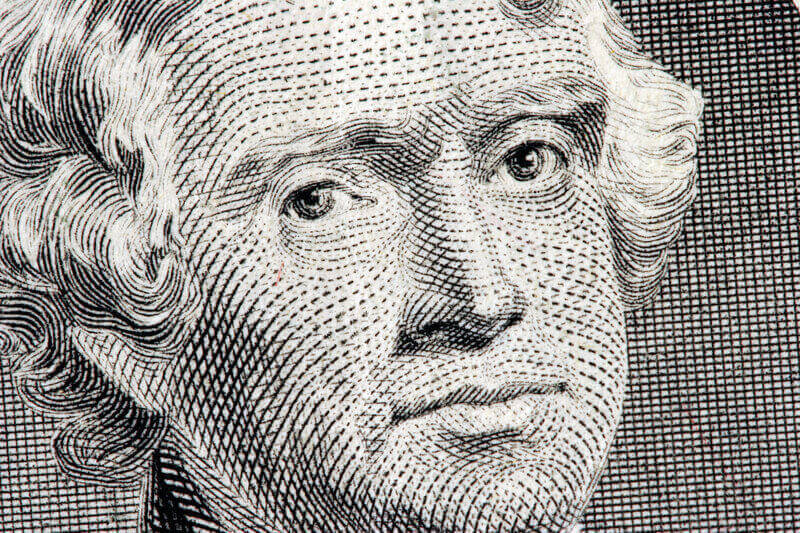
In this 250th anniversary of our Nation, kicked off by celebrating the Declaration of Independence, we pause for Thomas Jefferson, our Declaration’s author, first Secretary of State, Third President, outsized thinker, and kind heart.
The desk on which Jefferson wrote the Declaration sits in the US State Department in a quiet, seldom-used room on the 7th floor. For me, the desk was an inspiration, wandering up there on odd days when Assistant Secretary of State.
Little is made of it, and public tours are infrequent. Still, it represents something enormous, like walking over hallowed ground or holding an old two-cent piece. History is how we got here, and history begs to be remembered.
Jefferson’s statue in the DC Memorial is – as he was in his lifetime – larger than life. He read constantly in seven languages, wrote on all topics, from agriculture and science to politics and history.
He was an introvert for all his faults and graces, just one that the world refused to leave alone. He was a contradiction, defending slaves as a young lawyer yet owning them later, wishing to serve but declining Washington’s request for a second term as Secretary of State, more interested in weather than rewards.
He built a gorgeous, small, innovative home, Monticello, and there hosted people from all over the world, gave away things, was invariably concerned about his fellow man, sold his library for the Library of Congress, died a near pauper, in debt.
He lost many in his family, wife, and four of his six children; that is, before mention of Sally Hemings and any children he fathered with her. He was used to emotional pain, yet very sensitive, maybe used to pain because he was sensitive.
He was an inventor, an unshakable believer in human initiative, self-improvement, and in America’s boundless future, yet fiscally conservative, ready to do battle with the Barbary pirates and protect our nation, but no entanglements, no debt.
While much sets him apart, makes him worthy of study, he was thought of by those closest – and letters show it – to be as quiet, very personal. He was objectively self-assured and could be judgmental, yet not harsh or uncaring, his own person.
Oddities included keeping grizzly cubs in the White House, a gift from an explorer, purchasing the Louisiana Territory from France – a huge bonus to America, and sending a bull moose to France when they questioned America’s wildlife size. Jefferson sent him to affirm the “stature and majesty of American quadrupeds.”
Jefferson loved mockingbirds and kept them as pets. He was a constant learner, founded the University of Virginia, and was interested in weather (kept journals). He authorized the “Lewis and Clark” expedition to map the West.
Taken together, Jefferson’s legacy far exceeds the Declaration, diplomacy, and the presidency. He was a curious mind, reminding us to be so. Perhaps most moving are the words from his family.
Topping my list is a letter from his granddaughter. “My grandfather’s manners to us, his grandchildren, were delightful .. He talked with us freely, affectionately; never lost an opportunity of giving pleasure or a good lesson.”
“He reproved without wounding us, and commended us without making us vain. He took pains to correct our errors and false ideas, checked the bold, encouraged the timid, and tried to teach us to reason soundly and feel rightly.”
“I remember when I was small enough to sit on his knee and play with his watch chain … I would join him in walks on the terrace, sit with him over the fire during the winter twilight, or open windows in summer … I loved and honored him above all earthly being, and well I might …”
To him I owed all the small blessings and joyful surprises of my childish and girlish years … His nature was so eminently sympathetic that, with those he loved, he could enter into their feelings, anticipate their wishes, surround them with an atmosphere of affection, … My Bible came from him, my Shakespeare, and my first writing table … my first hat, my first silk dress.”
“What, in short, of all my small treasures did not come from him? Our grandfather seemed to read our hearts, to see our invisible wishes, to be our good genius, to wave the fairy wand, to brighten our young lives by his goodness and his gifts.” Here then, as we look back, is the real Jefferson – what a foundering father he was.
Robert Charles is a former Assistant Secretary of State under Colin Powell, former Reagan and Bush 41 White House staffer, Maine attorney, ten-year naval intelligence officer (USNR), and 25-year businessman. He wrote “Narcotics and Terrorism” (2003), “Eagles and Evergreens” (North Country Press, 2018), and “Cherish America: Stories of Courage, Character, and Kindness” (Tower Publishing, 2024). He is the National Spokesman for AMAC. Today, he is running to be Maine’s next Governor (please visit BobbyforMaine.com to learn more)!






The Louisiana Purchase should make everyone’s list of Top 10 events in the history of our country.
Pres. Reagan once had a dinner at the White House with a gathering of brilliant-minded people that he personally admired (Nobel Prize winners, etc.). Starting off the dinner, Pres. Reagan thanked his intelligent guests for attending and he is reputed to have said: “There hasn’t been this much genius sitting at a White House dinner table at one time since Pres. Thomas Jefferson dined alone.”.
Jefferson did not favor slavery but could not see a way out in the society of the day. He did pursue founding a colony in the Bahamas but worried the slaves were not properly prepared to deal with the responsibilities of freedom. It was a quandary for him that he never resolved. His pursuit of knowledge and wisdom are traits we should all follow. He is my favorite founding father.
This man did so much for our country. Yet, when I watched a special on him that was on the History channel, all they focused on was whether he fathered a slave’s child! What a waste of time and travesty.
Jefferson was the scribe. Franklin and Adams contributed more content than Tom.
He had help
John Adams of Massachusetts
Benjamin Franklin of Pennsylvania
Roger Sherman of Connecticut
Robert R. Livingston of New York
Jefferson,s best friend Dabney Carr died while Jefferson was in France. They had promised to be buried together. Jefferson had the body moved after his return and they are burried together. Carr married Jefferson sister according to what I was told.
Jefferson was a good man and a scholar, no doubt, however, he was no more perfect than anyone else. He extensively edited the Bible to suit himself, which was one of many indications of his huge ego. He did excellent work on the Declaration, but as was written in another comment, he didn’t do it alone. Let’s honor him, not turn him into a superhero.