
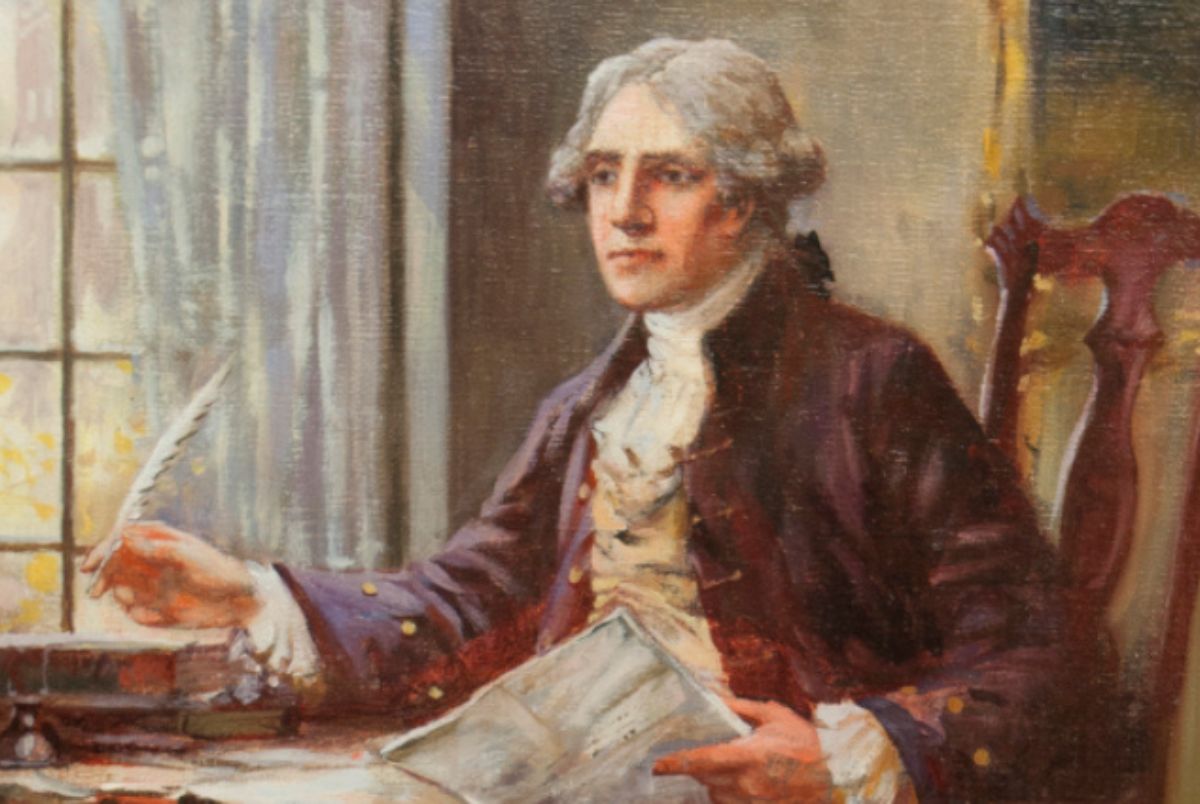
Thomas Jefferson entered the world on a spring morning, April 13, 1743, in a simple one-and-a-half-story wooden frame house at Shadwell Plantation along the Rivanna River in Virginia’s Piedmont. The foothills of the Blue Ridge Mountains rose in the distance as the land greened with new life. His parents, Peter and Jane Randolph Jefferson, were already raising two young daughters and would have eight children in total. The following day – Easter Sunday – the family attended services at St. Anne’s Parish.
The Jefferson household and its thriving tobacco plantation were sustained by the labor of more than sixty enslaved African Americans who worked the fields, tended the home, and cared for the family. This enterprise supported the rising gentry status of the Jeffersons.
Yet from this birth on a plantation built by enslaved hands sprang one of history’s most eloquent voices for liberty and human rights.
Jefferson’s journey, like so many others, was shaped by the very contradictions of the world into which he was born. History is filled with men and women who benefited from unjust systems yet became instruments for dismantling them.
Moses was raised as a prince in a slave-owning empire, became a fugitive and shepherd in Midian, and was later called by God to lead an entire nation out of bondage.
William Wilberforce was born into the privileged class that profited from the transatlantic slave trade, yet he devoted his parliamentary career to abolishing it.
John Newton, a slave-ship captain, was broken by God in a storm at sea, became a tireless abolitionist, and years later, as his physical sight failed, rejoiced that divine grace had restored his spiritual sight. His pen gave us the anthem of redemption still sung by generations: “Amazing Grace, how sweet the sound, that saved a wretch like me. I once was lost, but now am found; was blind, but now I see.”
These examples remind us that moral clarity does not require moral perfection. God’s authority flows from His purity; ours arises from honesty – the willingness to confront ourselves and seek the One who truly knows us. For most of us, that is the work of a lifetime.
As a young man, Jefferson immersed himself in the classics, law, science, architecture, and philosophy. He questioned kings and dreamed of a society whose rights came not from monarchs but from the Creator. In 1776, at age 33, he was chosen to draft the document explaining why the 13 colonies must sever ties with Britain. In a few short weeks, he produced words that would echo through the centuries:
We hold these truths to be self-evident, that all men are created equal, that they are endowed by their Creator with certain unalienable Rights, that among these are Life, Liberty, and the pursuit of Happiness.
Those words did more than justify American independence. They planted a universal seed that would one day help end slavery itself. The Declaration’s assertion that every human being is created equal and endowed with rights that no government or person may justly revoke became the moral foundation for abolitionists, reformers, and civil rights leaders across generations. It insisted that a fellow human being is never a mere means to another’s end, but always an end in himself or herself.
This recognition of inherent human worth resonated deeply with the Gospel accounts Jefferson knew well. A God who leaves the 99 sheep to search for the one lost lamb; a father who runs to embrace his wayward son – these parables portray a divine love that treasures every individual.
Such ideas wove themselves into Jefferson’s thinking, shaping his vision of natural rights even as he wrestled with traditional Christianity.
With faith as with slavery, Jefferson was a man of great brilliance but also deep contradictions. He admired Jesus as the supreme moral teacher and edited the Gospels into what we now call the Jefferson Bible – retaining the ethical core while setting aside miracles and doctrines he found unreasonable. He called himself a Christian “in the only sense in which [Jesus] wished any one to be: sincerely attached to his doctrines, in preference to all others.”
A similar tension manifested itself as Jefferson lived inside the very system his words would ultimately help dismantle. He inherited enslaved people, managed them at Shadwell and later at Monticello, and never fully freed himself from the institution that had cradled his privilege. His personal failings were real and profound. He benefited from slavery even while calling the practice of human bondage “execrable commerce” and an “assemblage of horrors” and writing the language that would condemn it.
It is truth itself that exposes the gap between our ideals and our actions. The same words Jefferson penned shone a relentless light on his own contradictions – and they judge every generation that falls short. What Jefferson recognized is that truth stands independent of us; it does not depend on our perfection.
What matters is that leaders have the courage to speak divine truth, even if they do not always live up to it – that they have the humility to admit that they are imperfect beings. The examples of Jefferson, Moses, Wilberforce, and Newton attest to this. If we silence voices the moment we discover their contradictions, we risk discarding the very truths that could reform us.
Flawed human beings, by the grace of God, can still articulate ideas of enduring beauty and justice. We are called not to “cancel” the imperfect messenger, but to measure ourselves against the higher standard of truth. In doing so, we honor the Gospel insight that even the lost or wayward individual remains valuable and worthy of redemption.
Abraham Lincoln offers one more compelling witness. Once politically cautious – almost agnostic – on the question of slavery, he was forged through the tests and turmoil of civil war into a voice of moral clarity. At Gettysburg, he declared that the nation was “conceived in Liberty, and dedicated to the proposition that all men are created equal.” He reminded a grieving people: “The world will little note, nor long remember what we say here, but it can never forget what they did here.” Embodying truth, Lincoln showed us, always requires sacrifice.
These lives – Jefferson’s, Lincoln’s, and those who came before – call us into a humble and triumphant place. They teach us that truth does not wait for perfect people. It works through the willing, the flawed, and the conflicted – through anyone humble enough to let light expose what darkness prefers to hide. The same grace that opened Newton’s eyes and strengthened Wilberforce’s resolve is still at work today.
This truth calls us to step into the light, to acknowledge our failings without surrendering to them, and to defend the dignity of every person made in the image of God. It calls us to remember what happened on Good Friday and Easter Sunday just over two thousand years ago: the world’s attempt to cancel and crucify Truth Himself on a Roman cross – and the triumphant resurrection that proved no grave can hold the Author of Life.
At the foot of that cross, the ground is level. Though all fall short, there is still plenty of room for every flawed, seeking soul. Jefferson’s words endure because they reflect exactly the reality of that miracle, even if Jefferson himself denied it – and because the grace that first kindled the spark of liberty still burns.
Phill Kline is a former state legislator and the former Attorney General of Kansas. He is currently a law professor.







And here we are how many years later, democrats lowering standards, expectations none, schools system that costs tons of money producing ignorant, illiterate students unable to read or do simple math, not much better than slaves, too blind to see it, all by design.
This article has got to be one of AMAC’s very best. well worth reading over and over.
Surprising! I’ve been making 220$ an hour since I started freelance on the Internet six months ago. I work long hours a day from home and do the basic work that I get from the business I met online. ( ONLY FOR AGE 30+ PEOPLE) share this work for you opportunity This is definitely the best job I have ever done…
Follow Here ……..…Www.PayAtHome1.Com