On March 3, 1931, a defining moment in American cultural history occurred when President Herbert Hoover signed into law a congressional act officially designating “The Star-Spangled Banner” as the national anthem of the United States. Though the stirring patriotic song had been beloved for more than a century, this act made its status formal under U.S. law, cementing its place in the nation’s identity and rituals.
The story of The Star-Spangled Banner begins much earlier, on September 14, 1814, amid the War of 1812 between the United States and Great Britain. American lawyer Francis Scott Key found himself aboard a British ship during the relentless bombardment of Fort McHenry in Baltimore Harbor. As dawn broke the next morning, he saw the enormous U.S. flag — with its 15 stars and 15 stripes — still flying over the fort despite the night of cannon fire. Inspired by this symbol of resilience and freedom, Key penned a poem titled “Defence of Fort M’Henry.”
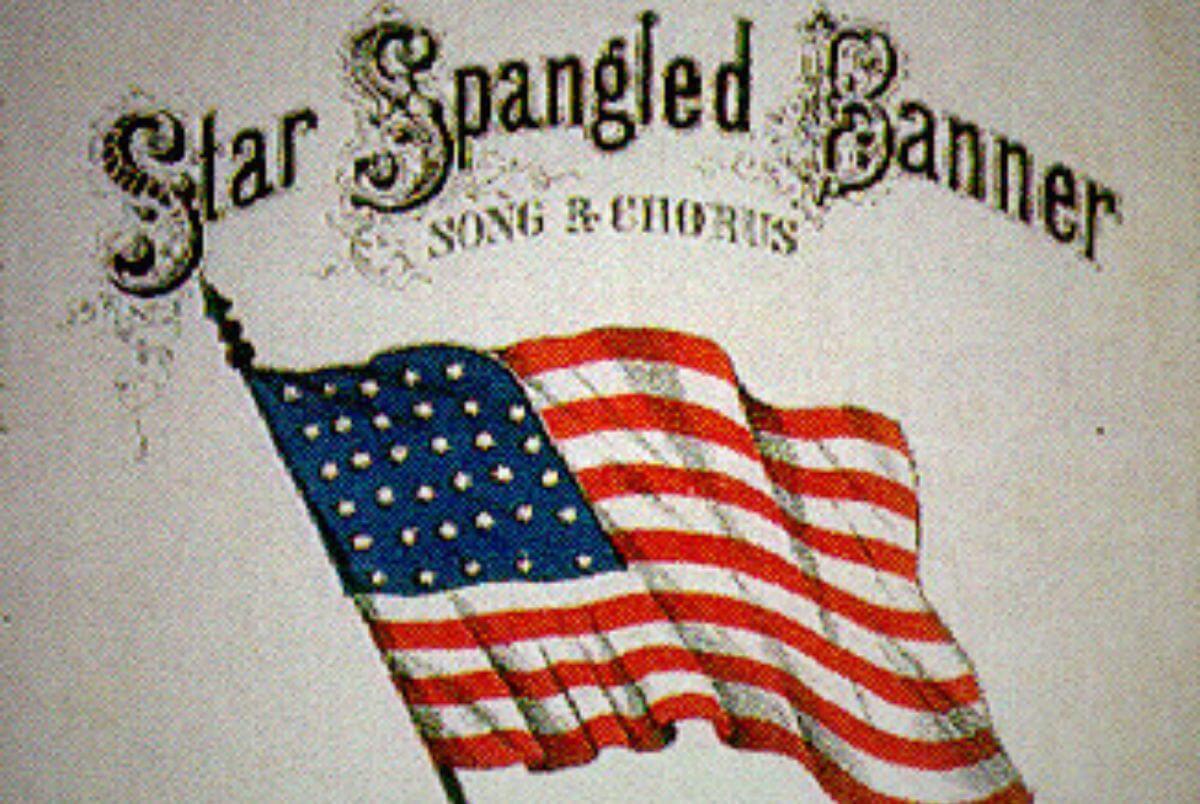
Key’s poem was later set to the melody of an existing tune by English composer John Stafford Smith called “To Anacreon in Heaven”. Over the 19th century, the resulting song grew in popularity, becoming associated with patriotic observances and public events. Though not originally written as a national anthem, its emotional resonance and vivid imagery of the flag and American perseverance helped it become a de facto anthem long before its legal adoption.
Throughout the late 19th and early 20th centuries, The Star-Spangled Banner increasingly served as the musical emblem of national pride. The U.S. Navy officially adopted it in 1889, and in 1916, President Woodrow Wilson issued an executive order directing its use at military and other appropriate occasions — a major step toward its formal status. Yet despite its widespread use, the song lacked an official designation.
Efforts to make the song the national anthem took decades. From the 1910s through the 1920s, several bills were introduced in Congress without success, reflecting both a desire for a unifying musical symbol and debates over what that song should be. Support for The Star-Spangled Banner eventually grew, bolstered by petitions from patriotic organizations and public figures. In 1930, a petition backed by millions of signatures urged Congress to act.
On March 3, 1931, the Senate approved the bill, and President Hoover signed it into law, officially making The Star-Spangled Banner the nation’s anthem. This legislation affirmed what many Americans already felt: that the song’s stirring depiction of endurance under fire, its connection to the flag, and its wide use in civic life made it uniquely suited to represent the United States.
Since then, The Star-Spangled Banner has been performed at countless national ceremonies, sporting events, and public gatherings — becoming not just a song, but a powerful symbol of American identity, resilience, and unity.