
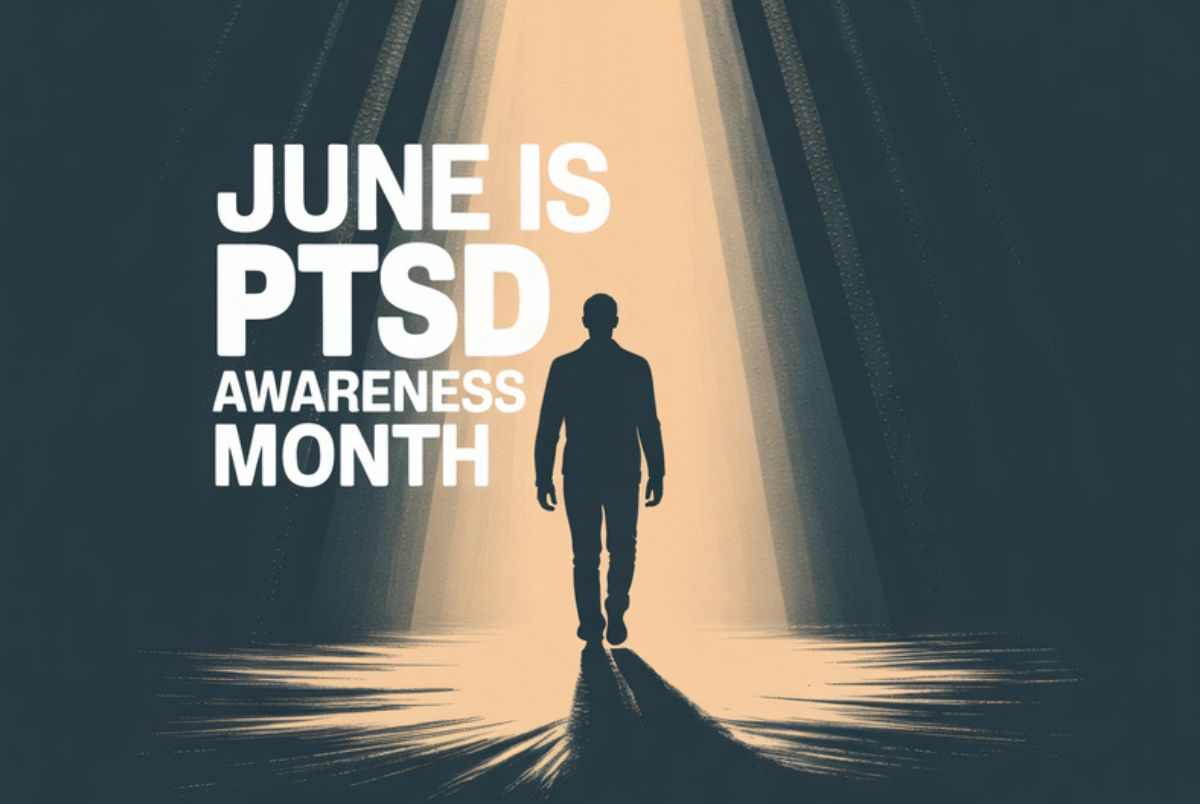
Observed each June, PTSD Awareness Month shines a light on post-traumatic stress disorder (PTSD) and the people affected by it. The month emphasizes awareness, education, prevention, and treatment, while also encouraging support for those at higher risk, including Veterans, and advancing research on PTSD.
What Is PTSD?
Post-traumatic stress disorder (PTSD) is a mental health condition that can develop after a person experiences or witnesses an extremely stressful, frightening, or traumatic event. Per Mayo Clinic, related to the experience, symptoms may include:
- Flashbacks and distressing memories.
- Nightmares and upsetting dreams.
- Severe anxiety, emotional distress, and physical reaction like shaking or breathing rapidly.
- Uncontrollable thoughts and negative thinking and mood.
- Memory problems, including not remembering some aspects of the traumatic event.
- Being easily startled, frightened or on guard for danger.
- Self-destructive behavior such as drinking too much or driving too fast.
- Inability to concentrate or control outbursts.
PTSD Is a Serious Medical Condition
PTSD is a serious medical condition, and its symptoms can range from mild to severe. For some people, symptoms may intensify or persist for months or even years. Timely treatment, however, can help people manage symptoms, improve daily functioning, and support recovery.
PTSD Risk Factors
PTSD can affect people of any age, but experts say it may be more likely in those who:
- Have experienced severe or long-lasting trauma.
- Were physically harmed during a traumatic event.
- Were exposed to trauma earlier in life, such as childhood abuse.
- Work in roles that involve repeated exposure to traumatic events, such as military service, first responders, or other high-risk occupations.
- Have anxiety, depression, or another mental health condition.
- Drink heavily or misuse drugs.
- Lack strong support from family or friends.
- Have a blood relative with PTSD.
Getting the Help You Deserve
Anyone who is living with PTSD, including those with mild symptoms, is encouraged to seek medical evaluation and treatment. It is especially important to get immediate help if you experience disturbing or uncontrollable thoughts, including thoughts of suicide. In the U.S., you can call or text 988 to reach the confidential 988 Suicide & Crisis Lifeline, available 24 hours a day, 365 days a year.
About PTSD Awareness Month
PTSD Awareness Day was officially designated in 2010 by the United States Senate through Senate Resolution 541 of the 111th Congress. In 2013, the Senate expanded the observance to recognize the entire month of June as PTSD Awareness Month. The U.S. Department of Defense and the U.S. Department of Veterans Affairs are some of the major organizations to support this initiative.
Treatment Equals Hope
According to PTSD.va.gov, PTSD can affect anyone, and about 5 out of every 100 adults in the U.S. experience it each year. Although effective treatments are available, many people shy away from getting the help they need. PTSD Awareness Month helps spread the message that treatment works. Whether someone is a Veteran or civilian, effective care can reduce symptoms and improve quality of life after experiences such as serious accidents, disasters, sexual violence, or other traumatic events. The key message is simple: treatment equals hope.
PTSD Treatment Options
PTSD is highly treatable, but treatments are best tailored to individual needs. Effective approaches often include specialized psychotherapy, or talk therapy, sometimes combined with medication to help regulate the nervous system. Trauma-focused therapy can help people process what they have experienced and reduce the self-blame that often accompanies trauma. In many cases, patients are gradually and safely guided to face situations or fears that trigger distress. Some professionals also recommend supportive practices such as mindfulness, yoga, acupuncture, and peer support to help calm the mind and body and promote healing.
More about PTSD
It’s well understood that to develop PTSD, trauma must be a shocking and dangerous event that is witnessed or occurs directly. Approximately 70% of adults globally experience trauma at some point in their lives, and most recover from symptoms within the first year without intervention. But those suffering from continued trauma can benefit well from proven treatments – and are urged to seek professional help.
Effects of PTSD on Men and Women
According to studies, women are significantly more likely than men to develop PTSD during their lifetimes. Additionally, U.S. Veterans are also affected because of the nature of their service. Also, men and women typically experience different types of traumatic events. Men tend to develop PTSD related to accidents, combat, and physical assault, whereas women experience more incidences of sexual assault or abuse which primarily leads to PTSD.
Shining a Light
PTSD deserves attention year-round, but June provides a focused opportunity to raise awareness and encourage support. Awareness activities may include registering for virtual walks and taking a PTSD self-screening test to help people assess symptoms, understand risk, and seek help when needed. PTSD is nothing to be ashamed of, yet many war survivors, for example, carry guilt over being alive and wishing they could have done more in their given situation. These feelings must be acknowledged and worked through to get to a place of understanding and emotional healing.
In Conclusion
PTSD Awareness Month is a reminder that trauma can affect anyone and help and healing are possible. By increasing understanding, encouraging early support, and sharing reliable information about symptoms, risk factors, and treatment, we can reduce stigma and help more people get the care they deserve. Raising awareness is not only about recognizing PTSD in June alone, but also about fostering compassion, promoting recovery, and supporting those affected all year long.
Disclosure: This article is purely informational and is not intended as medical advice.






PTSD is definitely hard. I have a grandson who was with his other grandfather when he was 6 years old and was on a camping/fishing trip on a lake in MN about 20 years ago. They were on an island, camping, when a storm went through. Lightning struck a tree that fell on the tent, pinning the grandfather under it. The grandfather sent the boy back to the boat where the boy fell asleep not being able to do anything. Some people the following morning, found my grandson in the boat. He led the group back to the tent where the grandfather had passed away. I really believe that the grandfather knew he would not make and sent the grandson away. Over the years, my grandson has gotten much better. When a heavy-duty thunderstorm rolls through, it does bring back that horrible memory for him.
I am a veteran of the United States Air Force. I am also a former correctional officer from the Louisiana Department of corrections and my childhood is a lot of it. I don’t remember.