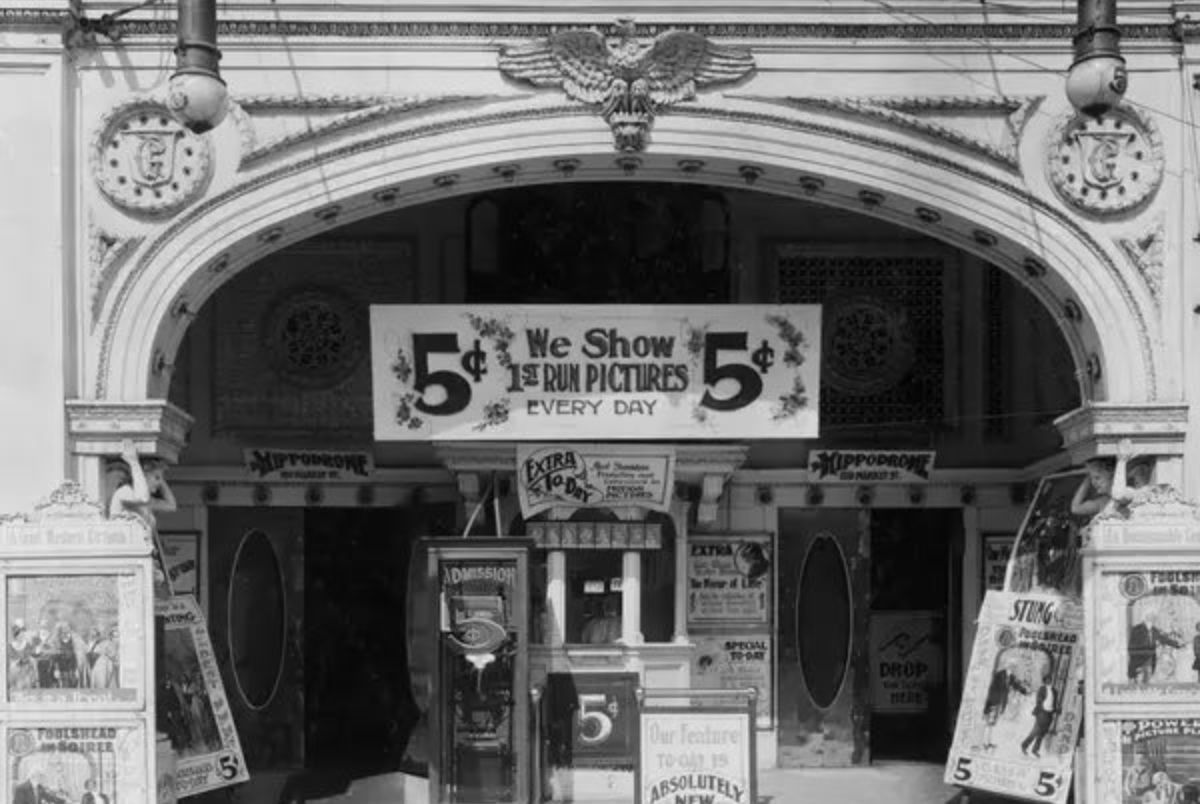
On June 19, 1905, a small theater in Pittsburgh, Pennsylvania, opened its doors and forever changed the way Americans experienced entertainment. Known as the Nickelodeon, it was the first theater in the United States devoted exclusively to showing motion pictures. Charging just five cents for admission—a nickel, which inspired its name—the theater helped usher in the age of mass moviegoing and laid the foundation for the modern film industry.
The Nickelodeon was the brainchild of entrepreneurs Harry Davis and John P. Harris, who recognized the growing public fascination with moving pictures. Before 1905, films were typically shown as short attractions in vaudeville theaters, amusement parks, arcades, or traveling exhibitions. Motion pictures were considered novelties rather than a primary form of entertainment. Davis and Harris saw an opportunity to create a dedicated venue where audiences could enjoy films continuously throughout the day at an affordable price.
Located on Smithfield Street in downtown Pittsburgh, the Nickelodeon could seat approximately 100 people and featured a simple but effective business model. For just five cents, patrons could escape the summer heat, sit comfortably indoors, and watch a rotating program of short films that lasted between 15 and 30 minutes. The theater was open from morning until late evening, allowing customers to come and go throughout the day. Its accessibility made it particularly appealing to working-class families, immigrants, and urban residents looking for inexpensive entertainment.
The concept proved to be an immediate success. Thousands of people visited the Nickelodeon each week, and entrepreneurs across the country quickly took notice. Within just a few years, nickelodeon theaters sprang up in cities and towns nationwide. By 1908, there were an estimated 8,000 nickelodeons operating in the United States, attracting millions of patrons every week. The rapid growth created a booming demand for new films and encouraged the development of a more organized and professional movie industry.
The popularity of nickelodeons also transformed filmmaking itself. As audiences clamored for fresh content, filmmakers began producing longer and more sophisticated stories. Studios expanded their operations, actors became recognizable stars, and motion pictures evolved from simple novelties into a major cultural force. By the 1910s, larger and more elaborate movie palaces began replacing many nickelodeons, offering enhanced comfort and grander presentations.
Although the original Nickelodeon era was relatively brief, its impact was enormous. The theater that opened in Pittsburgh on June 19, 1905, demonstrated that movies could attract large, paying audiences on a regular basis. It helped establish cinema as a mainstream form of entertainment and set the stage for Hollywood’s rise as the center of the global film industry. More than a century later, every modern movie theater owes a debt to that humble five-cent theater that introduced America to the magic of the movies.