
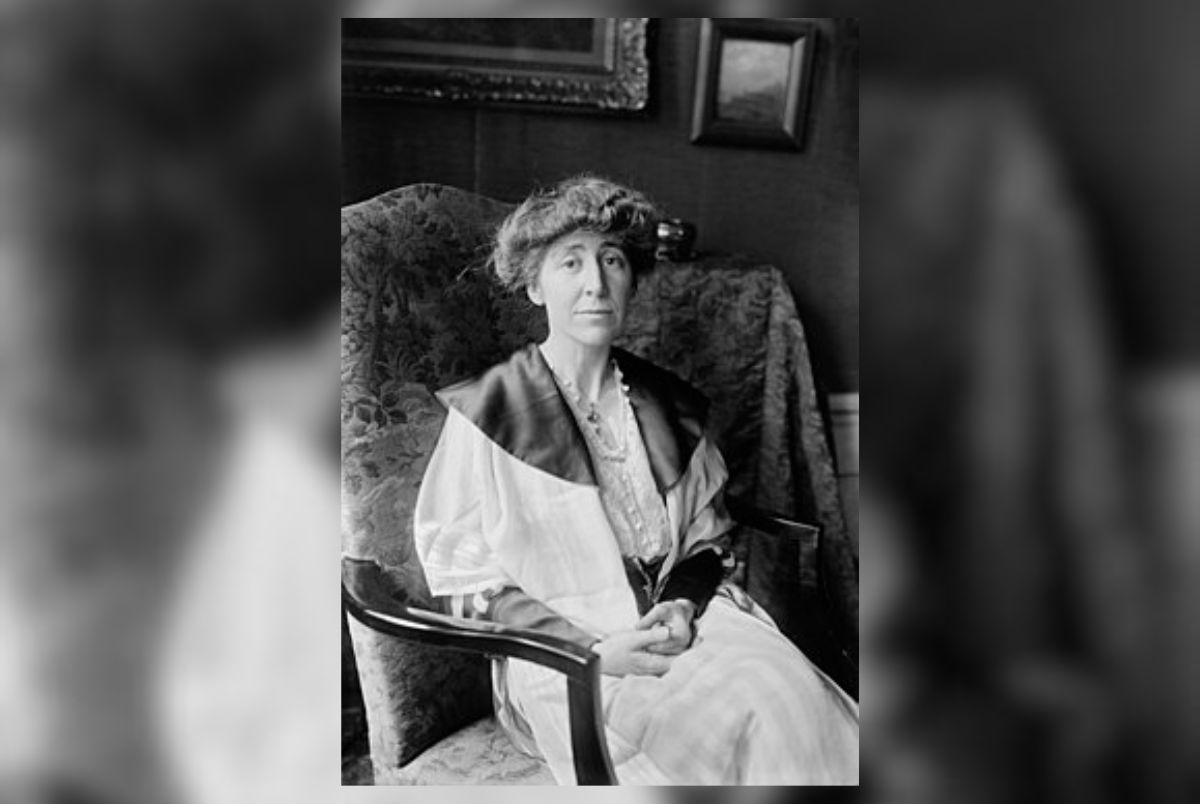
On April 2, 1917, Jeannette Rankin made history as she assumed office in the United States House of Representatives, becoming the first woman ever to serve in Congress. Her swearing-in marked a groundbreaking moment not only for American politics but also for the broader movement for women’s rights, as it occurred three years before the ratification of the 19th Amendment granted women the right to vote nationwide.
Rankin, a Republican from Montana, had been elected in 1916 after years of activism in the women’s suffrage movement. She had worked tirelessly to secure voting rights for women at the state level, helping to achieve victories in places like Montana before turning her attention to national politics. Her election was itself a remarkable achievement, signaling shifting attitudes about women’s roles in public life and governance.
Her first day in Congress unfolded during a moment of extraordinary national tension. On the very day she was introduced as the House’s first female member, President Woodrow Wilson addressed Congress to request a declaration of war against Germany, bringing the United States closer to entering World War I. Just days later, Rankin faced a defining test of her principles when the House voted on whether to go to war. Guided by her lifelong pacifist beliefs and the sentiments of many of her constituents, she cast one of the few votes against the declaration.
Rankin’s stance drew both admiration and criticism. While some viewed her vote as courageous and principled, others saw it as controversial, particularly given the gravity of the moment. Nonetheless, her decision underscored her commitment to peace—a defining characteristic of her political career. She would later make history again in 1941 as the only member of Congress to vote against declaring war on Japan following the attack on Pearl Harbor.
Beyond her antiwar position, Rankin used her time in Congress to advocate for social reform. She introduced and supported legislation aimed at improving conditions for women and children, and she was a strong proponent of a federal amendment to secure women’s suffrage. Her work helped lay the groundwork for future progress, even as she navigated the challenges of being the sole woman in a male-dominated institution.
Rankin’s presence in Congress also carried deep symbolic significance. At a time when women were largely excluded from political power, her election and service demonstrated that barriers could be broken. She famously acknowledged the weight of her role, recognizing that her actions would be closely watched and could influence opportunities for future generations of women.
In retrospect, April 2, 1917, stands as a landmark date in American history. Jeannette Rankin’s assumption of office was more than a personal achievement—it was a transformative moment that expanded the possibilities of democratic representation. Her legacy endures as a testament to perseverance, conviction, and the ongoing struggle for equality in American political life.







I had never heard of Jeanette Rankin until now and after reading this article, I regret to say that I am not impressed. Becoming the first female congressperson does not make one’s decisions admirable.