
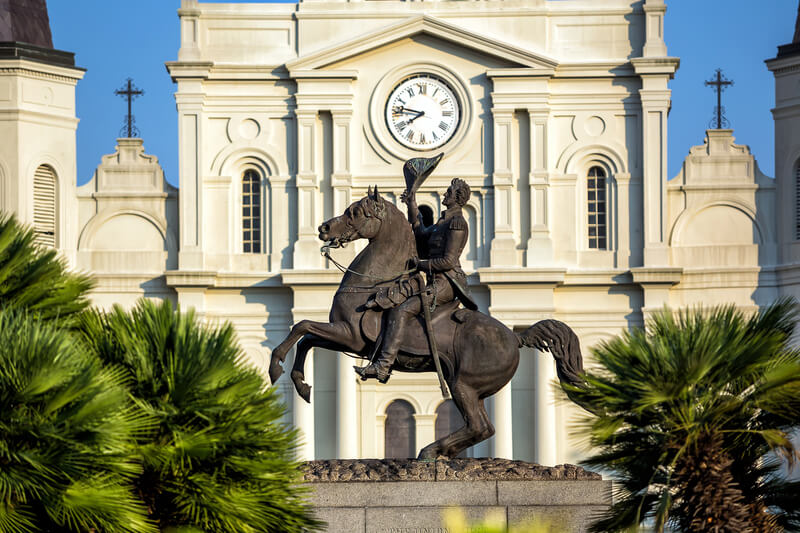
In the heat of a Carolina June, a thin, red-haired boy stood in the yard of a British prison camp outside Camden, South Carolina. He had just turned 14 years old, though the war had already taken from him the ease of childhood. His hand—gashed open by a saber—hung stiffly at his side. The wound had begun to crust, but it would not heal cleanly.
Nothing in the camp did.
The British Southern Campaign of 1781 had turned the Carolinas into a landscape of raids, reprisals, and burned homesteads. British dragoons swept repeatedly through the Waxhaws, a backcountry region straddling the border of North and South Carolina.
Patriot militia gathered near Waxhaw Presbyterian Church, a known meeting place for resistance. It was during one of these British sweeps in April 1781 that the boy and his older brother were caught up in the chaos and taken prisoner. The brothers were marched roughly south to Camden where the British maintained a makeshift prison for captured militia.
Conditions were harsh.
The air was thick with the smell of sickness. Smallpox spread quickly in the overcrowded, unsanitary conditions. The prisoners knew that every day there was a day closer to death—which is exactly what the British were counting on. They hoped that fear would loosen the tongues of some of the captured.
The boy’s injury to his hand had come during the march to the camp. A British officer had ordered him to clean the officer’s boots. The boy refused—not with display or histrionics, but with a simple, dignified reply: “No sir, I am a prisoner of war, not a servant.”
The officer’s saber slashed downward, slicing the boy’s hand and striking his head. The scars would remain for life.
At the camp, the British wanted information. Couriers were valuable captures. Even a child might carry intelligence that could expose militia movements and safe houses. The guards questioned the boy repeatedly. They believed hunger and fear would break him.
It did not.
Day after day, the boy kept silent. He stared at the ground silently while being questioned. He refused to betray the men of his community who were hiding in the woods and swamps of the Waxhaws. Those he knew as his neighbors, farmers, merchants—and others he had never met and who would never meet him.
The boy knew the cost of opening his mouth. The British raids had already burned homes and scattered families. And he knew the cost of keeping silent. He remained silent.
Smallpox ravaged the camp, and both boys contracted it. The heat of June pressed down like a weight. The boy grew gaunt, feverish, and weak. His older brother grew especially ill, life ebbing from him every single day. Nights grew longer, interrogations more aggressive, disease more present—and the boy still remained silent.
The boy’s mother, a Scots-Irish widow, having learned of her sons’ captivity, made her way to the camp. She moved through the war-torn countryside in a dangerous trek to Camden. She arranged a prisoner exchange—captured British for several American prisoners, including her sons. Her boys had offered nothing to the British and they were willing to unload them. The boys were released.
The boy’s older brother died shortly after returning home, weakened by disease and mistreatment. Another brother died that same year of heatstroke in service to the patriot cause at the Battle of Stono Ferry. The mother died later that year while nursing American prisoners near Charleston.
But the boy survived. He carried the scars of that June for the rest of his life, shaped by the crucible of war, pain, and suffering. He persevered.
The rebellion that he refused to betray also survived. In many ways, the story of the republic it birthed mirrored his own. Both he and his nation were stubborn, tough as nails, and determined to rise above their humble beginnings.
Thirty-three years later, in 1814, that scarred but determined boy would step into the history books on a battlefield just outside New Orleans, Louisiana Territory. Facing his old enemy the British once again, General Andrew Jackson commanded a ragtag band of regular soldiers, militia from Tennessee and Kentucky, free Black troops, Choctaw allies, local volunteers, and even Jean Lafitte’s Baratarian pirates against a numerically superior British force.
As Johnny Horton chronicles in his classic 1959 tune, the Americans decimated the British in one of the most decisive victories in U.S. military history, securing a much-needed morale boost for the country. Jackson catapulted to national fame as “Old Hickory,” a nickname which his troops bestowed on their beloved commander who was willing to endure any hardship that his men endured.
Fourteen years later, Jackson won another landslide victory—this time for the White House, becoming the seventh President of the United States. Historians have written volumes about Jackson’s influence on the country as general and president. He represented the idea that the country was no longer controlled only by coastal elites or inherited status. Power was moving outward to settlers, soldiers, farmers, and everyday people.
But perhaps the most important part of Jackson’s story, like our national story, is its beginning. Born poor, orphaned by the Revolution, scarred by British captivity, and hardened on the frontier, Andrew Jackson was America—ambitious, controversial, flawed, but doggedly determined to extract greatness from himself and everyone around him.
And it all began with a wounded 14-year-old boy in a Carolina prison camp who chose loyalty over fear and carried the hope of a nation he could only scarcely imagine.
Phill Kline is a former state legislator and the former Attorney General of Kansas. He is currently a law professor.





Did not know this I’m ashamed to say. $20 bill seems a bit low for this man, now, doesn’t it? Wish the MSN would inform the people of things like this, instead of lgbwxyz nonsense! Especially on the 250 anniversary.
I had heard Andrew Jackson hated the British greatly, now I know why!
Thank you for this uplifting story about Andrew Jackson; I had never heard it before now. So appropriate to print this now when we are celebrating 250 years as a nation!
Last year my husband and I toured Old Hickory’s home in Nashville TN. An amazing mansion of that era. How fortunate for us that he went on to overcome his injuries, losses, and poverty . It really doesn’t matter what sort of hardships a person lives with, God can raise them up, and use them in amazing ways. Thank you for this article Phill Kline.
Andrew Jackson and the Battle for New Orleans is a must read.
Thank you PROFESSOR KLINE!! Your tome on ANDREW JACKSON IS INSPIRATION FOR OUR SCHOOL CHILDREN!! YOU KNOW THE ONES BEING TAUGHT THAT AMERICA IS RACIST!! OUR KIDS DO NOT KNOW THE TRUTH OF OUR HISTORY! WHEN I TRIED TO TELL MY SONS THAT I WAS TAUGHT HISTORY IN SCHOOL THEY BOTH STATED VERY LOUDLY THAT I WAS INDOCTRINATED JUST LIKE THEM!!! SO SAD! ANYWAY I AM TOO OLD NOW TO FIGHT THAT LIE!BUT EVENTUALLY THEY WILL LOSE AND I WILL BE CRUISING THE UNIVERSE IN MY ANGEL-WINGS!!HA HA HA!!!
Great history lesson that supports the strength and courage of two brothers and their mother too!! Thank you so much for sharing it in a time of few willing to know history of American courage or to exhibit the same. Thank goodness our military does!!
As an African American conservative born and raised in the South, I have mixed feelings about Andrew Jackson. He was an unapologetic slave owner; and one who fought alongside Native Americans, only to evict Florida Indians from their land. And yet, I view him as a man of his time, just like Presidents Washington, Jefferson, Madison, and Monroe were. (If Jackson had known that his expanding the vote to working-class white men would benefit my people decades later, he would have flipped!) Recently I watched PBS’s “Andrew Jackson: Good, Evil, and the Presidency,” which I highly recommend. It includes the incident with the British officer you shared above – one of many experiences that hardened a determined youth into the “Old Hickory” who helped shape a young nation.
WOW! JUST WOW!!!