
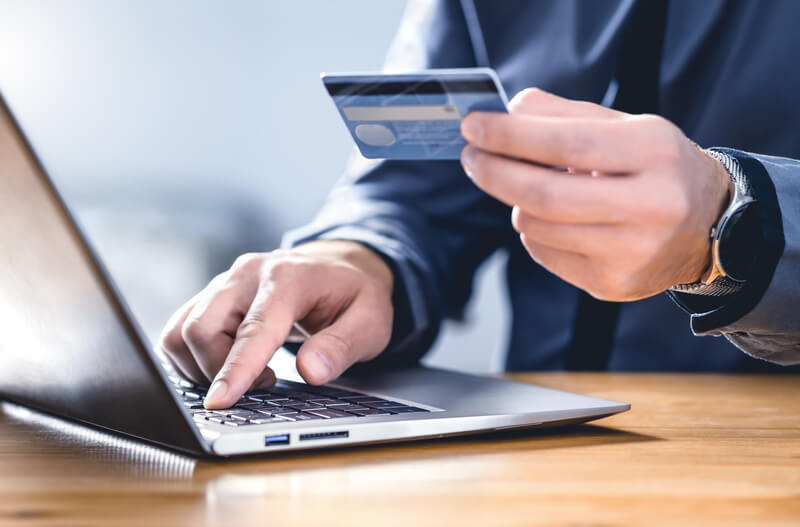
The increasing prevalence of credit card fraud means that people need to be on guard to avoid the sly tricks that scammers use daily.
Early Credit Card History
The idea of credit dates to ancient civilizations. According to Credit Canada, department stores first issued charge coins in 1865, allowing holders to buy on credit. Later, American Express launched money orders in 1882 and travelers cheques in 1891. In the 1930s, metal charge plates served as early credit cards, with their use continuing into the 1950s. By 1941, department store credit had become common, and in 1946, a Brooklyn banker introduced “Charg-It” cards—the first bank card usable at local merchants.
The 1950s and Beyond
The 50s saw both Diners Club cards, regarded as the first modern credit card, and Franklin’s National Bank issuing its first charge card. Interestingly, the idea for the Diners Club card began with a lost wallet when businessman Frank McNamara dined out with clients. He realized he did not have his wallet and envisioned and developed a universal way to pay. In 1955, gas station owners received the first patent for “Credit Card” after inventing a pump that accepted cards. Credit cards soon became widespread, with approximately 648 million accounts in the U.S. by the fourth quarter of 2025. Clearly, credit history has been around in various forms for generations—and, unfortunately, so has credit card fraud.
Old Trick, New Tactics
The first known charge card scam is said to have happened in 1899, when a lost transportation credit card was found and used fraudulently for carriage services. Over the decades, scammers have continued to adapt, using ever-evolving methods to trick their targets. From physically lifting the cards to modern day scams and cyberattacks. – credit card theft has become increasingly complex. But there are steps consumers can take to stay safe. Understanding how modern scams operate is crucial for protecting yourself. By learning how to spot suspicious activities, you can take effective steps to secure your information.
Convenience with Some Vulnerabilities
Credit and debit cards make everyday purchases and cash advances simple and convenient. However, despite their security features, these cards are still susceptible to fraudulent activity. Fraud occurs when someone steals and uses another person’s card to make unauthorized purchases or cash withdrawals. Scammers are typically looking for quick financial gain—they might rack up charges, take out cash advances, or sell card information to other criminals.
Scammers – Up to No Good Tricks
According to consumer credit reporting company Experian, credit card fraud can take several forms. The most frequent methods involve tricking individuals into revealing their card information or stealing the card without the owner’s knowledge. As credit card fraud continues to rise, it is essential for everyone to remain alert and avoid falling victim to scammers’ sneaky and deceptive tactics.
Credit Card Scams and the Toll They Take
In 2024, credit card scams resulted in total losses of $275 million, with almost 450,000 reports filed with the Federal Trade Commission (FTC). By 2025, the volume of cases surged—with over 503,000 reported to FTC in just the first three quarters of the year, nearly 180,000 more than the same period in 2024. The FTC also notes that actual losses are likely even higher because so many incidents go unreported. The takeaway is clear: credit card scams are becoming more common and widespread, so users must stay vigilant.
Identifying 8 Common Scams
Last year, Experian identified eight common types of credit card scams, many of which are quite sophisticated or convincing. In these schemes, fraudsters work to outsmart the latest security measures. Being able to recognize these eight popular scams and understand how they operate can help keep you and your finances secure. The eight scams from their 2025 list include:
- Phishing scams: Scammers pose as banks, businesses, organizations, or government agencies and contact victims by email, text, or social media. Messages may appear urgent and request that the recipient click a link or quickly resolve a problem. The aim is to make victims act without thinking, giving away personal information that scammers then use or sell.
- Credit card skimming and shimming: Both scams use devices to capture card data. Skimming involves placing devices over or inside card readers (like those at ATMs or gas pumps) to steal information from magnetic stripes. Shimming targets chip-enabled cards, with devices inserted deep into the slot to gather chip data. Scammers use the stolen details to make counterfeit cards or sell the information.
- Interest-rate deduction and debt settlement scams: These scams target people struggling with credit card debt, offering to reduce interest rates or settle debts for less than owed. While legitimate counseling agencies exist, scammers charge up-front or ongoing fees without providing any real service.
- Online shopping scams: Fake e-commerce websites are set up to steal shoppers’ card information. These sites may copy legitimate businesses, even using their logos and web addresses. Warning signs include very low prices, misspelled URLs, or new sites with little information and no contact details. Sites that only accept wire transfers, cryptocurrency, or gift cards are also suspicious.
- Public Wi-Fi scams: Scammers monitor or create public Wi-Fi networks to intercept credit card or bank information. Using public networks at airports, hotels, or coffee shops can expose your data to these types of attacks. Experian advises everyone to be cautious when connecting to public Wi-Fi networks, as these are common places where scammers exploit unsecured connections.
- QR code scams: Also known as “quishing,” these involve scanning QR codes that lead to fake websites meant to steal information or download malicious software. Scammers might also reroute payments through fake QR codes. Be cautious with unsolicited QR codes, especially those that request payments or downloads.
- Overcharging scams: In these scams, crooks typically contact their targets by email, text, or phone to say that their credit card was “overcharged” for a purchase or payment. But to get the refund, a person must confirm their payment information or verify their credit card. Once they do, that information is stolen by the scammer.
- Donation scams: Scammers pose as charitable organizations to collect donations, stealing credit card information from unsuspecting donors. Scammers frequently change the donation amount or steal credit card information or both.
Credit Card Denial Scams
Credit card denial scams, sometimes referred to as card-declined scams, are a growing concern across the country. In these schemes, scammers entice shoppers with online deals that seem too good to be true—because they are. Victims are drawn to fraudulent websites that advertise these incredible offers. When a person attempts to make a purchase and enters their payment information, the website falsely reports that the credit card has been declined. Believing the issue is with their card, users may try to enter details for additional cards. This process results in the victim unknowingly providing all their credit card and banking information directly to criminals.
Credit Card Application Declined Scams
Credit card application decline scams involve getting a letter in the mail (or by email) stating that your credit was declined for a card you never applied for or intend to get. This is likely a phishing scam designed to steal personal information, including your banking information, credit card number, or Social Security number. These letters tend to look and sound official and typically instruct recipients to call a (fake) number to “verify” identity or resolve the issue. Treat the letter as a scam and do NOT CALL THE PHONE NUMBER ON THE LETTER.
Steps to Respond to Credit Card Application Declined Scams
If you receive a letter stating your credit card application was declined, and you did not apply for credit, it is most likely a scam. Begin by carefully examining the letter. Look for spelling errors, generic greetings, or suspicious formatting. Be aware that scammers often use official-looking logos and urgent language to create a sense of legitimacy and urgency, hoping to trick recipients into responding.
If the letter claims to be from a reputable banking institution such as JPMorgan Chase, Bank of America, Wells Fargo, or another familiar bank, do not use the phone number provided in the letter to verify its authenticity. Instead, locate the bank’s official phone number independently—either from their website or a trusted source—and call to confirm whether the letter is genuine.
If you are worried that your information may have been compromised or that unauthorized inquiries have been made, review your credit reports from the three major credit bureaus: Equifax, Experian, and TransUnion. Check for any suspicious or unauthorized activity. If you suspect application fraud, or if someone has opened an account in your name, follow these steps described by Experian and place a free fraud alert on your credit reports by visiting AnnualCreditReport.com.
Complications Related to Machine-to-Machine Fraud (M2M)
Consumers lost $12.5 billion to fraud in 2024 according to date released by the FTC in March 2025. And it will likely get worse. Per Fortune, Experian asserts that AI-powered scams are set to explode this year, calling 2026 a “tipping point” as more people turn to AI agents for shopping. “A swarm of bots armed with your credit card information sounds like a glaring-red signal to cancel the card. But a swarm of bots with your credit card information – and permission to buy those jeans you’ve been eyeing? Doesn’t sound so bad. Yet “shopping” with tools like OpenAI or Perplexity could wreak havoc on companies that already struggle to distinguish between so-called good and bad bots, warns Experian in its 2026 Future of Fraud Forecast…” The forecast also asserts that the no. 1 threat to companies is “machine-to-machine mayhem” in which cybercriminals blend good bots doing your shopping with bad bots tasked with fraud. While retail companies and e-commerce giants like Amazon strive to ensure security and privacy of shoppers, AI-driven M2M fraud enables rapid, sophisticated attacks that can directly and negatively impact consumers. For instance, it can cause rapid large-scale theft of credit card data and make fraudulent transactions challenging to detect – growing concerns in this modern day world.
Reporting and Preventing Credit Card Fraud
From personal experience, even with diligent attention to business and financial transactions, I have encountered fraud on two occasions involving identity and credit card theft likely related to data breaches. Nevertheless, cardholders should use safe credit card habits like using RFID wallets, activating real-time transaction alerts, avoiding saving credit card details on websites, updating software, enabling multi-factor authentication, using strong passwords, protecting personal and financial information by not sharing it, and only making purchases through trusted retailers. It is imperative for cardholders to promptly report any suspicious activity to receive support. Fortunately, most credit card issuers are responsive and effective in assisting customers with such matters. Staying on top of your credit and taking swift action not only safeguards individual interests but also contributes significantly to the broader effort of preventing fraudulent schemes and protecting others.
Report credit card scams promptly to: https://reportfraud.ftc.gov/
Report identity theft to your local police and contact: https://www.identitytheft.gov/
Disclosure: This article is provided for informational purposes only and does not constitute personal advice.





Never allow a debit/Atm card out of your sight. There are time limits to reporting fraud and those cards can actually clean out your savings if your check card has overdraft protection tied to it. Credit card companies seem to accept fraud as part of the business and limits risk should you be taken. But back to the ATM/debit-check card, you personally have to do most of the leg work to fight this fraud where as Credit card companies will act on your behalf because it’s their money at risk. Don’t answer the phone from numbers you don’t recognize, never click on emails until you verify first if your accounts have actually been compromised. Scammers get away with this because there is no justice or punishment. Suspicious activity is exactly that, usually unsolicited and sometimes hard to spot. Criminals are getting more devious and clever, you have to be smarter.
Excellent article. I am sharing with everyone I know. Thank you.
I can quickly see the dreaded implanted identity chip talk coming up next. I cannot imagine what a crook will do to a person if the chip is on his wrist……cut off his hand? These heartless people WHO FIND IT A GAME AND PROFITABLE TO SCAM THE WORLD for money, they do not deserve, would stop at nothing. Why don’t people use their cards less and their cash more? I never use a credit card in a gas station (easiest scam place), a BIG LOTS store or place where there are no security checks on their machines during the day. Even have stopped using my credit card on the Internet and only use prepaid debit cards with limited amounts. People have to put on their thinking caps for their own use and safety of their credit cards. It will be a little annoying, but it is better than finding someone wiped out your bank account by using your debit card!