On April 6, 1862, one of the most shocking and consequential battles of the American Civil War began near a small country church in southwestern Tennessee known as Shiloh. What unfolded over the next two days would forever change how Americans understood the war—transforming expectations of a short conflict into the grim reality of a long and bloody struggle.
In the early months of 1862, Union forces under General Ulysses S. Grant had gained momentum in the Western Theater, capturing key Confederate strongholds along the Tennessee and Cumberland rivers. These victories opened a path deeper into the South, threatening vital railroads and supply lines. Confederate General Albert Sidney Johnston, determined to halt this advance, gathered his forces near Corinth, Mississippi, and moved to strike before Union reinforcements could arrive.
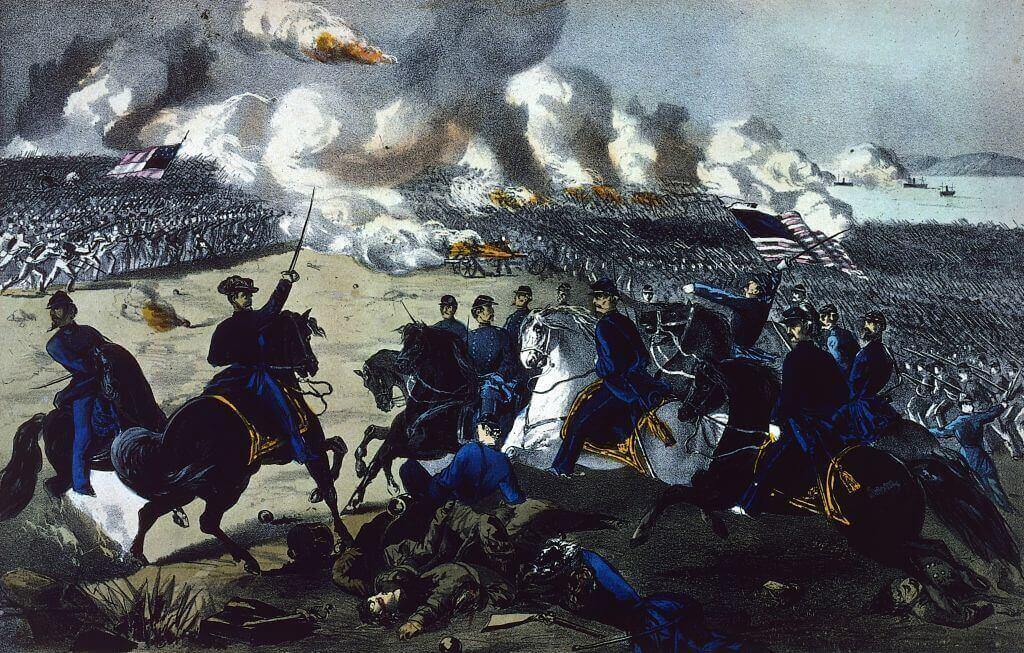
At dawn on April 6, Confederate troops launched a surprise attack on Grant’s encamped army near Pittsburg Landing. Many Union soldiers were caught off guard, unprepared for a major assault. The Confederates drove the Union lines backward through the woods toward the Tennessee River, inflicting heavy casualties and creating chaos across the battlefield.
Despite the initial success, the Confederate advance began to lose momentum. One of the most dramatic moments of the day came when General Johnston himself was mortally wounded while leading his men. His death marked a turning point, leaving command to General P.G.T. Beauregard, who ultimately halted the attack as night fell. Although Union forces had been pushed back nearly two miles, they had not been defeated.
Overnight, fresh Union troops arrived, strengthening Grant’s position. At first light on April 7, Grant launched a powerful counterattack. The exhausted Confederate army, unable to withstand the renewed assault, was gradually forced to retreat. By the end of the second day, Union forces had regained the lost ground, securing a hard-fought victory.
The Battle of Shiloh resulted in more than 23,000 casualties—an unprecedented toll at the time. The scale of death and destruction stunned both the North and the South, shattering illusions that the war would be brief or relatively painless. Instead, Shiloh revealed the true nature of the conflict: brutal, costly, and far from over.
Though a Union victory, Shiloh was a sobering experience for both sides. It demonstrated the high stakes of the war in the West and underscored the importance of controlling strategic transportation routes. More importantly, it marked a psychological turning point, as Americans on both sides came to understand that the Civil War would demand far greater sacrifice than anyone had anticipated.