
AMAC Magazine Exclusive – By Alexa Astuto
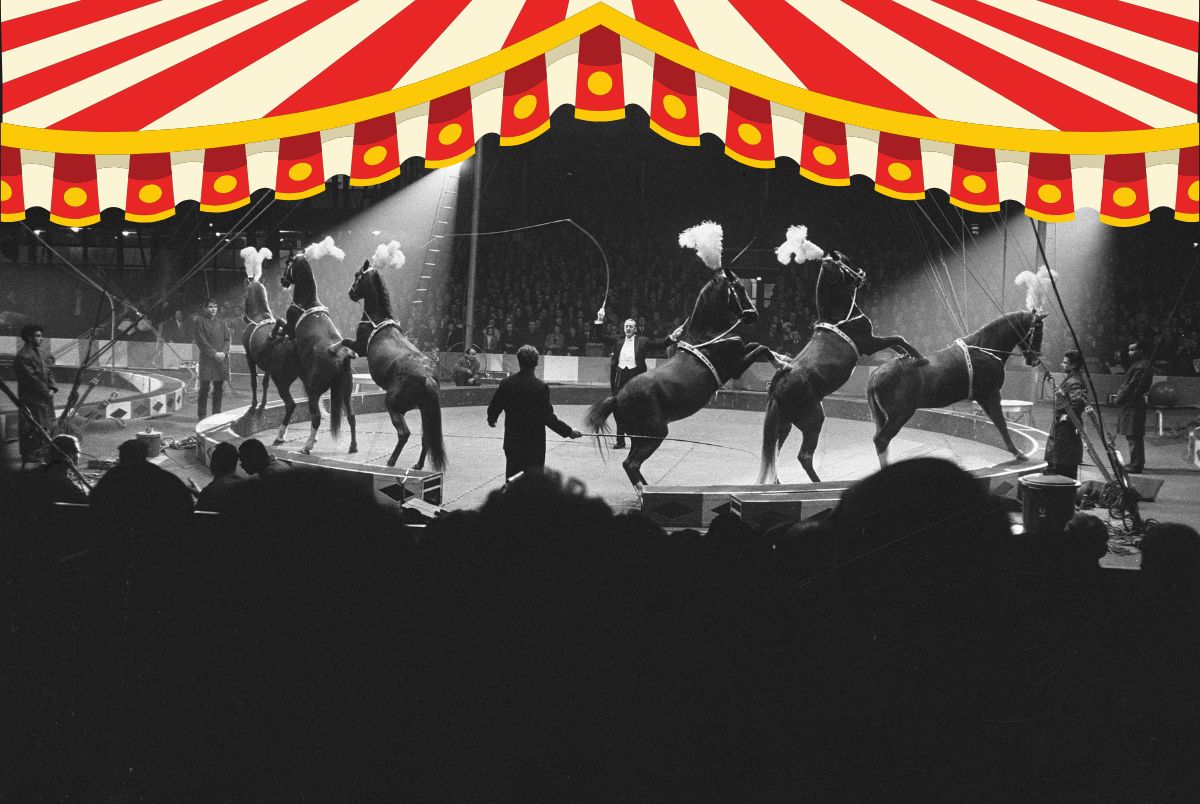
The smell hit you first. Warm hay and sawdust. Sweet roasted peanuts. A faint trace of animals. Then came the sound. A distant hum of laughter, shouts, and the ringmaster’s energetic voice. You gazed up at the canvas: a tent stretched high against the sky. You didn’t need a ticket to know where you were. You could feel it. You were at… the circus.
But have you ever wondered what brought these big tops to life—and where they are today?
Before television filled every living room and before radio reached every kitchen, the circus was America’s great shared spectacle. It brought lions to farm towns, acrobats to Main Street, and enough wonder to make ordinary life feel briefly expandable.
The circus thrived because it understood something simple about human nature: People are drawn to what they cannot quite explain. We slow down for the strange. We lean toward the unbelievable. We want to see for ourselves. Few understood this better—and used it more shamelessly—than P. T. Barnum (1810–1891).
The Business of Curiosity
Throughout his life, P. T. Barnum struggled to find financial stability. That changed in 1835 when he exhibited Joyce Heth, an elderly enslaved woman whom he falsely advertised as the 161-year-old former nursemaid of George Washington.
People did not come because they believed him. They came because they wanted to judge for themselves. Barnum quickly learned that skepticism could be just as profitable as belief.
In 1842, he turned that instinct into Barnum’s American Museum, a strange blend of theater, zoo, lecture hall, and sideshow. Snake charmers, fortune tellers, and human curiosities filled its halls.
But the circus was not truly born until it learned to move. After a fire destroyed his museum, Barnum joined touring showmen Dan Castello and William Coup, hauling more than one hundred wagons of strange acts and exotic animals from town to town.
The completion of the transcontinental railroad in 1869 offered the successful showmen even greater opportunity: a national stage. Customized railcars soon entered the tracks. What rolled into town was not just a show. It was a traveling city.
A Passport in Every Ticket
For many Americans, the circus was the first place they saw an elephant, tiger, giraffe, or rhinoceros outside the pages of a book. The big top became an imperfect geography lesson, bringing worldwide acts to the quiet corners of a growing country.
A young rival showman named James Anthony Bailey (1847–1906) pushed this wonder even further. After seeing electric lighting demonstrated in Philadelphia, Bailey introduced it to his New England circus, making it one of the first shows lit by electricity. Long before towns had electric streetlights, Americans saw the future beneath Bailey’s big top.
This caught P. T. Barnum’s attention, and the two rivals joined forces. Together, they became unstoppable. If Barnum knew how to make people look, Bailey knew how to get the show there on time. In 1881, they formed the Barnum & Bailey Circus, which would soon be billed as The Greatest Show on Earth.
The Final Bow
After both men died, the Ringling brothers purchased the circus, creating the Ringling Bros. and Barnum & Bailey Circus in 1919. But even the grandest show could not outrun changing times.
Today, mass media and animal activism have changed the public’s appetite for the classic American circus. The show closed in 2017, ending a run that had shaped American entertainment for more than a century. In 2023, it returned in a reimagined form, trading animal acts for acrobats, music, technology, and human spectacle.
The sawdust may be gone, and the acts may look different, but the spirit of the circus still lingers wherever curiosity survives—whether in the child who wants to see more, the adult who craves surprise, or the American heart that hasn’t outgrown wonder.
Because the circus was never just a place. It was a promise that no matter how ordinary the day began, something astonishing might still come down the road.
CIRCUS TRIVIA CHALLENGE
Test your knowledge and take the circus quiz below!
1. What everyday word for “oversized” entered the English language thanks to a popular circus elephant from the 1880s?
A. Colossal
B. Titanic
C. Titan
D. Jumbo
2. What famous circus tune, typically associated with clowns and chaos, was originally written as a military march in 1897?
A. Sabre and Spurs
B. Entrance of The Gladiators
C. The National Emblem March
D. The Washington Post March
3. What circus act gets its name from the Greek word for “little table”?
A. Trapeze
B. Acrobatics
C. Trampoline
D. Tightrope
Visit amac.us/circusquiz to check your answers!






The animal-rights NUTS ended the circus! Just more damage from the lunatic left. They don’t want anyone to enjoy life just because they walk around depressed all the time!