AMC BOOK

UNITED WE READ

Post Image

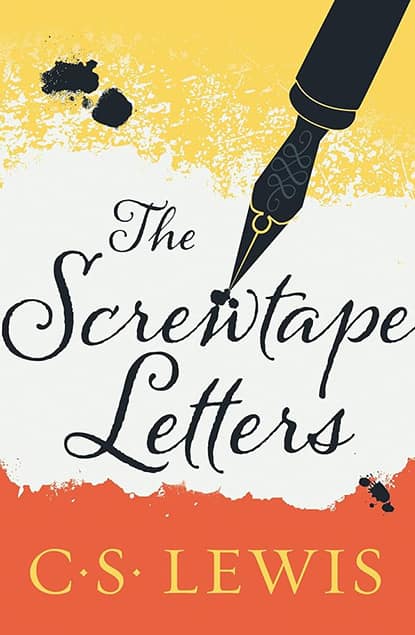
"The Screwtape Letters"

By C.S. Lewis | Published: February 6, 2001

AMAC'S ANALYSIS

C.S. Lewis’s The Screwtape Letters (originally published in 1942) has entertained and enlightened readers the world over with its sly and ironic portrayal of human life and foibles from the unique vantage point of Screwtape, a highly placed assistant to “Our Father Below.” At once wildly comic, deadly serious, and strikingly original, C.S. Lewis gives us the correspondence of the wordly-wise devil to his nephew Wormwood, a novice demon in charge of securing the damnation of an ordinary young man. The Screwtape Letters is the most engaging account of temptation—and triumph over it—ever written.

Buy "The Screwtape Letters" Now!

MEET THE AUTHOR

C.S. Lewis

C.S. Lewis (1898-1963) was one of the intellectual giants of the twentieth century and arguably one of the most influential writers of his day. He was a Fellow and Tutor in English Literature at Oxford University until 1954, when he was unanimously elected to the Chair of Medieval and Renaissance Literature at Cambridge University, a position he held until his retirement. He wrote more than thirty books, allowing him to reach a vast audience, and his works continue to attract thousands of new readers every year. His most distinguished and popular accomplishments include Out of the Silent Planet, The Great Divorce, The Screwtape Letters, and the universally acknowledged classics The Chronicles of Narnia. To date, the Narnia books have sold over 100 million copies and have been transformed into three major motion pictures.

Author Image
AMC BOOK

Welcome
to the Club!

DISCUSSION QUESTIONS:
  • 1. What are the various kinds of irony in "The Screwtape Letters" and what are its effects?
  • 2. Are "The Screwtape Letters" a comedy, a tragedy, or something in between?
  • 3. Compare the roles of women and men within "The Screwtape Letters". Are the two sexes given equal treatment?
  • 4. What, based on Screwtape’s advice to Wormwood, does it mean to be “merely Christian”? Might some Christian groups take offence or disagree with the idea of “mere Christianity” advanced within "The Screwtape Letters"?
  • 5. Are readers of "The Screwtape Letters" supposed to empathize with, pity, or revile Screwtape? Given that Screwtape is evil, what are the negative implications of feeling for him? If human beings do feel for Screwtape, might this actually say something positive about humanity?
  • 6. Describe the treatment of World War II within the book. Was C.S. Lewis trying to help his readers cope with the trauma of this international crisis? How might the advice in "The Screwtape Letters" change if it were given during peacetime?
  • 7. The Patient, despite being the main human character in the book, is all but anonymous. Why might C.S. Lewis have intentionally kept the details of the Patient’s life vague? Does the lack of detail concerning the Patient’s life help reader to, or hinder them from, identifying with this character?
  • 8. Wormwood’s version of events is always presented secondhand through Screwtape’s summaries of Wormwood’s letters. Why does C.S. Lewis exclude Wormwood’s side of the correspondence?
Join the discussion below:
Subscribe
Notify of
guest
0 Comments
Most Voted
Newest Oldest
Inline Feedbacks
View all comments
0
Would love your thoughts, please comment.x
()
x