

UNITED WE READ
BOOK OF THE MONTH
* March, 2026 *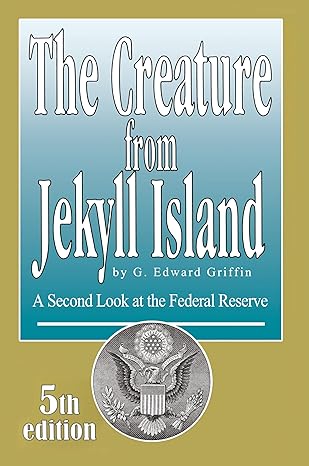
"The Creature from Jekyll Island"
A Second Look at the Federal Reserve
Buy The Creature from Jekyll Island Now!

Welcome
to the Club!
DISCUSSION QUESTIONS:
- 1. What evidence does Griffin present to support his claim that the Federal Reserve was created primarily to benefit private banking interests? How convincing did you find it?
- 2. How does the secret 1910 Jekyll Island meeting shape the book’s central narrative? Does secrecy alone imply malicious intent?
- 3. Griffin frames the Federal Reserve as a “cartel.” In what ways does this comparison hold up, and where might it fall apart?
- 4. How does the book’s portrayal of fiat money and fractional-reserve banking challenge mainstream economic views?
- 5. To what extent does the book blur the line between historical research and conspiracy theory? How can readers evaluate that distinction?
- 6. How might supporters of the Federal Reserve respond to Griffin’s arguments? Which counterarguments seem strongest?
- 7. What role does fear—of inflation, debt, or centralized power—play in the book’s persuasive strategy?
- 8. Did the book change how you view monetary policy, inflation, or the national debt? Why or why not?
- 9. If Griffin’s critiques are valid, what realistic reforms (or alternatives) to the Federal Reserve seem most feasible today?
- 10. Why do you think The Creature from Jekyll Island continues to resonate with readers decades after its publication?
Join the discussion below:

Follow Us


© 2026 AMAC, Inc. / AMAC Senior Resources Network. All Rights Reserved.
The Association of Mature American Citizens (AMAC) is here to protect your interests, and to offer an alternative perspective on how to best solve the problems seniors face today. We need you. America needs you.
The book of the month is a little too financially boring for me but I just got done with Joey’s book
Behind the Badge!
Just finished reading Ship of Gold in the Deep Blue Sea by Gary Kinder. Non-fiction, 1897, SS Central America carrying passengers from the gold fields of California. If you like history, adventure and deep-sea technology, I’d read this one! It was a page turner!
Has the April book selection been announced?